Many people assume workflows fail because of poor planning. In reality, the problem rarely lies in the planning phase. Most workflows break down during execution - where invisible gaps emerge that traditional task management tools struggle to detect.
Imagine a familiar scenario: a project manager spends the entire morning chasing updates through emails, chat messages, and scattered spreadsheets. Instead of focusing on business goals or improving the product, they spend hours gathering information and coordinating work.
This is the reality for many teams today. When workflows lack clear structure, teams spend more time coordinating work than actually doing it.
The problem with traditional workflows
Most organizations still treat workflows as static blueprints: define steps, assign tasks, and execute according to plan.
But real work is very different. It is dynamic, context-dependent, and often involves hidden relationships between tasks. These factors are rarely captured in traditional task management tools.
As a result, workflows exist in theory, while in practice teams constantly communicate, ask for clarification, and manually coordinate.

Where do workflows actually break?
-
Hidden dependencies between tasks
In many projects, one task can only begin after another is completed. Yet most tools fail to recognize these dependencies.
For example, Task A depends on data from Task B, but the system doesn’t know it. Someone has to manually track, remind, and check progress.
This “coordination cost” may seem small, but over time it slows down the entire project.
-
Loss of context during handoffs
One of the biggest issues in modern workflows is context loss. When work moves from one person to another—or from one tool to another—the next person often doesn’t know:
-
why decisions were made
-
what options were previously explored
-
what constraints exist
They must spend time searching for information—or worse, guessing. This not only slows progress but also increases the risk of errors.
-
Manual status updates
Traditional workflows rely heavily on people to update task status.
In reality:
-
people forget
-
updates are delayed
-
or lack sufficient detail
As a result, workflow boards often fail to reflect the true state of the project.
-
Fragmented workflows across tools
In many organizations, work is spread across multiple systems:
-
Design in Figma
-
Tasks in project management tools
-
Documents on separate platforms
-
Communication scattered across chat and email
The real workflow exists in people’s heads rather than in a shared system, making tracking and coordination significantly harder.

The hidden cost of messy workflows
Disorganized workflows don’t always cause immediate problems. But over time, the consequences become clear.
When workflows are unclear, teams spend excessive time on:
-
manual data entry
-
status updates
-
repetitive administrative tasks
Meanwhile, high-value activities like product improvement and customer service slow down.
Common consequences include:
-
wasted time due to duplicated work
-
higher error rates
-
slow and inconsistent onboarding
-
reduced customer satisfaction
-
employee burnout and disengagement
Left unresolved, these issues reduce operational efficiency and hinder innovation.
Why adding more tools doesn’t solve the problem
When workflows break, many companies respond by adding more tools or automation. But this often increases complexity instead.
Common mistakes include:
-
Too many disconnected tools
-
Over-reliance on meetings for updates
-
Lack of clear ownership
-
Temporary fixes without redesigning workflows
The key lesson: tools don’t create order. What matters is a clear, transparent workflow that adapts to real-world context.

Building effective workflows: three key principles
A good workflow doesn’t just track work—it enables execution. Organizations often rely on three principles:
-
Make work visible
Clear visualization helps teams understand:
-
what’s in progress
-
priorities
-
bottlenecks
A shared workflow board aligns everyone on progress and responsibility.
-
Limit work in progress (WIP)
Handling too many tasks at once reduces efficiency. Limiting WIP ensures better focus and faster completion.
-
Continuously improve workflows
No workflow stays perfect forever. As teams and markets evolve, workflows must adapt.
Regular reviews help identify:
-
delays
-
bottlenecks
-
coordination issues
Small, consistent improvements lead to significant gains over time.
ChaTask: When workflows start from conversations
One major reason workflows break is the separation between tasks and communication. Teams discuss work in chat, while tasks live in separate tools - leading to scattered information and lost context.
ChaTask takes a different approach: tasks start directly from team conversations.
Instead of chatting in one place and creating tasks elsewhere, teams can turn discussions into tasks instantly. Each task is linked to its conversation thread, preserving full context - from initial request to decisions and progress updates.
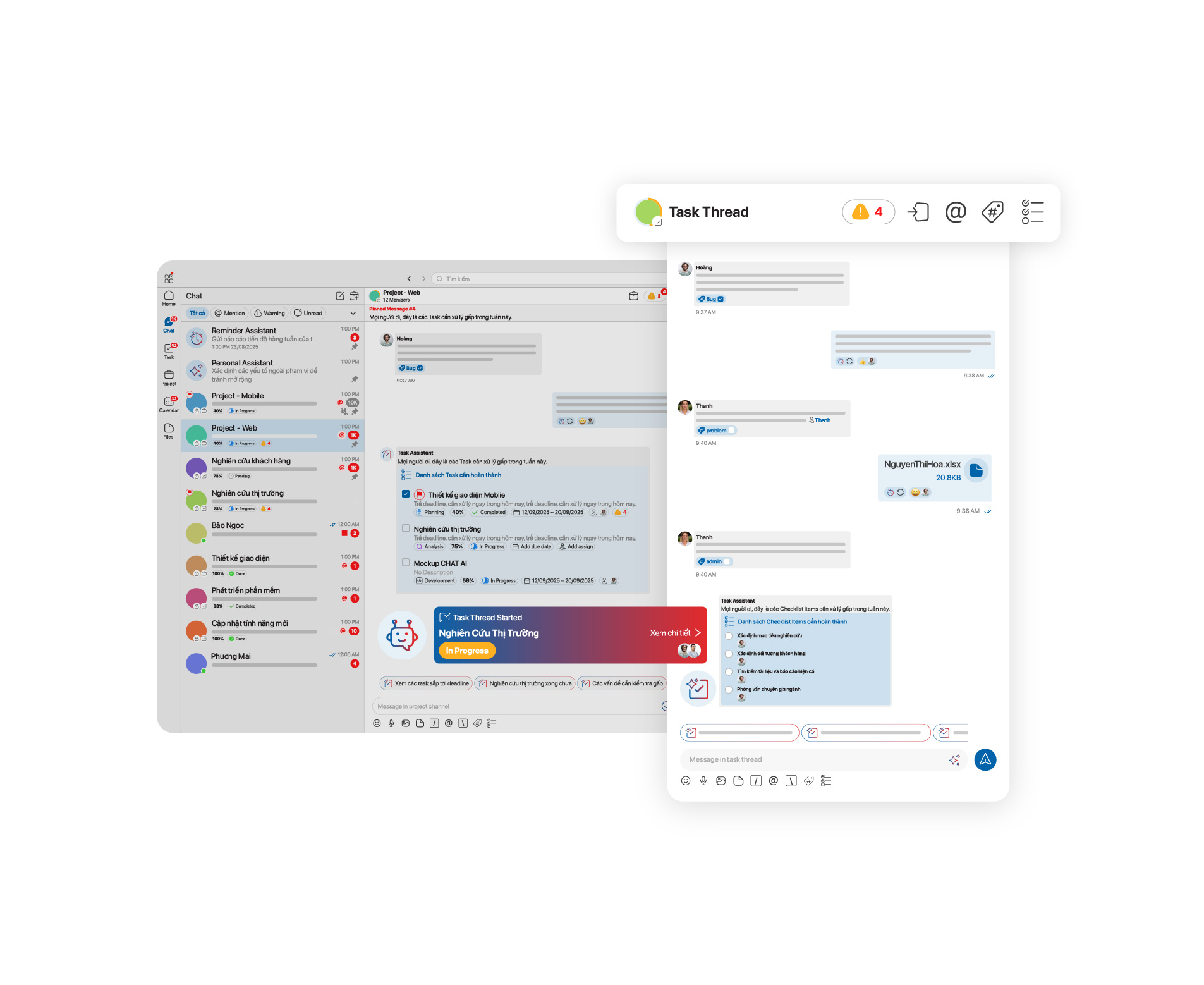
This makes workflows more natural by reflecting how teams actually work:
-
discuss in chat
-
convert key points into tasks
-
track progress in the same space
With tasks, communication, and progress unified, handoffs become clearer and information loss is reduced.
Teams can also see the full workflow in real time, enabling early detection of bottlenecks and faster adjustments.
From manual coordination to smooth workflows
Effective workflows don’t just make teams faster—they help them focus on what truly matters.
When workflows are well designed:
-
dependencies are clear
-
handoffs are seamless
-
progress is transparent
Most importantly, teams no longer spend the majority of their time coordinating work. Instead, they focus on execution, creativity, and improvement.
Workflows don’t fail because of poor planning. They fail because of execution gaps that many systems cannot see.
When organizations recognize this and design clearer workflows—where tasks, information, and communication are unified—teams can shift from reactive firefighting to proactive execution.
Collaborative platforms like ChaTask are helping businesses move toward that goal: creating work environments where workflows are no longer a coordination burden, but a truly efficient flow of work.