In today’s wave of digital transformation, artificial intelligence (AI) is becoming an indispensable part of business operations. From customer service and marketing to internal management, AI helps automate processes, improve efficiency, and optimize costs.
However, when organizations begin implementing AI, many often confuse two common concepts: AI Assistant and AI Agent. Although both are built on similar technological foundations, they differ significantly in how they operate and the value they deliver.
Let’s take a closer look at these differences in detail in the article below.
AI Assistant – Waiting for Your Instructions
An AI Assistant is a system designed to help users perform tasks based on specific requests. Simply put, it operates on a “you ask – AI responds” or “you request – AI executes” model. Familiar assistants such as Siri, Alexa, and ChatGPT all fall into this category.
At its core, an AI Assistant uses large language models (LLMs) combined with natural language processing (NLP) to understand user intent. When it receives a prompt, the system analyzes the content, identifies the context, and provides an appropriate response.
As a result, AI Assistants can support a wide range of tasks, from simple activities like searching for information or generating content to more advanced functions such as data analysis or decision support.
Key characteristics of AI Assistants
- Reactive: AI Assistants depend on user-provided input. They must wait for user interaction before delivering information, answers, or suggested actions, and they can only execute actions once approved by the user.
- Supportive: Most AI Assistants are trained to support humans rather than replace them. They function as copilots, offering suggestions, personalizing insights, and answering questions.
- Specific: AI Assistants are trained to perform specific tasks and follow predefined processes.
- Contextual: Through Conversational AI, assistants can understand the context and nuances of user input to provide tailored, personalized responses.
Limitations
- Prompt-dependent: AI Assistants require user input to operate effectively. They cannot take actions beyond the scope of the given request.
- Narrow scope: AI Assistants are trained for specific functions, focusing on completing predefined tasks and lacking the ability to innovate or solve problems outside their scope.
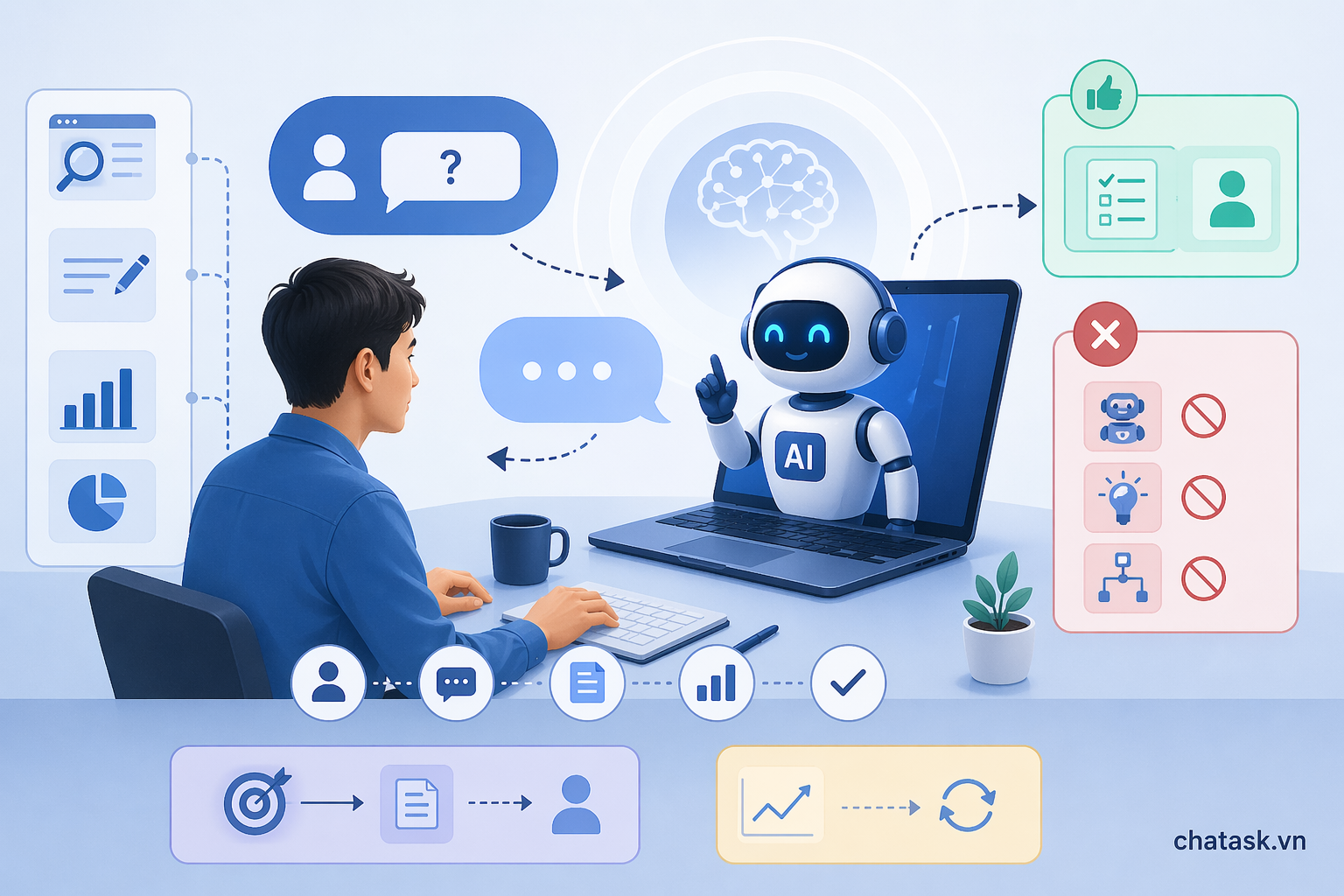
In addition, AI Assistants generally struggle with complex workflows that involve multiple sequential steps. Each interaction is treated as an isolated task rather than part of a broader objective. Their learning capability is also limited, as most improvements depend on model updates from developers rather than continuous self-adaptation during use.
AI Agent – Taking Initiative
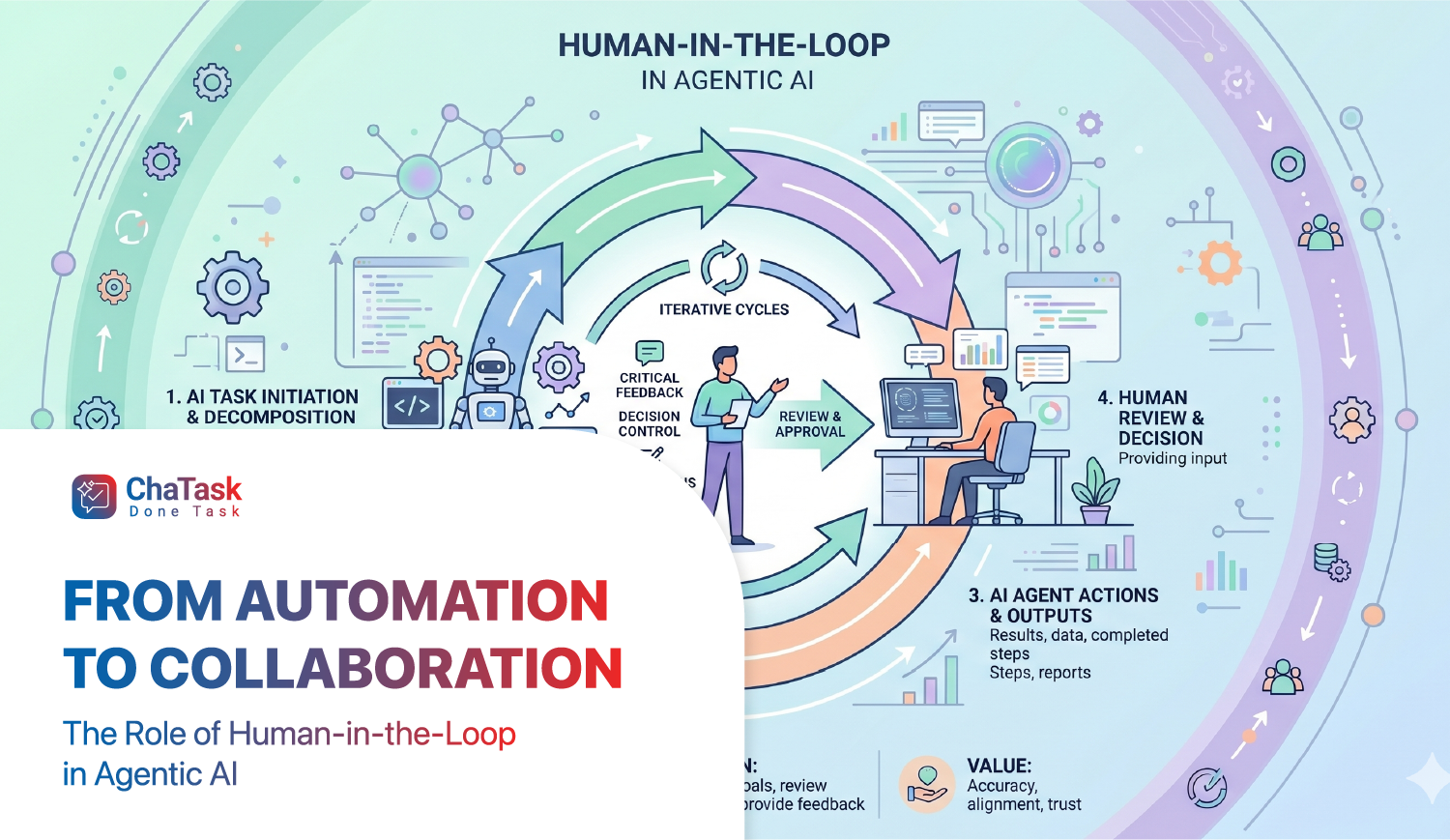
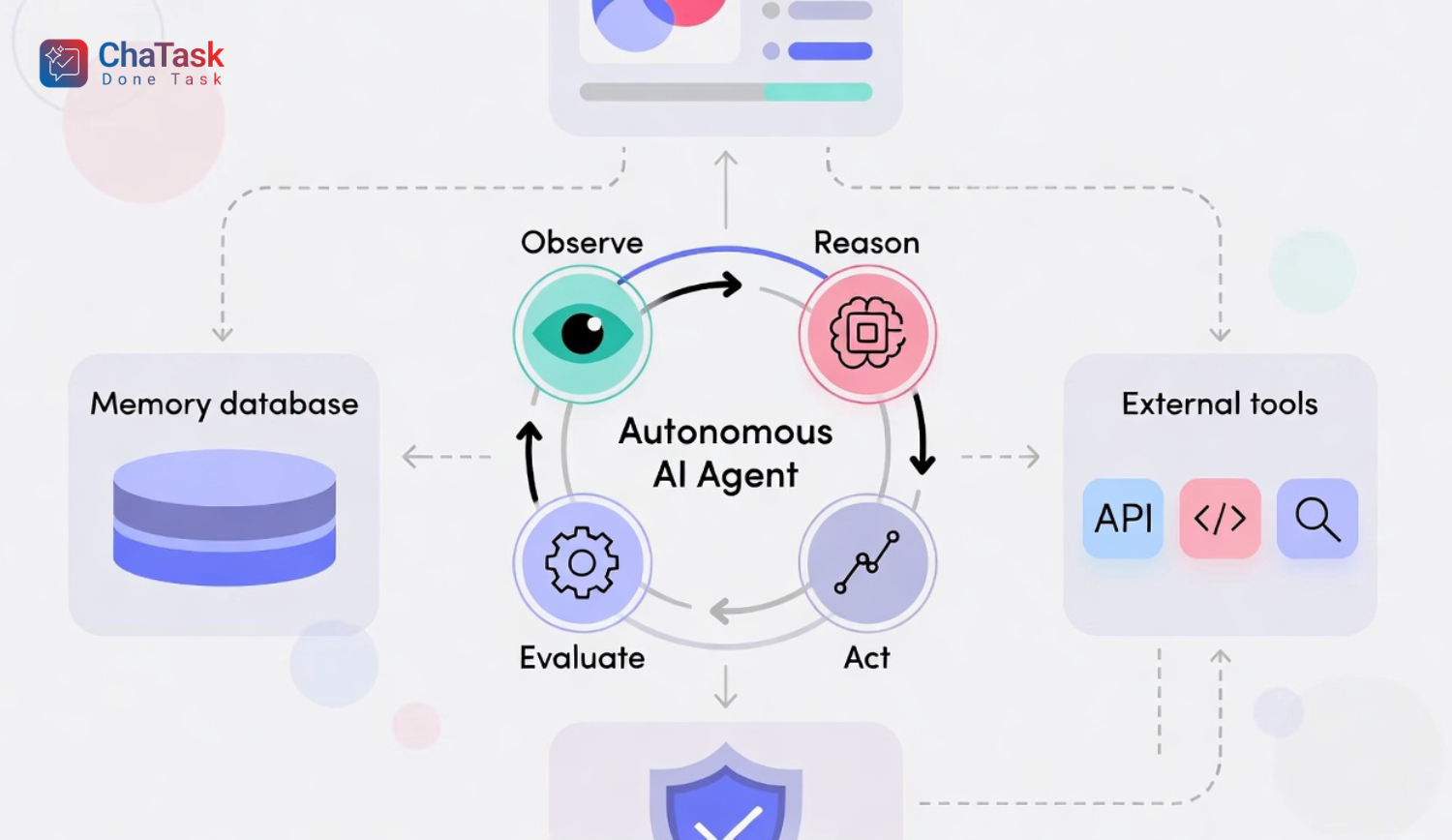
Unlike AI Assistants, AI Agents are designed to operate based on goals rather than instructions. This means that instead of waiting for users to specify each step, AI Agents can independently analyze, plan, and execute a series of actions to achieve a defined objective.
If an AI Assistant is like a personal assistant, then an AI Agent is more like a professional representative. It not only follows instructions but also proactively seeks the best way to optimize outcomes. After receiving an initial goal, an AI Agent breaks down the problem into smaller tasks, builds a workflow, and leverages tools such as APIs, CRM systems, or databases to complete the job.
One of the most important distinctions of AI Agents is their autonomy. They can make independent decisions, evaluate multiple options, and select the most appropriate solution without continuous human intervention. This capability makes AI Agents particularly effective in handling complex, multi-step, and dynamic problems.
Key characteristics of AI Agents
- Proactive: AI Agents do not require continuous user prompts. They can automatically carry out tasks without additional input.
- Independent: While assistants provide recommendations, AI Agents evaluate options and select the optimal solution on their own.
- Continual evolution: With both short-term and long-term memory, AI Agents use past interactions to improve future processes.
- Multi-step task completion: They break down problems into multiple steps and execute a series of tasks to solve the overall objective.
Limitations
Lack of structure: Their autonomy can sometimes lead to unexpected behavior, making them less suitable for processes that require strict compliance and predefined rules.
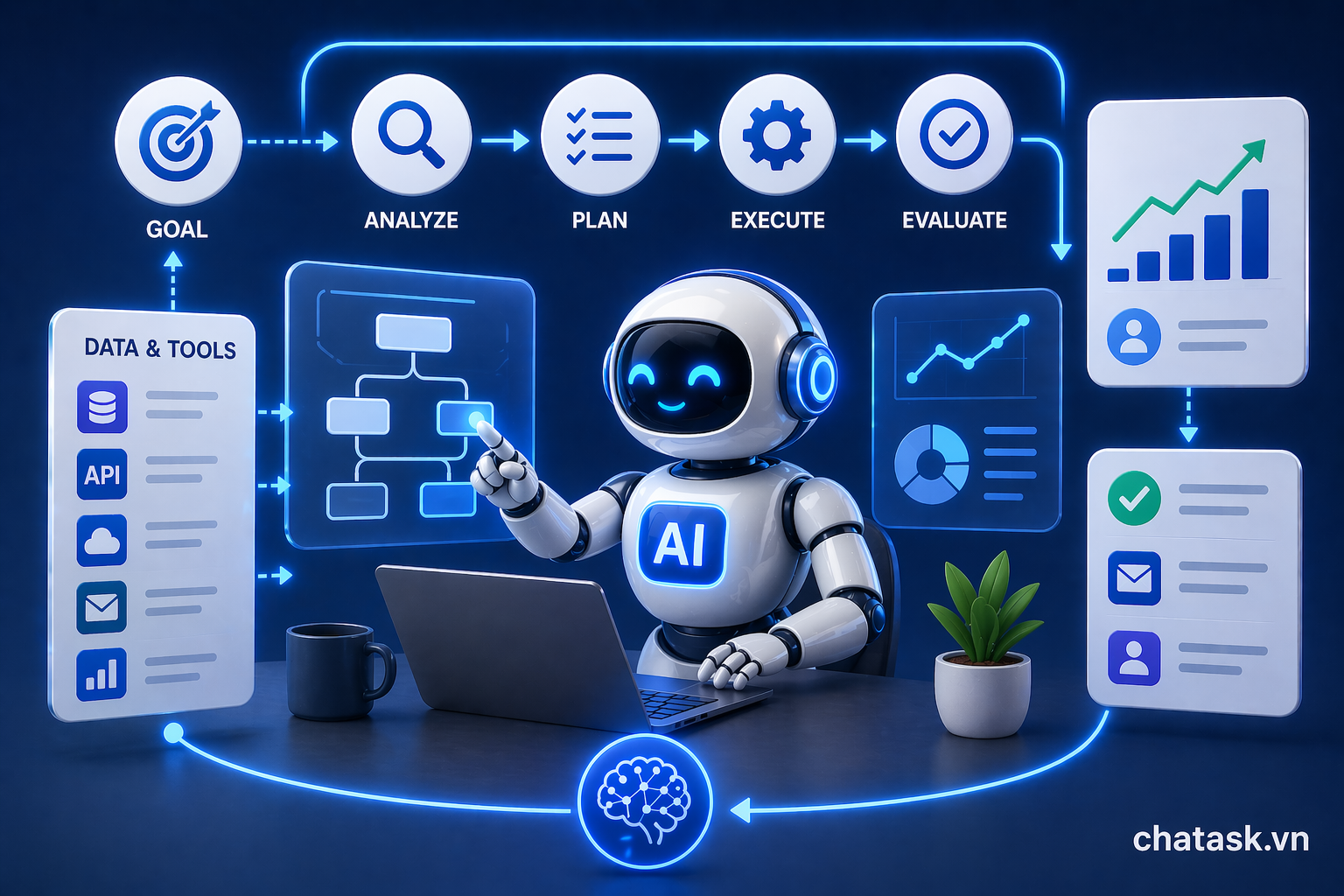
Comparing AI Assistant and AI Agent
According to McKinsey Research, AI adoption has become widespread, with 78% of organizations reporting that they use AI in at least one business function.
With the global expansion of AI, there has never been a greater variety of products, tools, and technologies available to enterprises. While many of these tools share similar capabilities based on Generative AI, Conversational AI with NLU, or a combination of both, they are often described differently depending on the provider.
This distinction becomes especially clear when comparing AI Agents and AI Assistants. Although both rely on similar underlying technologies, their functions and scope set them apart.
The key difference lies in proactivity versus reactivity.
AI Assistants are user-focused and respond to specific prompts. AI Agents are goal-oriented, using initial interactions to define objectives, break them down into tasks, and dynamically work toward the best possible outcome.
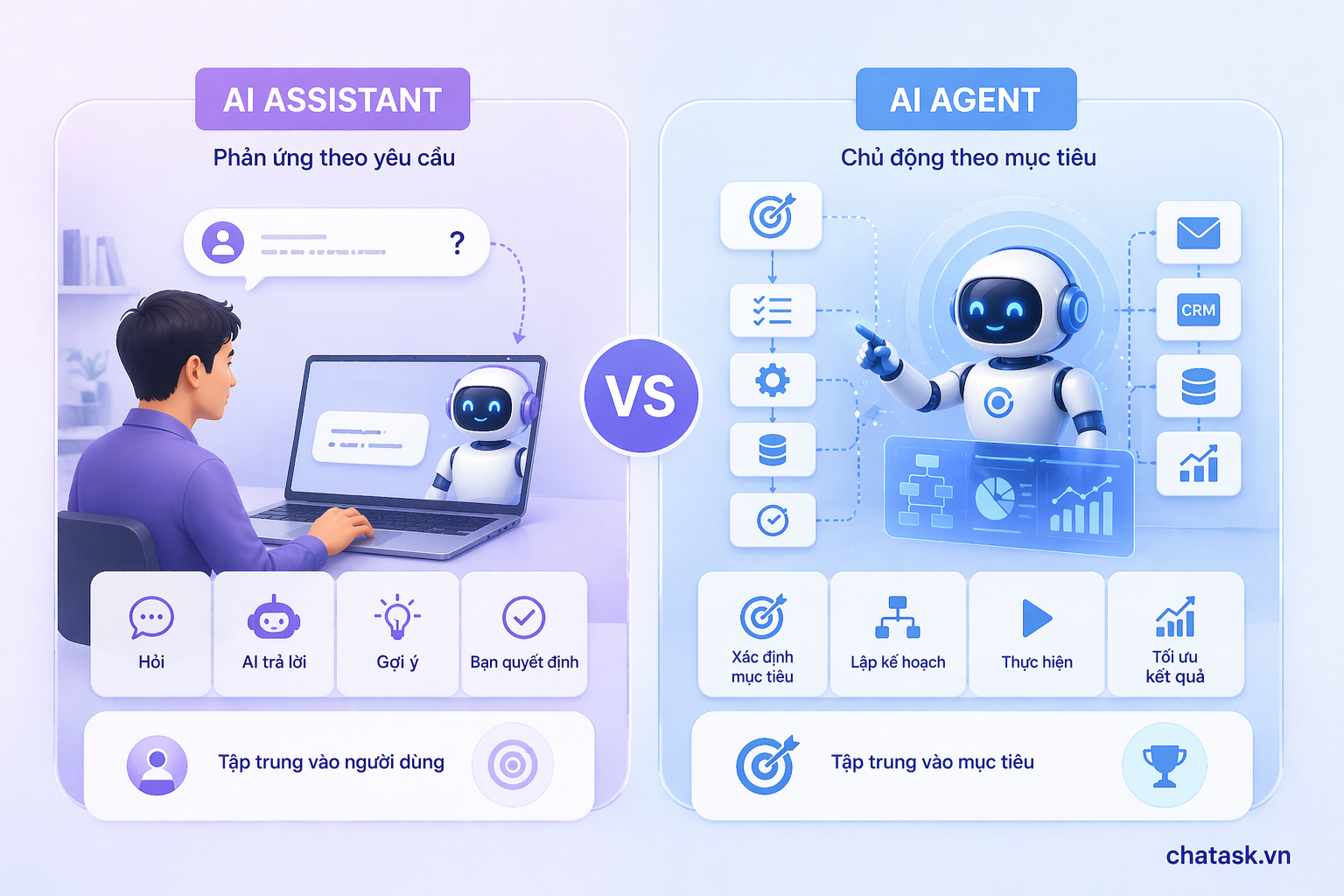
The differences can be summarized in the table below:
|
Criteria |
AI Assistant |
AI Agent |
|
Operating mode |
Reactive to requests |
Proactive toward goals |
|
Level of autonomy |
Low |
High |
|
Scope of handling |
Single tasks |
Multi-step workflows |
|
Decision-making |
Based on user input |
Self-evaluated and selected |
|
Learning capability |
Limited |
Continuously improving |
|
Applications |
Chatbots, personal assistants |
Workflow automation, operations |
From this comparison, it is clear that AI Assistants are better suited for quick, well-defined interactions, while AI Agents excel at complex problems requiring flexibility and deep automation.
Real-world applications in business
In enterprise environments, both AI Assistants and AI Agents play important roles, but at different levels. AI Assistants are commonly used in user-facing scenarios, such as customer service chatbots, information retrieval systems, or content generation tools.
On the other hand, AI Agents are more suitable for backend processes that involve multi-step execution and system integration. For example, in customer service, an AI Agent can automatically detect an issue with an order, communicate with logistics systems, update the status, and notify the customer without human involvement.
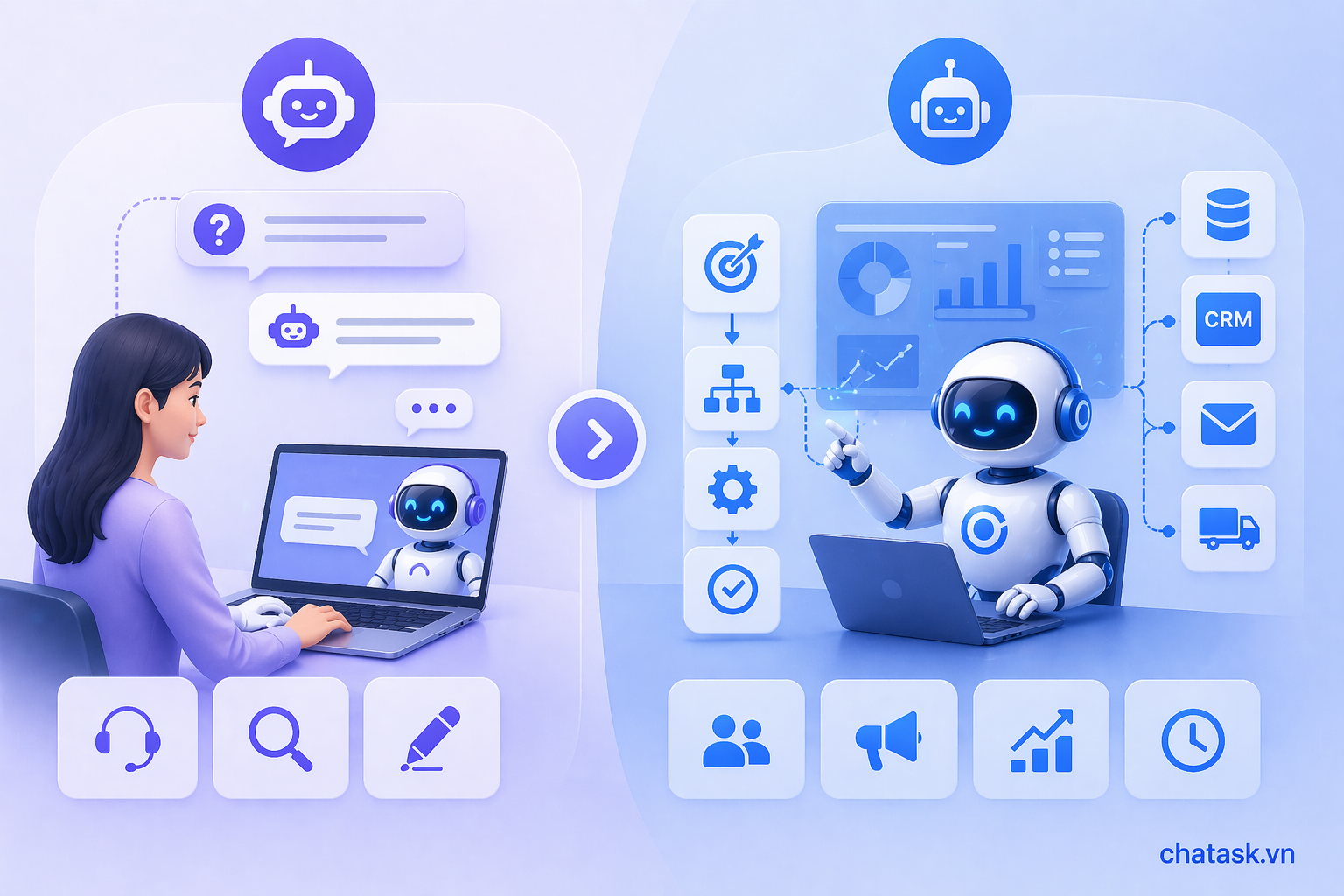
In marketing, AI Agents can track user behavior, automatically segment customers, launch campaigns, and optimize performance in real time. In internal operations, they can replace repetitive manual tasks, helping businesses save both time and resources.
Trend: Combining AI Assistant and AI Agent
Rather than choosing one over the other, the current trend is to combine both AI Assistants and AI Agents to leverage the strengths of each. AI Assistants handle communication and interaction with users, while AI Agents take care of logic, execution, and automation behind the scenes.
This approach allows businesses to maintain a natural user experience while achieving a high level of automation. It is also the direction that many modern AI platforms are moving toward.
Getting Started with AI Agents using Chatask
As AI continues to play a critical role in business, choosing the right platform for implementation becomes essential. Chatask is a notable solution that goes beyond offering AI Assistants by enabling businesses to build and operate AI Agents tailored to specific goals.
With Chatask, organizations can flexibly deploy different AI roles for marketing, customer service, or internal operations. The platform allows users to design workflows, retain contextual memory, and integrate with existing tools, enabling AI not only to respond but to truly “take action.”
The most significant shift lies in moving from a “question–answer” model to a “task assignment–execution” model. This transformation represents a major step forward in unlocking the full potential of AI in real-world business scenarios.
AI Assistants and AI Agents represent two different approaches to applying artificial intelligence. While AI Assistants help people work faster, AI Agents reduce workload by automating entire processes.
Understanding this distinction not only helps businesses choose the right tools but also shapes long-term AI strategies. As AI continues to evolve, competitive advantage will no longer depend on whether a company uses AI, but on how effectively it builds and operates its AI Agent systems.