Every school year, teachers create and receive a large volume of materials: lesson plans, teaching plans, tests, answer keys, exercises, reference materials, forms, professional guidelines, and resources from training sessions.
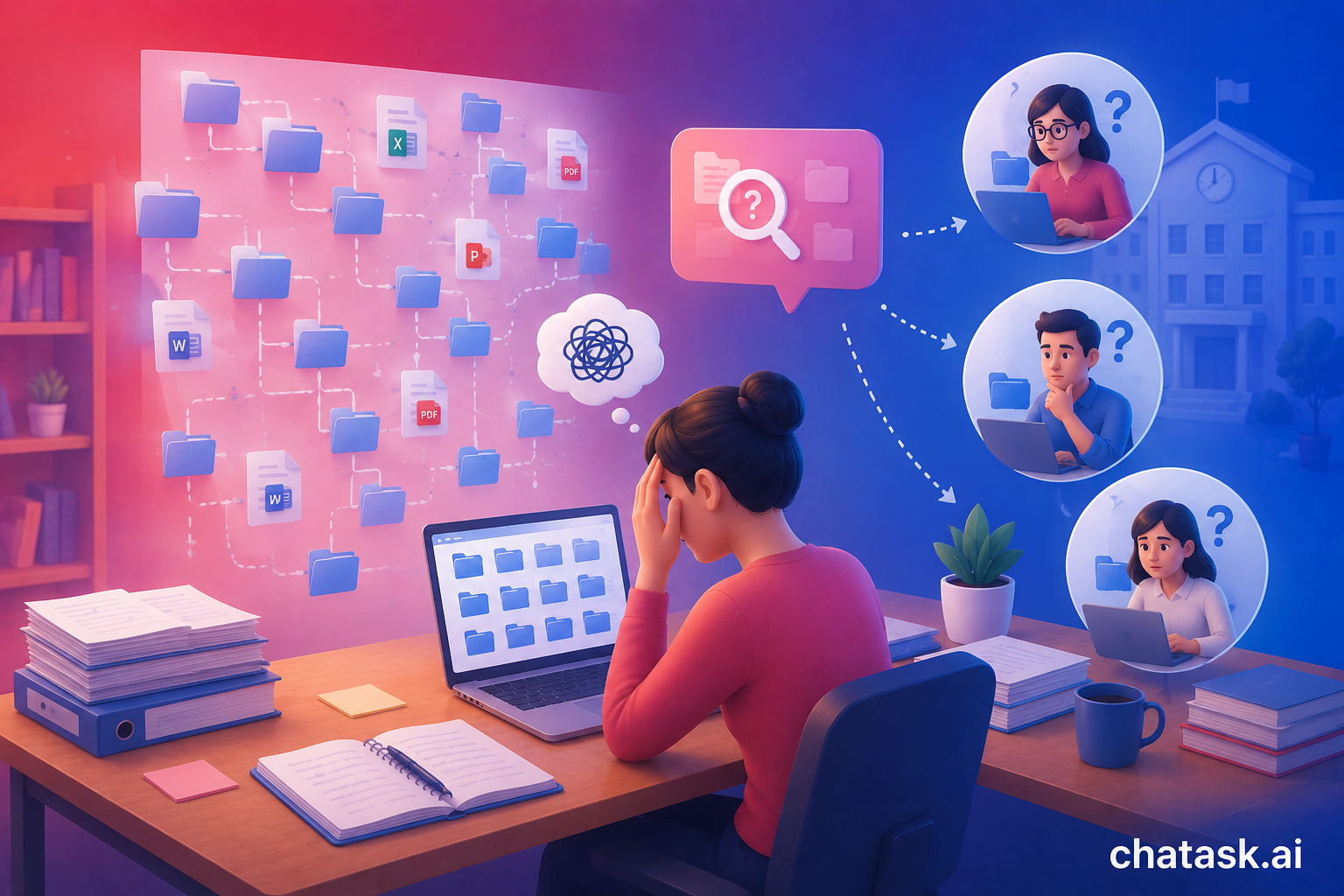
Some documents are stored on personal computers, some are shared through chat groups, some are saved on Drive, while older files remain buried in folders from previous school years. When teachers need to use them again, the problem is sometimes not that the materials do not exist, but that they no longer remember where they are stored.
A teacher may spend only a few minutes looking for a single file. But when this happens repeatedly throughout the day and across many teachers in a school, the amount of time spent searching for and managing documents becomes significant.
What Is Learning Material Management for Teachers?
Learning material management for teachers is the process of centralizing, organizing, searching, sharing, and reusing teaching resources such as lesson plans, tests, exercises, reference materials, forms, and professional guidelines.
When combined with AI, document management can go one step further. Instead of simply storing files in folders, teachers can search for information based on what they need to know, ask questions based on the documents, and reuse the knowledge that the school has accumulated over time.
Why Is Storing Documents in Folders Alone Not Enough?
Creating folders by subject, grade level, or school year is a familiar way for teachers to organize materials. This approach works relatively well when there are only a few files, but as the number of documents grows over time, folder structures become increasingly complex, and finding information depends heavily on whether users remember where they saved a particular file.
A test, for example, may simultaneously belong to English, Grade 8, Semester II, and the 2025–2026 school year. If teachers cannot remember the exact filename or folder location, they may still need to open multiple folders to find it.
The challenge becomes even more apparent when materials need to be shared across a subject department or the entire school. If every teacher has a different way of organizing files, finding and reusing materials depends heavily on the person who originally created or stored them.
How Can AI Help Teachers Manage Learning Materials?
AI can help teachers manage learning materials by searching content, retrieving information from files, bringing together relevant documents, and answering questions based on the school's learning resource repository.
Instead of starting with the question, "Where was that file saved?", teachers can start with what they actually need to know.
With ChaTask Wiki, schools can centralize lesson plans, tests, professional resources, forms, regulations, and training materials in a shared knowledge base. Documents can be organized by subject, grade level, department, or purpose so that teachers can easily find and reuse them whenever needed.
From a collection of individual files, schools can gradually build a digital learning resource repository that continues to grow and support teaching across multiple school years.
How Can Teachers Find Documents Without Remembering the Filename?
With an AI-powered document repository, teachers can search based on the content and meaning of a document rather than relying solely on filenames or folder locations.
In practice, teachers often do not remember exactly how a document was named. What they do remember is the information they need.
For example, teachers can ask questions such as:
-
"Find the guidelines for organizing STEM activities for Grade 6 students."
-
"What does this document say about student assessment regulations?"
-
"Find materials related to the end-of-semester English test for Grade 8."
AI can search the knowledge base and provide information based on the documents that the school itself has stored.
This changes the way teachers access materials-from asking "Where is the document?" to "What information do I need?"

Do Teachers Need to Read a Long Document from the Beginning?
Finding the right file sometimes solves only half of the problem. A regulation, training document, or professional guideline may be dozens or even hundreds of pages long. Teachers may know that the information they need is somewhere inside the document, but they still have to locate the right chapter, section, or page.
When documents are added to an AI-powered knowledge base, teachers can ask questions directly about the information they need. AI can help retrieve the relevant content, allowing users to access the information more quickly and return to the source document for verification when necessary.
Instead of rereading an entire lengthy document just to find one small piece of information, teachers can start with the question they actually want answered.
How Is a Digital Learning Resource Repository Different from Regular File Storage?
A digital learning resource repository does more than solve the question of where files are stored. It also helps teachers find, understand, and reuse the information contained within those files.
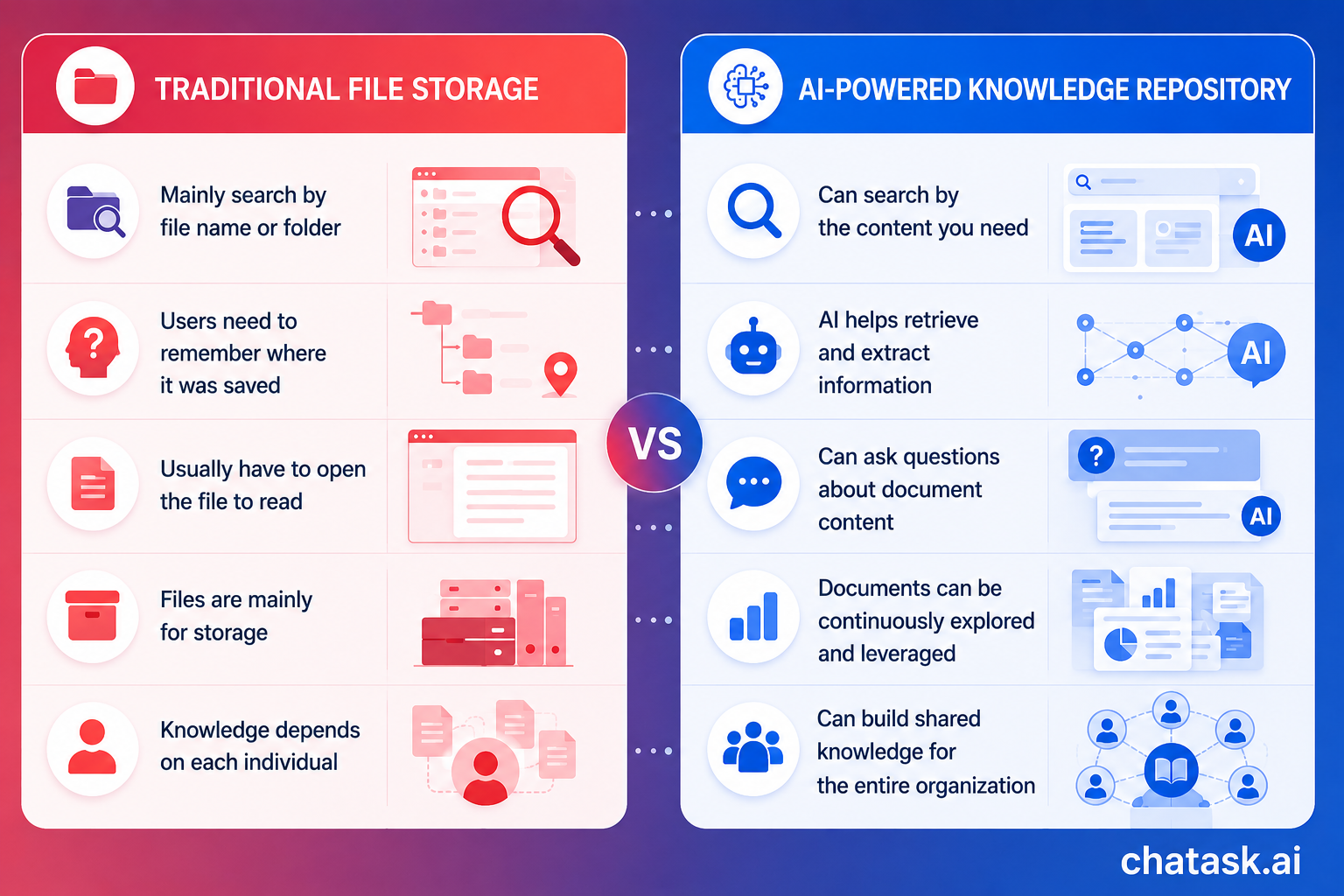
The difference, therefore, is not simply the storage technology itself. More importantly, documents can continue to create value after they have been added to the system.
From Personal Documents to a Shared School Knowledge Base
A teacher may develop an excellent collection of lesson plans. A subject department may accumulate many tests over the years. A school may also have hundreds of documents from training programs and professional development activities.
If these materials remain only on individual teachers' computers, their value is often limited to those individuals. When they are added to a shared knowledge base, they can continue to support other teachers.
New teachers also do not necessarily have to start by asking colleagues where every form, guideline, or document is located. The knowledge that the school has already accumulated can become a starting point that helps them quickly become familiar with their work.
Over time, the greatest value no longer lies in the number of files a school has, but in its ability to turn those files into knowledge that can continue to be used.
How Does ChaTask Wiki Help Schools Build a Knowledge Base?
ChaTask Wiki is designed to help businesses and organizations centralize documents, build knowledge bases, and connect those data repositories with AI. In a school environment, Wiki can become a space where teachers, subject departments, and other relevant teams can store and access institutional knowledge.
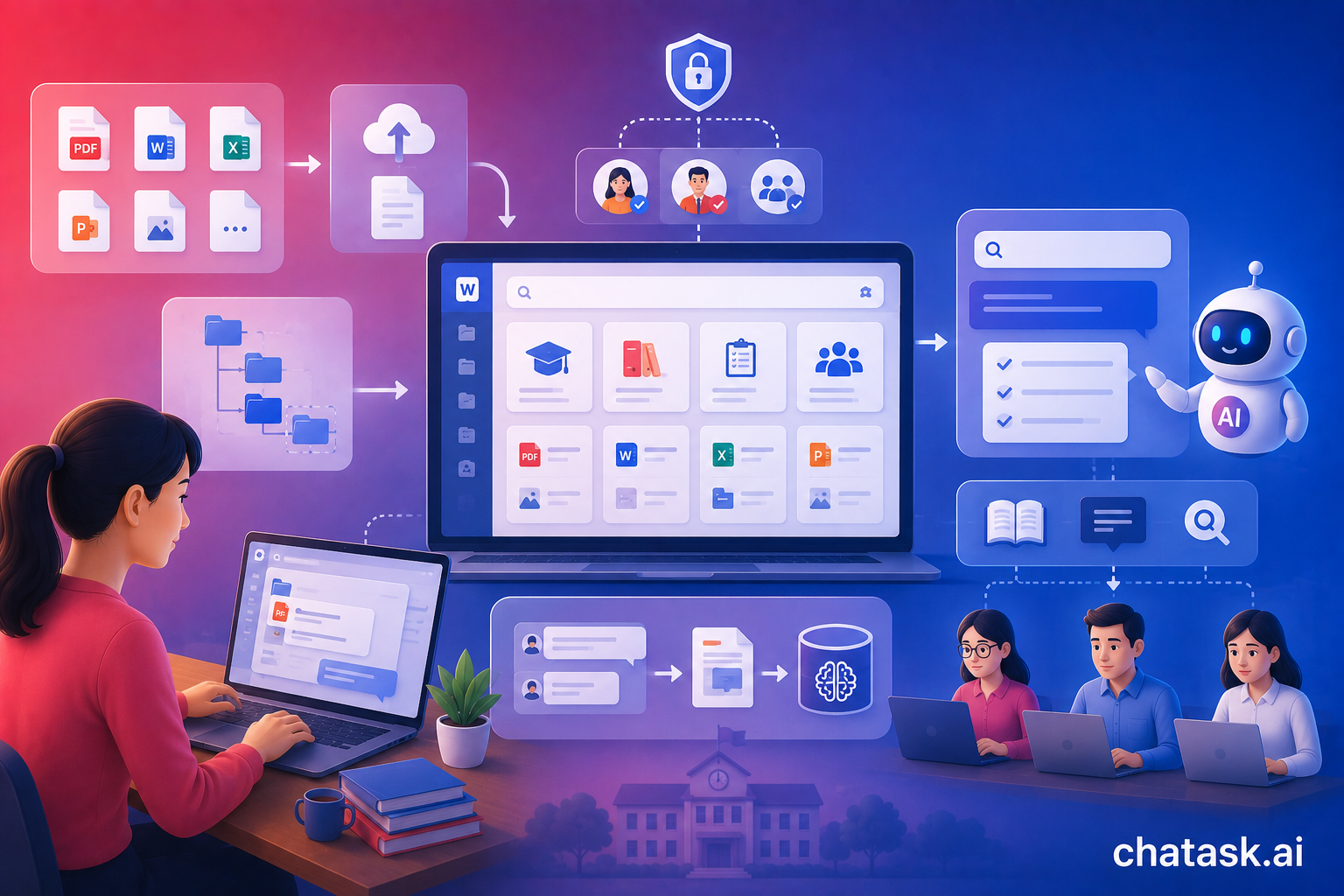
Schools can add different types of documents to Wiki, manage access permissions according to their needs, and organize materials into appropriate knowledge categories. When information is needed, teachers can search for documents or use AI to ask questions based on the school's own knowledge sources.
More importantly, the knowledge base is not separated from everyday work. Documents created and shared during conversations and daily work in ChaTask can be added to the Knowledge Base, turning them into information that can continue to be accessed and used in the future.
A document created for today's work, therefore, does not necessarily have to serve only a single purpose.
When Today's Documents Continue to Create Value in Future School Years
Every school year, schools create more lesson plans, tests, training materials, professional guidelines, and knowledge accumulated through teaching experience. If these materials are simply stored and gradually forgotten, schools may have to spend time searching for or recreating resources they already had.
When documents are centralized in a knowledge base and connected with AI, the knowledge that has already been created can continue to be searched and used in future school years. An old lesson plan can become a reference for a new lesson, training materials can support newly hired teachers, and professional guidelines can be retrieved by AI whenever related questions arise.
With ChaTask Wiki, the goal is therefore not simply to help teachers manage more documents, but to help schools make better use of the knowledge they already have. When documents are no longer "closed and forgotten" after each use, the school's learning resource repository becomes increasingly valuable over time.