When it comes to facilities management, many people think first of an asset inventory: how many computers, projectors, air conditioners, laboratory devices, desks, chairs, and other equipment the school has.
But in day-to-day operations, the more difficult question is often not “What assets does the school have?” but “What condition are those assets in, and what needs to happen next?”
A projector may be working normally, waiting for repair, have been repaired several times, or need to be replaced. It is still the same asset, but at each stage, the school may need to make a different decision.
That is the real challenge of school facilities management.
Every Piece of Equipment Has a Lifecycle That Needs to Be Managed
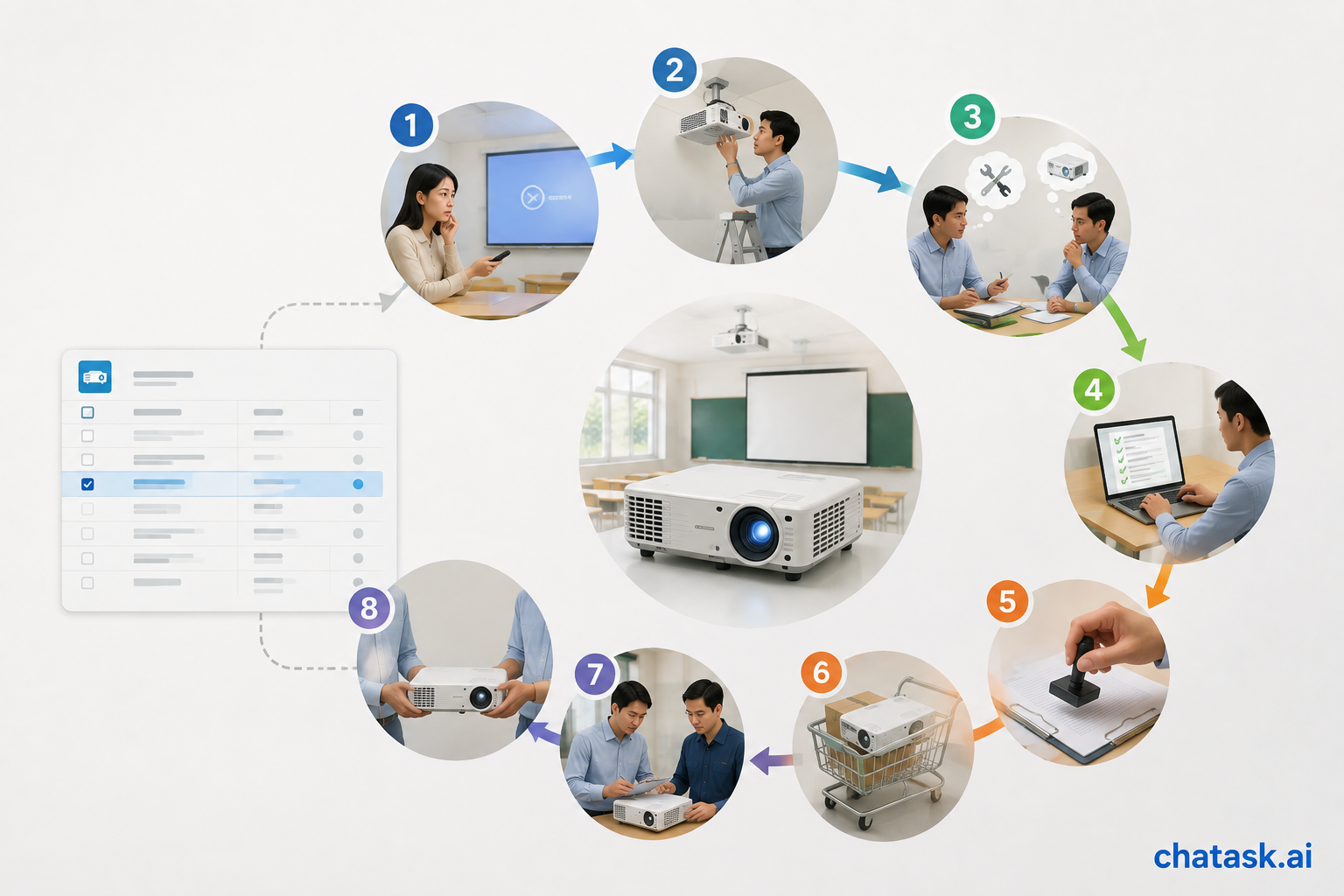
Take a classroom projector as an example. A teacher notices that the projector frequently loses its signal and reports the issue to the responsible department. After inspecting the device, the school needs to decide whether to repair it, continue using it, or propose replacing it.
If a replacement is necessary, another process begins: identifying the need, submitting a proposal, obtaining approval, collecting quotations, purchasing the equipment, conducting acceptance checks, and handing it over for use.
In other words, behind a single line such as “Projector – Classroom 6A” in an asset list is an entire lifecycle:
Use → Issue Identified → Inspection → Repair/Replacement Proposal → Approval → Procurement → Acceptance → Back in Use
If the school only manages its asset inventory without managing these activities, a significant amount of important information remains outside the system.
The Problem Is Not a Lack of Data, but Data That Is Disconnected from Work
Information about a single device may be scattered across many places. The asset list may be stored in Excel, a teacher may report a problem through chat, a quotation may arrive by email, a purchase proposal may be saved as a Word document, while the acceptance record is stored in another folder.
Each piece of information still exists. But when someone needs to decide “Should we continue repairing this device or replace it?”, the relevant information has to be gathered and pieced together again.
This is where asset management and work management need to be connected.
A school should not only know how much a device cost when it was purchased. It should also be able to see how many times the device has been repaired, what requests are currently associated with it, how much maintenance has cost, and what the most recent decision regarding the device was.
Procurement Should Start with Actual Needs, Not an Isolated Purchase Request
When operational data is retained, the procurement process can also work differently.
Instead of receiving only a request saying “We need to buy a new projector,” the approver can see the context behind it: how long the current device has been in use, how many times it has been repaired, what the latest issue was, and why replacement is being proposed.
The procurement decision can then be made with the right context.
This becomes particularly valuable when the school is planning its budget. Data from repair requests throughout the year can help identify which groups of equipment are deteriorating and which investments should be prioritized for the next academic year.

AI Can Help Schools See Problems That an Asset List Cannot Show
When the history of requests, tasks, and documents is connected, AI can use this data to support management.
Instead of asking only “How many projectors does the school have?”, managers can ask more valuable questions:
-
“Which equipment generated the most repair requests this academic year?”
-
“Which procurement proposals are still awaiting approval?”
-
“Which devices have been repaired multiple times and should be considered for replacement?”
-
“Which asset categories have the highest maintenance costs?”
AI does not decide whether the school should repair or replace a device. Instead, it can bring relevant historical information and data to the right place at the right time, helping managers make better-informed decisions.
From Handling Individual Issues to Managing the Entire Asset Lifecycle
With ChaTask, a facilities-related request can begin directly from an everyday conversation, then become a Task, be assigned to the responsible person, and move through inspection, approval, repair, or procurement.
Documents such as photos of the current condition, quotations, proposals, acceptance records, and handover information can also remain connected to the same process. As a result, when reviewing an asset, the school does not see only a single line of data but can understand what has happened to that asset throughout its period of use.
Over time, this data enables an important shift: the school moves from responding to facilities issues when they occur to managing the asset lifecycle based on data.
That is also the broader value of digital transformation in school facilities management: not simply helping schools know what they have, but helping them understand when to repair, when to replace, and where to invest next.