“Is this part finished yet?”, “Have you sent me the file?”, “Whose response is this task waiting for?”
These are perfectly normal questions at work. Yet they can sometimes make both the sender and the recipient uncomfortable. The person asking may worry that they sound pushy, while the recipient may feel that their work is being monitored too closely.
Because of this hesitation, many task owners choose to wait. They only check in when the deadline is approaching, even though they know their task still depends on data, approval, or work from someone else.
By the time one link in the chain is delayed, the entire task may have already come to a standstill. At that point, follow-up no longer helps prevent risk. It only helps identify the cause of a deadline that has already been affected.
Task Owners Do Not Do Everything, but They Are Still Ultimately Responsible
A task owner can rarely control every factor involved in a piece of work. To complete a proposal, they may need to wait for technical information, pricing details, and management approval. To release a feature, they may depend on design, development, testing, and confirmation from multiple people.
No matter how many parties are involved, the task owner is often the first person questioned when work falls behind schedule. Therefore, owning a task does not mean doing everything yourself. It means knowing where the work currently stands, what it is waiting for, and where action is needed to keep it moving forward.
This is why follow-up is an important part of being responsible for a task. Task owners do not send reminders because they want to control other people. They follow up because someone else’s output directly affects the deadline for which they are responsible.

The Dilemma of Being the Person Who Has to Follow Up
Task owners often have to think carefully before sending a reminder. Following up too early may make them seem impatient. Following up too often may make their colleagues feel bothered. But if they do not follow up, an important action item may be forgotten among dozens of other priorities.
The difficulty is not only about choosing the right time. Task owners must also remember who is responsible for each input, where the most recent discussion took place, and when each part must be completed. When a task has multiple dependencies, follow-up can consume a significant amount of time.
As a result, many reminders are reduced to short messages such as “Is it ready yet?” or “Could you check this for me?” The sender understands the context because they have followed the task from the beginning, but the recipient may need to search through previous conversations to understand what the request refers to.
At that point, follow-up creates communication pressure without necessarily leading to prompt action.
Follow-up Is Not About Pushing People - It Is About Keeping Work Moving
An effective follow-up does more than ask whether something has been completed. It should help the recipient understand what is being awaited, which task the expected result relates to, and why a response is needed at that particular time.
If a task is waiting for data from the Sales department, that dependency should be recorded as soon as it appears. If a piece of content requires management approval before Friday, the relevant person should see that milestone before the deadline passes. If a bug is blocking the testing stage, the entire team should know who is handling it and what its current status is.
When this information is clear, follow-up is no longer personal. It becomes a signal that the workflow contains an issue that must be addressed before the next steps can continue.

Why Are Private Messages Not the Best Way to Follow Up?
Private messages are usually quick, but the information can easily become disconnected from the task. Managers and other relevant team members cannot see what the work is waiting for. If the task needs to be handed over, the new person also has no visibility into previous follow-ups.
A reminder posted in a group chat, meanwhile, may be buried as the conversation continues. Without a clearly assigned owner and status, everyone may see the issue but assume that someone else will handle it.
The greatest risk of manual follow-up is that it depends on the task owner’s memory. If that person becomes busy, takes time off, or has to shift their attention to another priority, the pending items they were tracking may also be forgotten.
When ChaTask Speaks on Behalf of the Task Owner
Behind the question “Is this part finished yet?” there may be many things the task owner actually wants to say:
I do not want to pressure you, but this task is waiting for your input. I do not want to keep messaging you, but our shared deadline is approaching. I also do not want the entire team to discover the bottleneck only after the work has already been delayed.
ChaTask helps turn these difficult-to-express concerns into signals based on actual work data. Once an issue or dependency has been recorded, the system can track its status and remind the right person. The reminder appears because the work still contains an unresolved item, not because the task owner wants to put pressure on an individual.
As a result, task owners no longer have to constantly consider when to send a message or how to phrase it without making the recipient uncomfortable. They remain responsible for the final outcome without having to become the person who is always asking everyone for progress updates.
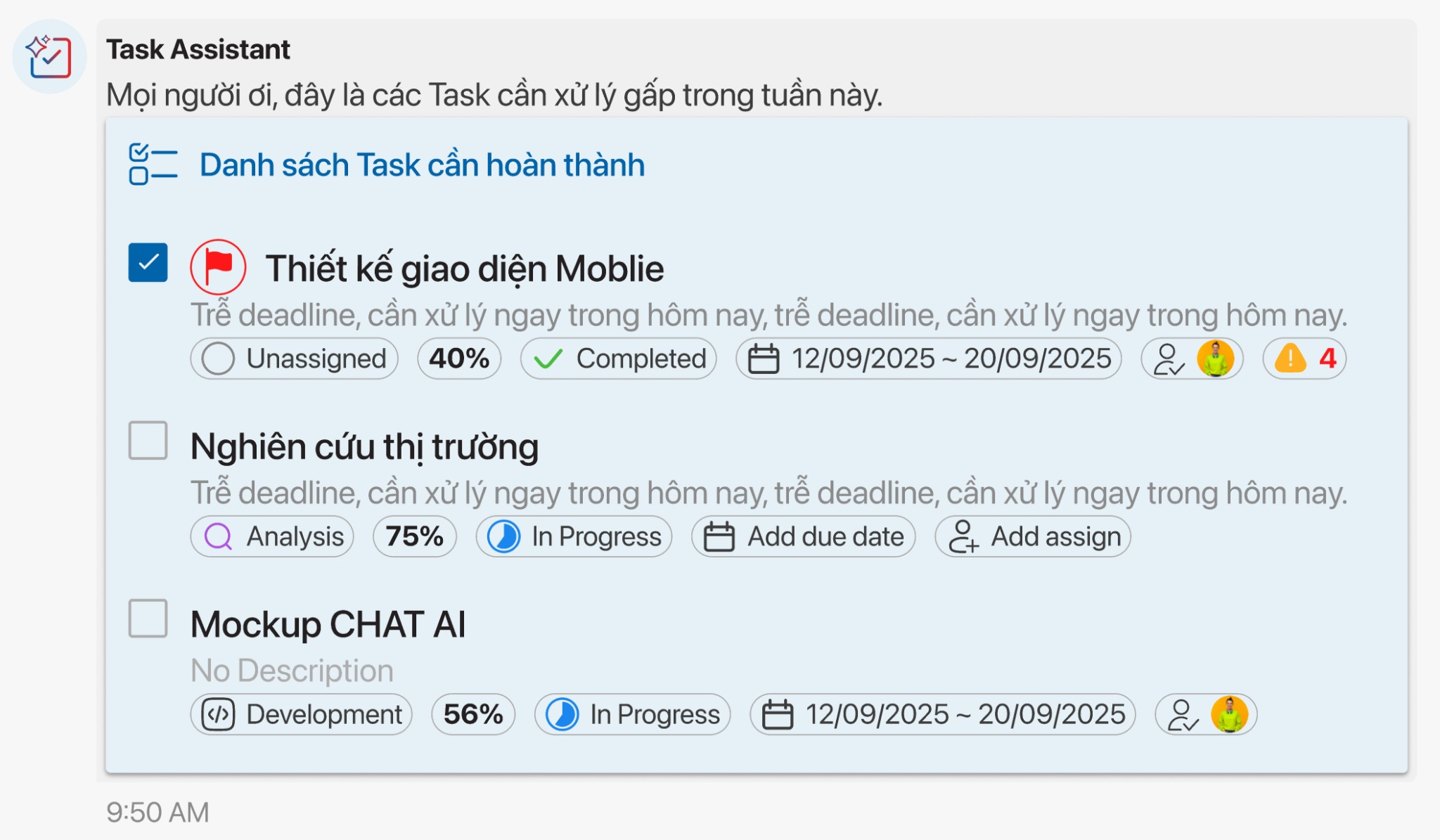
Label Warning Records What the Task Is Waiting For
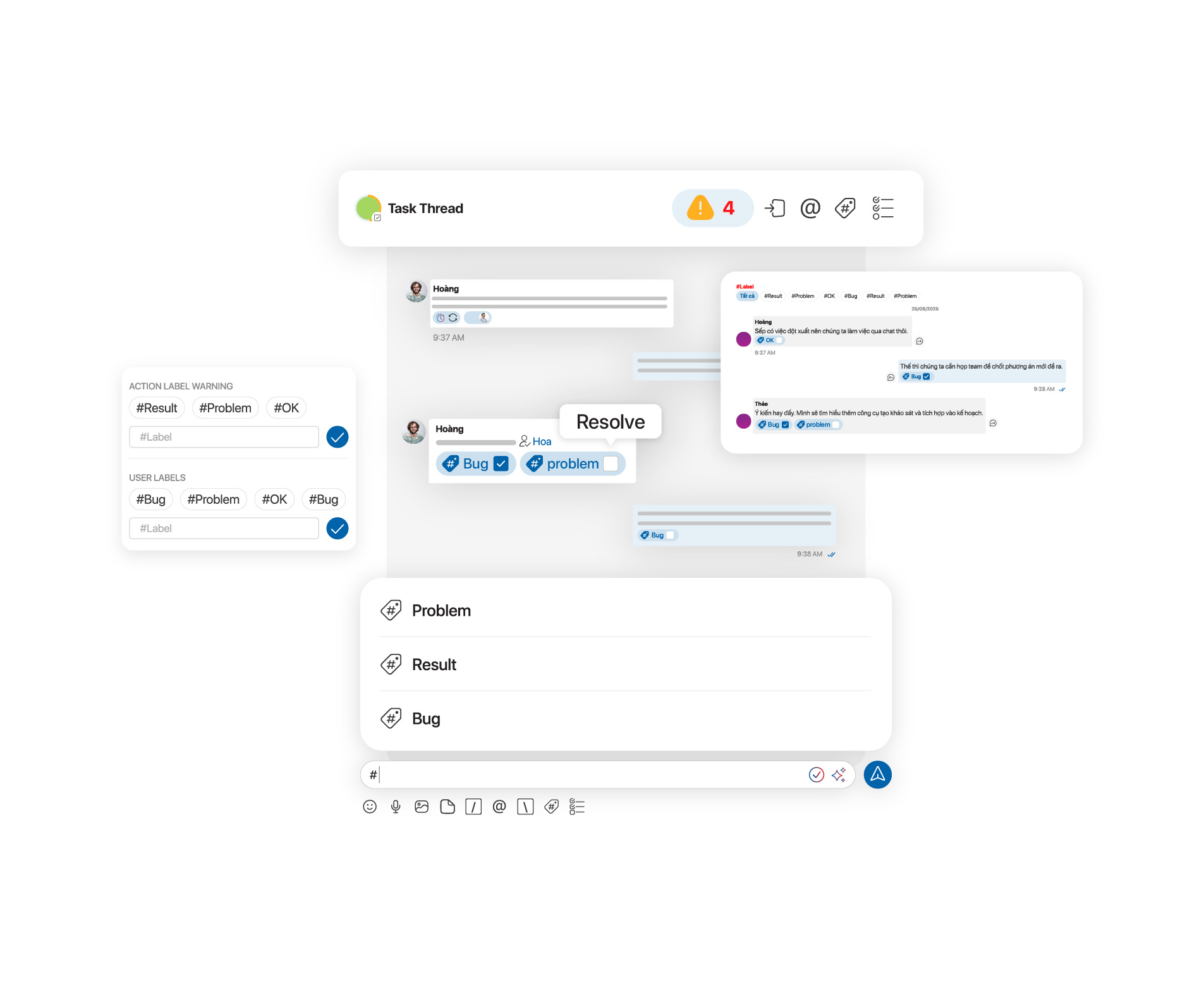
When a dependency appears in a Task Thread, the task owner or another relevant member can attach a Label Warning directly to the message and assign someone to handle it. Information that could easily be buried in the conversation is then transformed into a trackable issue.
For example, while working on a landing page, the content writer may report that they are waiting for the feature list from the development team. Instead of trying to remember to ask again several days later, the task owner can immediately flag that message. The team can then see what the task is waiting for and who needs to provide the information.
The purpose of Label Warning in this situation is not to add another complicated layer of management. It simply turns the task owner’s concern into a clear, accountable signal located exactly where the issue first appeared.
Task Follow-up Agent Maintains the Follow-up Process
Once an item has been recorded for follow-up, Task Follow-up Agent helps monitor open Warnings and sends reminders directly in the Task Thread. The task owner does not have to create a separate list and contact each person one by one.
The Agent does not send generic reminders. Each follow-up is connected to a specific issue and the context of the task, helping the recipient understand exactly what requires a response. The follow-up cycle only ends after the work has been addressed and the result has been confirmed.
This combination creates a reasonable boundary between AI and people: AI supports the monitoring and reminding of items that are easy to forget, while people continue to carry out the work, review the results, and make the final decisions.
Early Follow-up Gives the Team Time to Respond
A task that has not yet passed its deadline is not necessarily on track. If it is still waiting for an important input and no one has responded, the risk already exists even if several days remain before the deadline.
When a dependency is recorded and tracked early, the team has more options. A manager can adjust priorities, assign additional support, or find an alternative solution. The task owner can also update the plan before the delay affects subsequent steps.
By contrast, if follow-up only happens after the deadline, most of the contingency time has already been lost. The reminder may then feel more like an attempt to assign blame than an effort to solve the problem together.
Systematic follow-up does not only reduce pressure on the task owner. The assigned person also receives a clearer request and understands what is being awaited and how it affects the team’s shared work.
Instead of receiving multiple disconnected messages from different people, they can track the issue directly in the Task Thread. Once it has been addressed, the status can be updated for all relevant parties to see, reducing the need to report the same progress through multiple channels.
The reminder therefore becomes part of work coordination rather than a personal exchange between the person asking and the person being asked.

From an Individual Memory Skill to a Teamwide Coordination Mechanism
When a team is small, one person may be able to remember most pending action items. However, as the number of tasks, team members, and dependencies increases, tracking work through memory or private messages becomes difficult to maintain consistently.
ChaTask brings follow-up directly into the workflow. Items requiring attention are recorded where they appear, responsible people are clearly identified, and AI helps maintain the follow-up rhythm. Task owners remain in control of their work while relying less on their own memory and manual reminders.
The value of this mechanism is not that it enables the team to send more reminders. Its value lies in helping the team know what to follow up on, when to do it, and within what context.
Good follow-up does not make colleagues feel pressured. It helps everyone identify what is blocking the work and address it together before the deadline is affected.
Sometimes, what a task owner needs most is simply a clear mechanism that can speak on their behalf:
“I am not trying to push you. I am only trying to keep our team’s work moving forward.”