"If we don't hold meetings, how will we know what everyone is working on?"
This is probably one of the most common questions businesses ask as their teams and projects begin to grow. It often starts with a weekly meeting, then expands into mid-week check-ins, end-of-week reviews, project meetings, and ad hoc discussions. Before long, calendars are filled with meetings, yet everyone still feels like they don't have enough information.
The reality is that most of these meetings are not held to make important decisions. Instead, they exist simply to update everyone on project status, check who is responsible for what, identify blockers, and review deadlines. When an organization spends dozens of hours each week just gathering information, the real problem isn't the number of meetings - it's the way information is managed.
Why Do Teams Hold More Meetings as They Grow?
In a small team, everyone naturally knows what others are working on. A quick conversation or a glance across the office is often enough to understand the project's progress.
However, as companies grow, projects multiply and information becomes scattered across emails, chat applications, spreadsheets, documents, and multiple business tools. Managers lose visibility into the overall picture, and meetings become the easiest way to piece everything together.
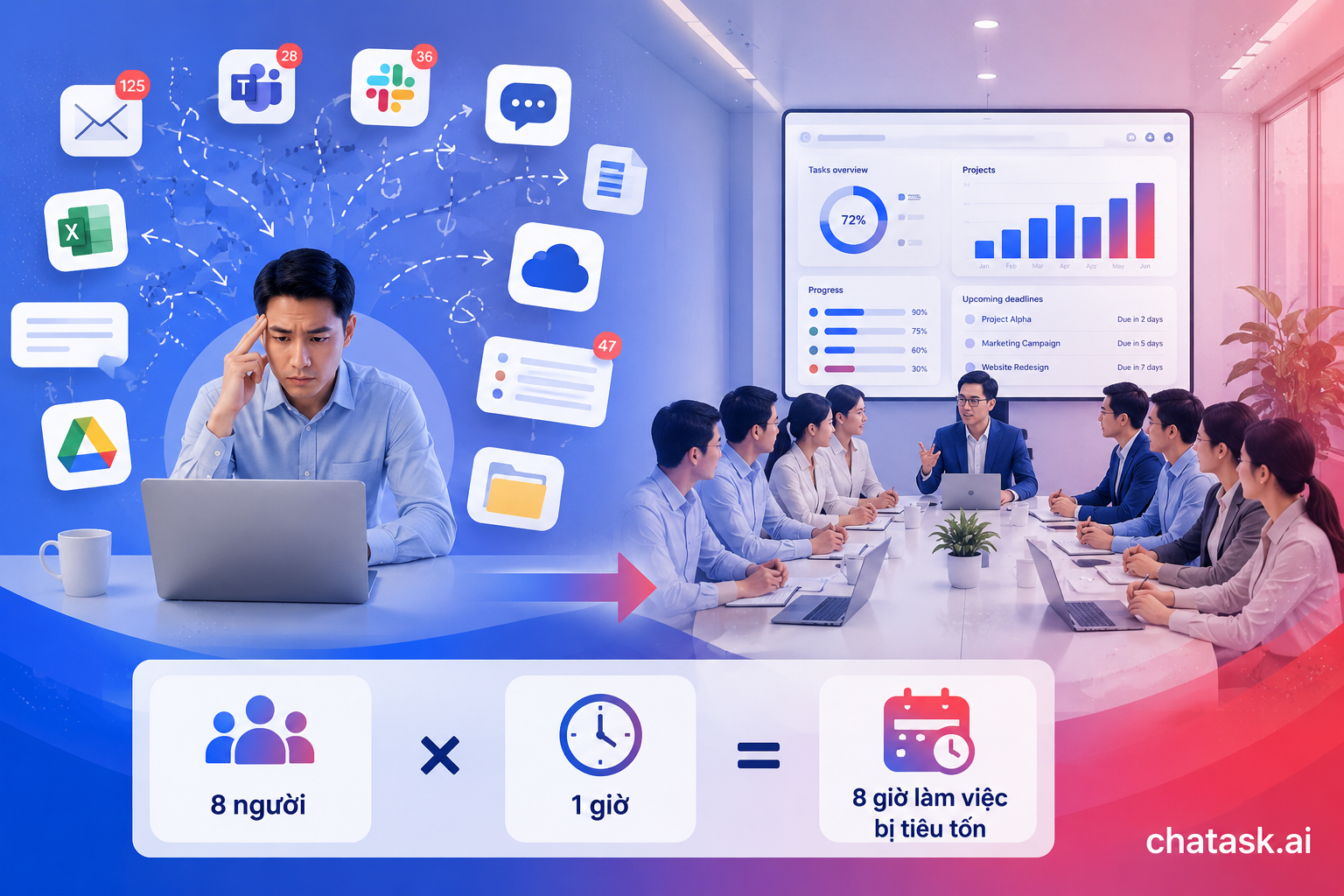
A one-hour meeting with eight participants actually costs the company eight working hours. If that meeting only answers questions like "Has this task been completed?", "Who's responsible?", or "Is the deadline still on track?", the cost is often far greater than the value it creates.
The Problem Isn't Meetings - It's Meetings Used for Status Updates
Not every meeting should be eliminated. Project kick-offs, brainstorming sessions, strategic planning, and complex problem-solving discussions remain essential because they create value by helping teams collaborate, evaluate options, and make decisions.
Status update meetings are a different story. When most of the meeting is spent going around the room asking each person what they've done, what's left, and what they're waiting for, the meeting becomes nothing more than a manual reporting process instead of a decision-making forum.
How Can You Reduce Meetings Without Losing Visibility?
Reducing meetings isn't simply about removing them from the calendar. The key is creating a workflow where everyone shares the same source of truth, eliminating the need to repeatedly ask questions that a system should already be able to answer.
Every task should have a clearly assigned owner, a deadline, and an up-to-date status. When work is continuously tracked, managers no longer need to message employees or schedule meetings just to find out where a task stands.
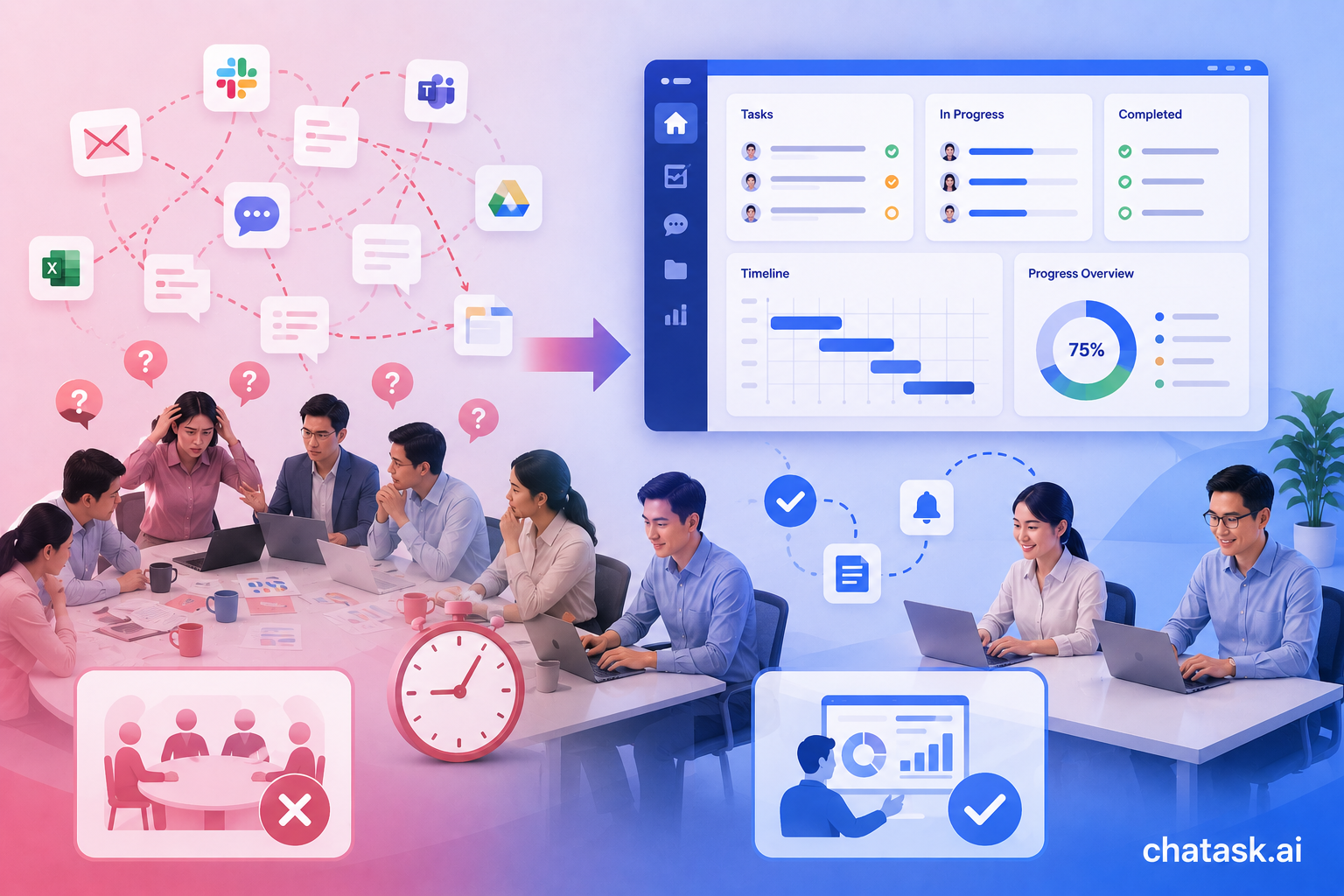
It's equally important to avoid spreading work across too many different platforms. When a task starts in an email, is discussed in a chat application, stored in Google Drive, and tracked in a spreadsheet, information quickly becomes fragmented. The more fragmented the data, the more meetings are required to reconnect the pieces.
Another highly effective practice is turning conversations directly into actionable tasks. Instead of sending a message like, "Please remember to handle this," and discussing it again in the next meeting, the task can be created immediately with its assignee, due date, and related documents. From that point onward, everyone can monitor its progress in one place.
How Can AI Replace Part of the Meeting Process?
One of the biggest reasons managers spend so much time in meetings is that they first have to gather information from multiple sources. Every morning they read emails, browse through dozens of conversations, review task lists, and manually piece together the current status of projects.
This is exactly where AI can provide significant value. Instead of requiring people to collect and summarize information manually, AI can analyze project data, generate progress summaries, identify overdue tasks, detect potential risks, and produce reports within seconds.
When everyone already has a clear picture of project status before entering a meeting, the discussion naturally shifts toward solving problems and making decisions instead of exchanging updates.
A Company Knowledge Base Can Eliminate Many Meetings Too
Another category of meetings often goes unnoticed: meetings held simply because someone can't find information.
New employees don't know where to find templates, experienced employees can't remember the latest version of a document, and managers repeatedly answer the same questions from different team members.
By building a centralized knowledge base that stores procedures, SOPs, documentation, project materials, and internal guidelines, employees can find answers on their own instead of scheduling meetings or waiting for someone else to respond.
The experience becomes even more powerful when combined with AI. Employees can ask questions in natural language without needing to remember file names or document locations, allowing them to access organizational knowledge within seconds.

How Chatask Helps Businesses Reduce Unnecessary Meetings
In many organizations, status update meetings happen not because people enjoy meetings, but because information is scattered across too many systems. Managers have to ask each employee individually, collect updates manually, and compile reports before they can make informed decisions.
Chatask addresses this challenge by bringing Chat, Tasks, AI Agents, and the company Knowledge Base into a single workspace. Conversations can instantly become tasks, documents stay connected to the right projects, and AI automatically summarizes progress, generates reports, identifies risks, and answers questions using the organization's knowledge base.
Instead of organizing a meeting simply to understand project status, managers can view real-time reports and spend their team's valuable time discussing solutions, resolving issues, and making strategic decisions.
Conclusion
An effective organization isn't one that completely eliminates meetings. It's one where every meeting has a clear purpose and creates real business value instead of being used to exchange information that systems should already provide.
When workflows are standardized, information is centralized, and AI continuously summarizes project progress, organizations can dramatically reduce unnecessary meetings while ensuring everyone stays aligned. Managers gain more time to focus on what truly matters - making better decisions that move the business forward - instead of spending their days searching for information.