A Head of Operations resigned after nearly five years with the company. At first glance, it did not seem like a major issue. The company quickly found a replacement. Project documents were still there. All files were stored in Google Drive. Work continued as usual.
But just a few weeks later, problems began to emerge.
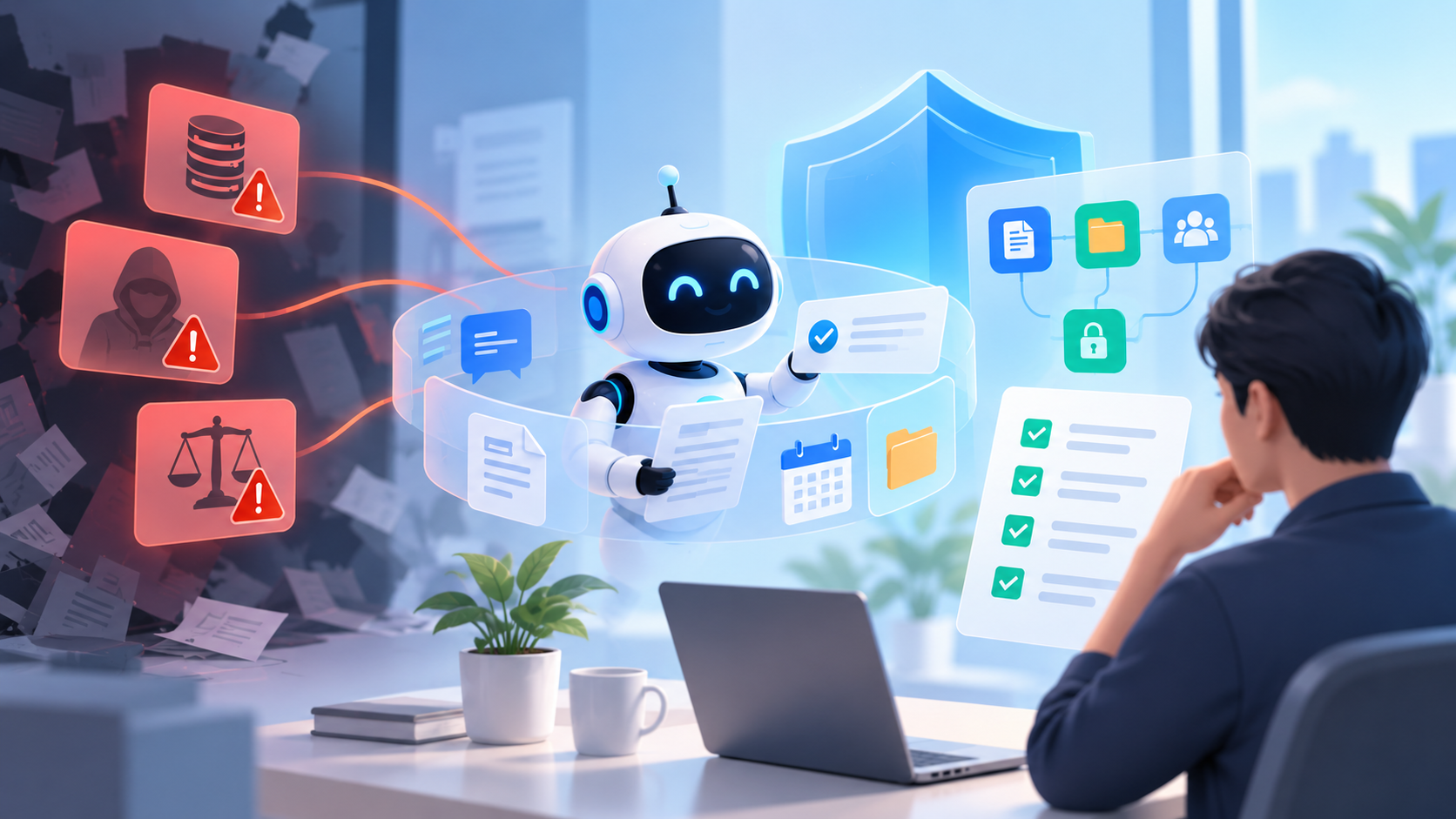
No one could clearly remember why certain customers were handled through a special process. Several important reports became difficult to reproduce because nobody knew where the data came from. Situations that the former manager used to resolve within minutes now required hours of discussion and investigation.
The team gradually realized that the company had not simply lost an employee.
It had lost a piece of its knowledge.
What Is a Business Second Brain?
A second brain is a centralized digital knowledge hub where an organization stores, organizes, and connects its documents, processes, expertise, and ideas in a single system. Beyond preserving organizational knowledge as employees change roles or leave the company, it also provides the foundation for AI to quickly retrieve information, automate workflows, and improve operational efficiency.
Key Benefits of a Business Second Brain
Preserve Organizational Knowledge: Capture and retain documents, expertise, and institutional knowledge, preventing valuable information from being lost when employees leave or transition to new roles.
Create a Single Source of Truth: Centralize information across departments, ensuring everyone has access to accurate and up-to-date knowledge while eliminating information silos.
Power AI-Driven Operations: Provide structured knowledge that enables AI Copilots, AI Agents, and virtual assistants to search information, answer questions, and automate business workflows more effectively.
Tacit Knowledge: The Most Vulnerable Invisible Asset
Knowledge does not exist only in documents. Much of a company's most valuable information lives in meetings, internal discussions, years of accumulated experience, or simply in things that "everyone on the team knows."
It might be the best way to handle a difficult customer. It might be the reason a process was designed in a particular way. It might even be a lesson that cost significant time and money to learn.
The problem is that most of this knowledge is never fully documented.
Until the people who hold it leave.
Many companies only realize the value of their institutional knowledge when they no longer have access to it.
Why Do Businesses Keep Paying for the Same Problems?
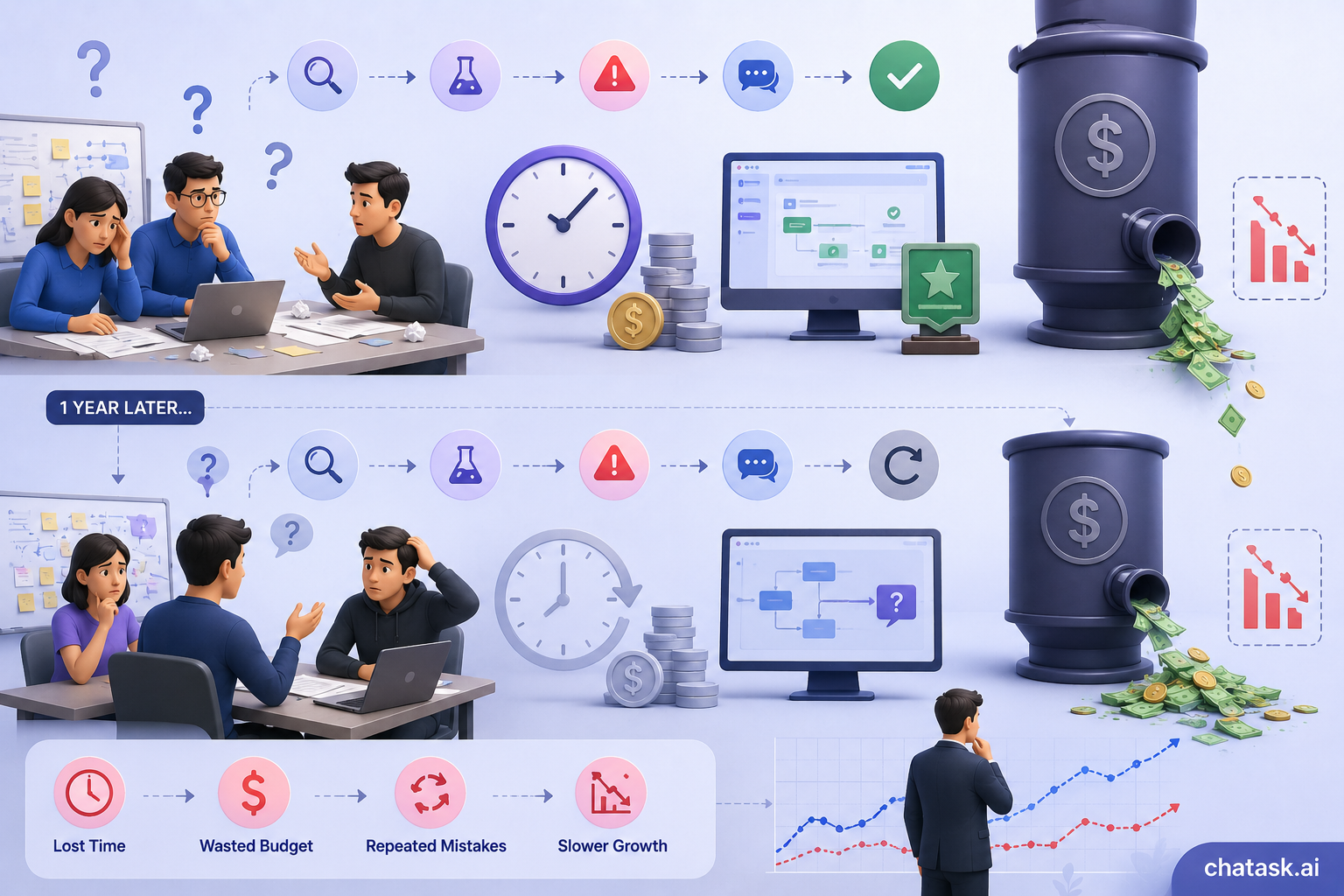
Imagine a project team spending months optimizing a customer onboarding process. They test different approaches, encounter countless issues, and eventually discover the most effective solution.
Then a year later, after some team changes or when another department launches a similar project, the entire process starts over again. The same questions come back. The same debates reappear. Even mistakes that were already solved begin to happen once more.
The issue is not the capability of new employees.
The issue is that the knowledge, experience, and lessons the organization spent time, effort, and money accumulating were never transformed into shared organizational assets.
As a result, every new hire, every team expansion, and every similar project forces the company to "pay tuition" once again for lessons it should already know.
This is one of the most expensive yet least visible costs in business operations. It does not appear on financial reports, but it quietly slows down organizational growth year after year.
You Cannot Build a Business on the Memory of a Few People
In the early stages, most businesses operate in a familiar way.
When there is a customer issue, everyone asks Person A. When a technical problem appears, they turn to Person B. When they need to understand why a decision was made years ago, they message someone who has been involved since the beginning.
This approach works reasonably well when teams are small. People sit close together, information flows naturally, and workloads remain manageable.
However, as the company grows, projects multiply, teams expand, and employees come and go. Relying on a handful of individuals to store organizational knowledge gradually becomes a bottleneck.
One employee taking leave can delay an entire process. One resignation can force a team to spend weeks searching for information. The same questions are asked repeatedly because the answers were never formally captured anywhere.
Eventually, businesses realize that knowledge should not live inside a few people's heads.
Knowledge should belong to the organization.
To make that possible, companies need a place where experience, processes, and operational history can be stored, connected, and shared. They need a "Second Brain" that ensures knowledge stays with the company even when people change.
Businesses Do Not Lack Documents. They Lack Access to Knowledge.
Interestingly, most organizations do not actually suffer from a lack of information.
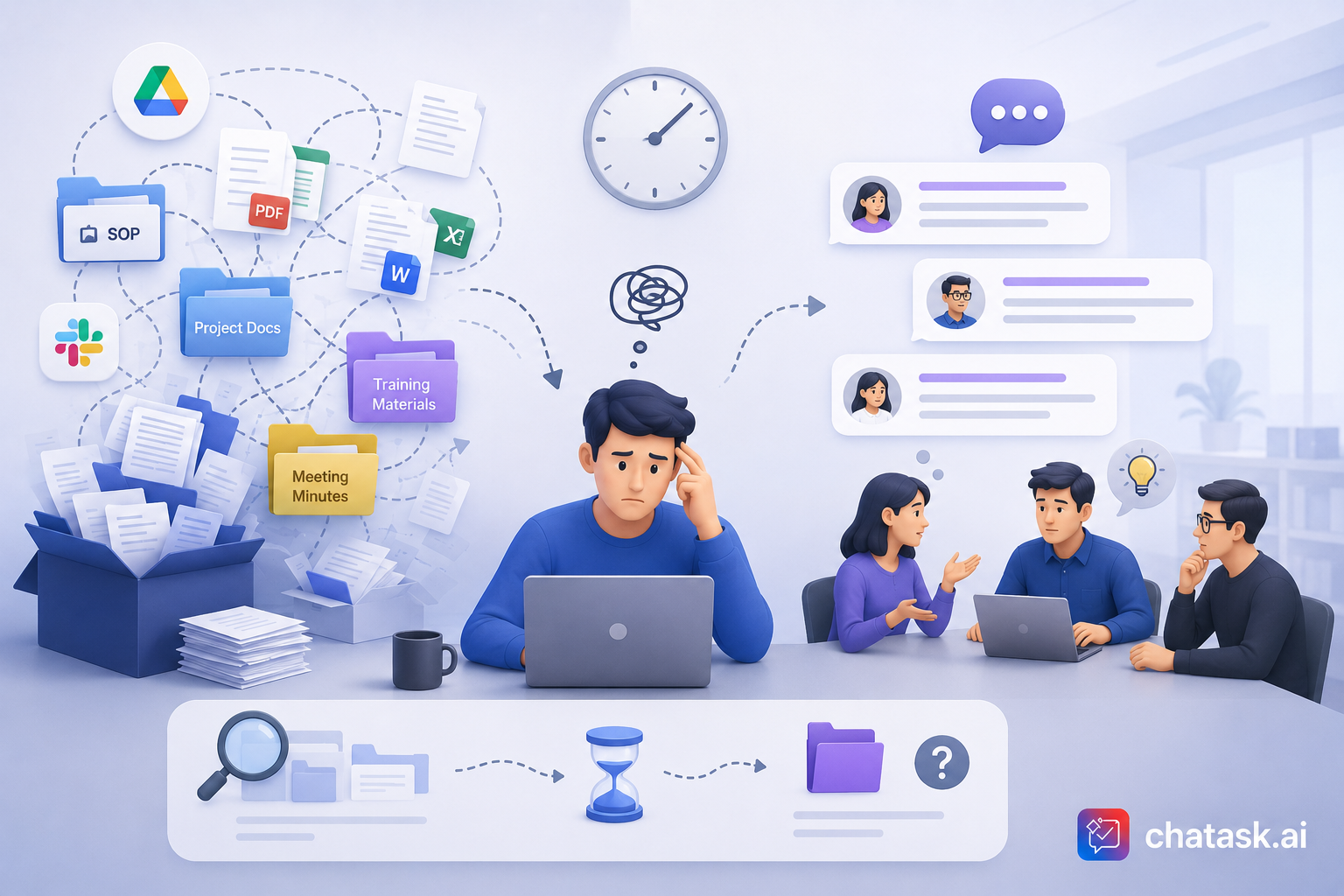
They have Google Drive folders filled with thousands of documents. They have SOPs, meeting notes, project documentation, training materials, and years of accumulated files.
Yet when employees need answers to specific questions, their first instinct is often not to search the documentation.
Instead, they open chat and ask a colleague:
-
"Do you remember this process?"
-
"Do you know where that file is stored?"
-
"How did the team handle this situation before?"
This reflects a common reality in modern organizations: the information still exists, but the knowledge is difficult to access.
When processes are stored in one folder, meeting notes in another system, conversations in chat, and practical experience only in the minds of a few employees, finding the answer can sometimes take longer than solving the problem itself.
That is why many organizations own extensive documentation but still struggle to share, transfer, and retain knowledge effectively.
From a Document Repository to a Second Brain
Most companies do not lack documents. They already have Google Drive folders, SOPs, meeting records, project documentation, and thousands of files accumulated over the years. The challenge is that this information is often scattered across different systems, making it difficult to find the right knowledge at the right time.
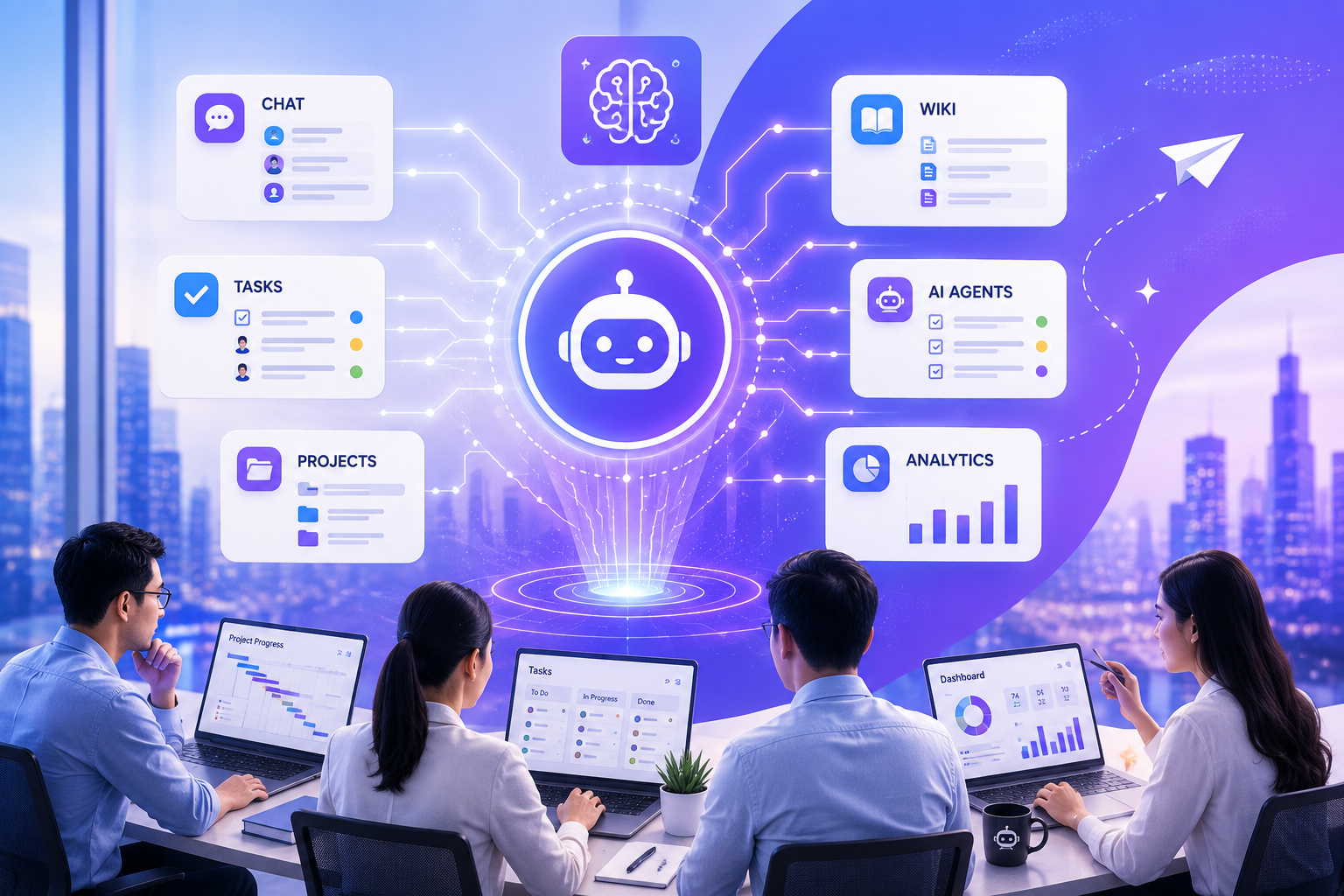
ChaTask Wiki was built to solve this problem. Instead of acting as a standalone document library, Wiki connects directly with Workspaces, Projects, and Tasks, allowing teams to search, share, and utilize knowledge seamlessly within their daily workflow. This is exactly the role of a Second Brain: transforming organizational experience, processes, and knowledge into shared assets that are always available when needed.
More importantly, this foundation enables AI Agents to become far more effective. When connected to Wiki, AI can go beyond general knowledge and directly reference SOPs, internal documentation, and operational processes. As a result, AI does not simply answer questions—it supports work based on the knowledge the organization has accumulated over time.
Don't Wait Until Someone Leaves to Think About Knowledge Management
Employees may leave. Projects may end. Teams may change.
But organizational knowledge should not disappear with them.
The longer companies delay knowledge management, the greater the risk of paying the price through lost time, unnecessary costs, and repeated mistakes. By the time an organization realizes what has been lost, much of that knowledge may already be impossible to recover.
That is why forward-thinking organizations are building a Second Brain today-before the valuable experience they have accumulated becomes tomorrow's knowledge gap.