Teamwork is always considered a core factor that helps businesses grow. However, in reality, the more we work in modern environments, the more teams tend to fall into a state of “working together but not truly collaborating.”
The problem is not a lack of tools or skills, but how work is organized.
When information is fragmented, when each person understands things differently, and when time is spent “reconstructing context” before starting work, effective teamwork becomes nearly impossible.
Below are 5 ways to help you organize teamwork better, based on how teams actually operate in modern environments.
1. Build teams with clear and complementary roles
An effective team is not one where everyone does everything, but one where each person takes on a specific role and complements others.
When roles are unclear, work easily overlaps or gets overlooked. On the contrary, when each person clearly understands their responsibilities, collaboration becomes smoother.
However, assigning roles alone is not enough. More importantly, all roles must operate within a shared context. If each person holds different pieces of information, collaboration will still be difficult.
2. Understanding context is more important than learning processes/tools
Many organizations focus on training tools and workflows. But in reality, what takes new employees the most time is the lack of context.
They don’t know:
- Why the project is being executed the way it is
- What decisions have already been made
- What issues have previously occurred
This information is often scattered across fragmented conversations and not stored systematically.
Without context, new employees have to ask again or make assumptions, which leads to wasted time and potential misunderstandings. To help employees work effectively, it is essential to help them quickly understand the “story behind the work,” not just the “how-to.”
3. Don’t just centralize data, centralize context
Many organizations invest in centralized data storage but still struggle with execution.
The reason is that data may be in one place, but it is not tied to a specific context.
A task without related discussions is hard to understand. A document detached from its discussion process is easy to misinterpret.
When information is disconnected, users have to manually piece everything together each time they work. This significantly reduces team efficiency.
Effective teamwork requires not only “enough information,” but the “right context.”
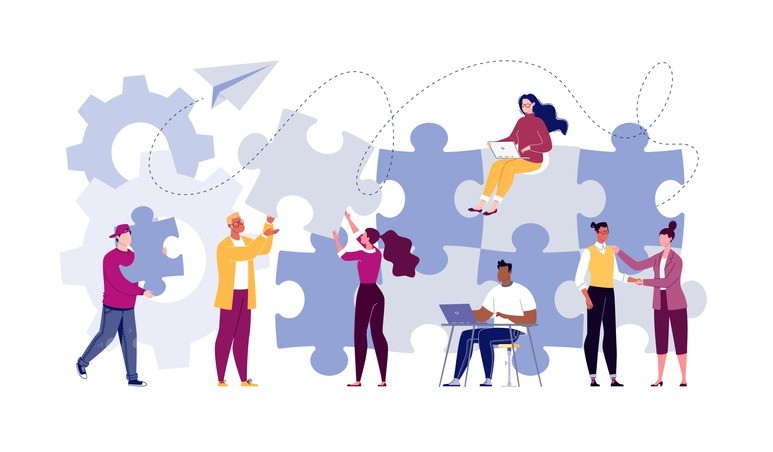
4. Design workflows that fit flexible work environments
Whether working in-office, remotely, or in a hybrid model, weaknesses in work organization will eventually surface. Even when sitting in the same space, teams can still face misalignment, unclear progress, or missed updates.
The issue is not a lack of communication, but a lack of a clear workflow structure.
An effective workflow should help the entire team see the big picture of the project while also allowing each individual to focus on their own tasks. This way, everyone not only knows what they are doing, but also understands how their work connects to the overall project.
5. Focus on real collaboration, not just communication
Many teams engage in constant communication: messaging, frequent meetings, continuous updates. But that does not necessarily mean effective collaboration.
True collaboration happens when everyone shares the same goal, works within the same context, and makes decisions based on the same information.
If each person has to search for information, ask again, or reinterpret the problem, then no matter how much communication happens, efficiency will still be limited.

Effective teamwork starts with how work is organized
Teamwork is not just about people - it is about systems.
When information, communication, and tasks are disconnected, teams must spend extra time “reconnecting” everything before they can work. In contrast, when everything exists within the same context, collaboration becomes much more natural.
This is also why many businesses are turning to platforms that connect the entire workflow into a unified space.
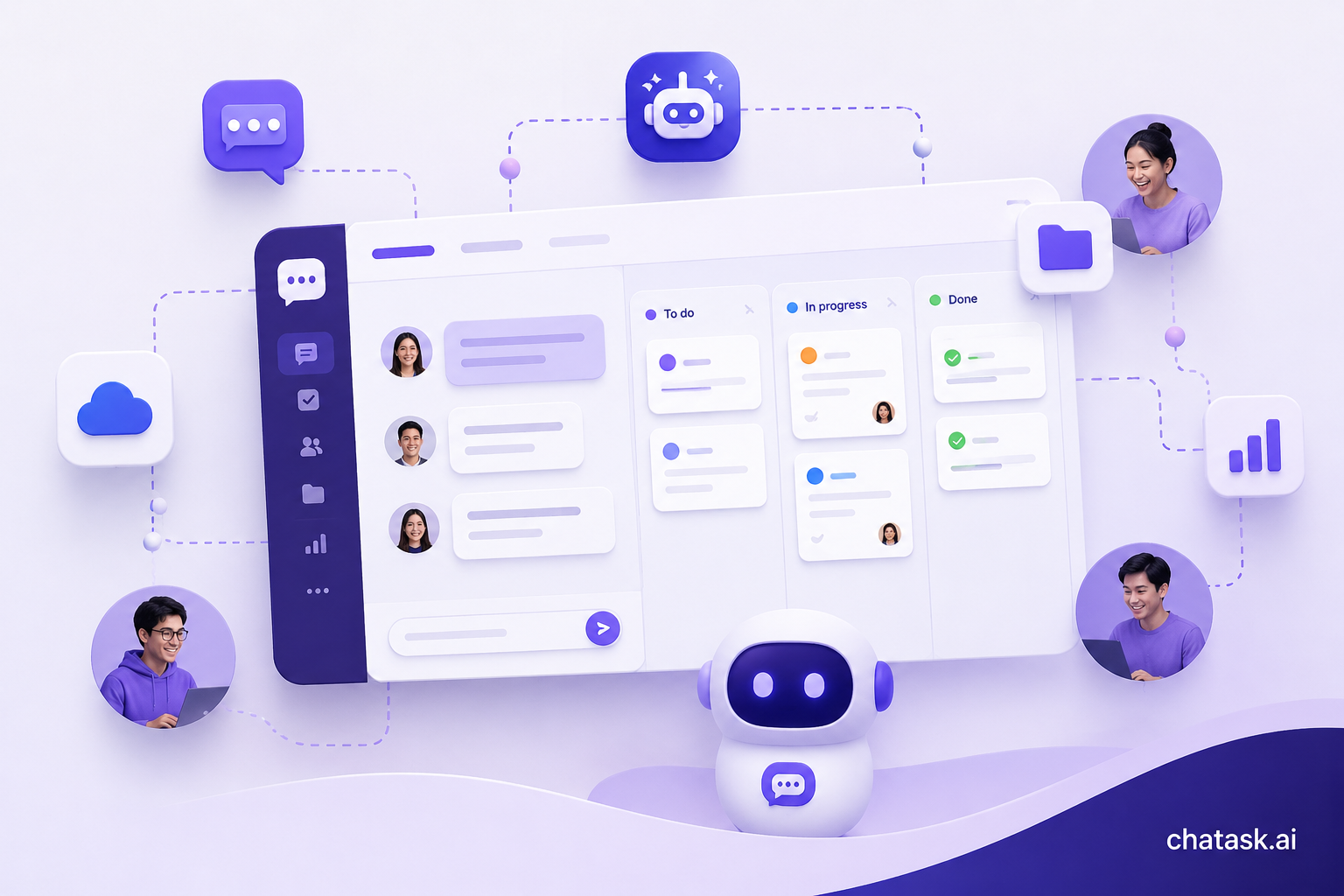
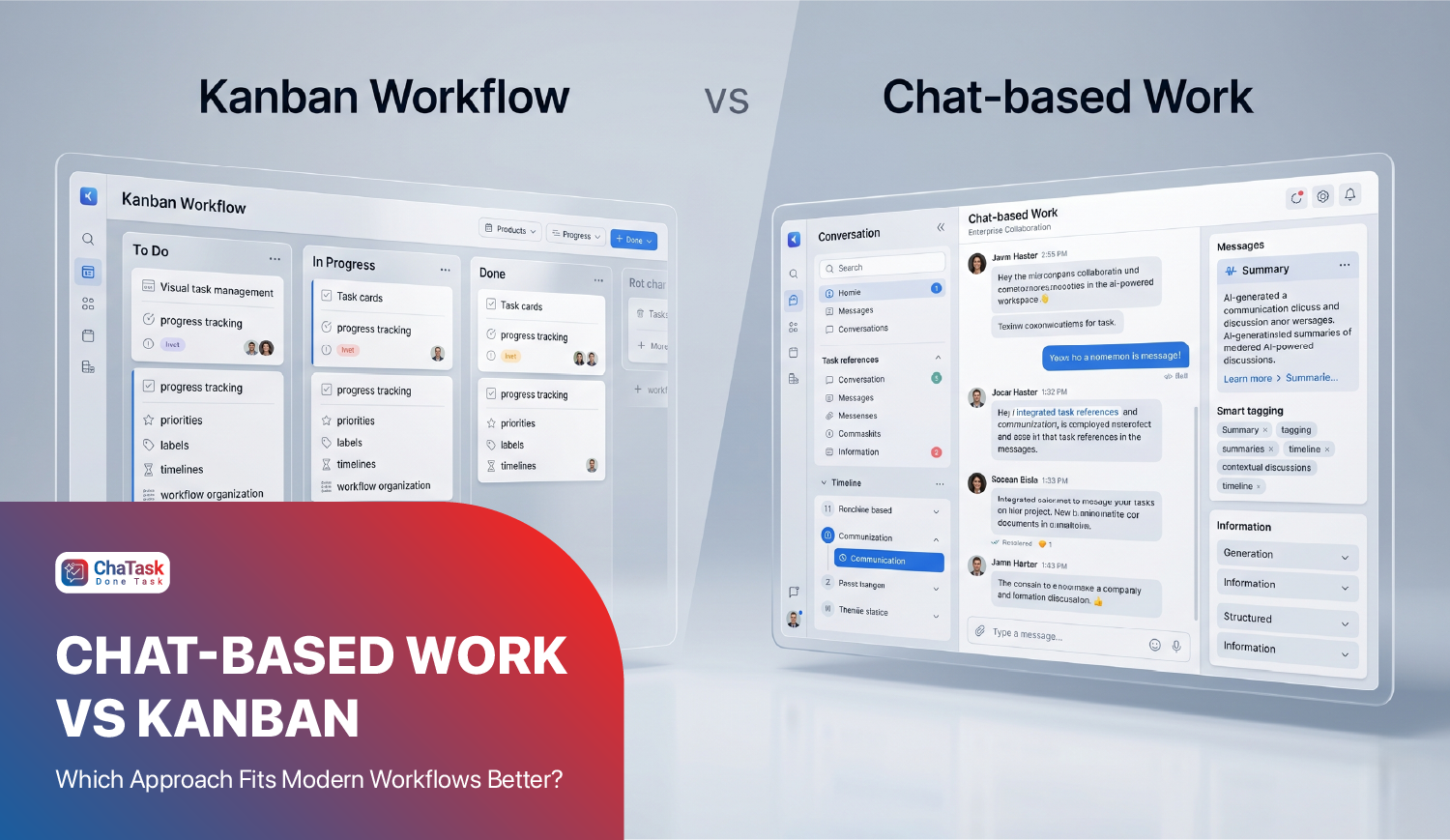
Instead of using separate tools for chat, tasks, and documents, some solutions like ChaTask allow the entire workflow to exist within a single system. As a result, communication, tasks, and information are no longer separated, but connected within the right context.
Experience ChaTask to see how a context-driven workspace can transform the way your team works.
As a result, teams not only work faster but also understand each other better—an essential factor for truly effective teamwork.