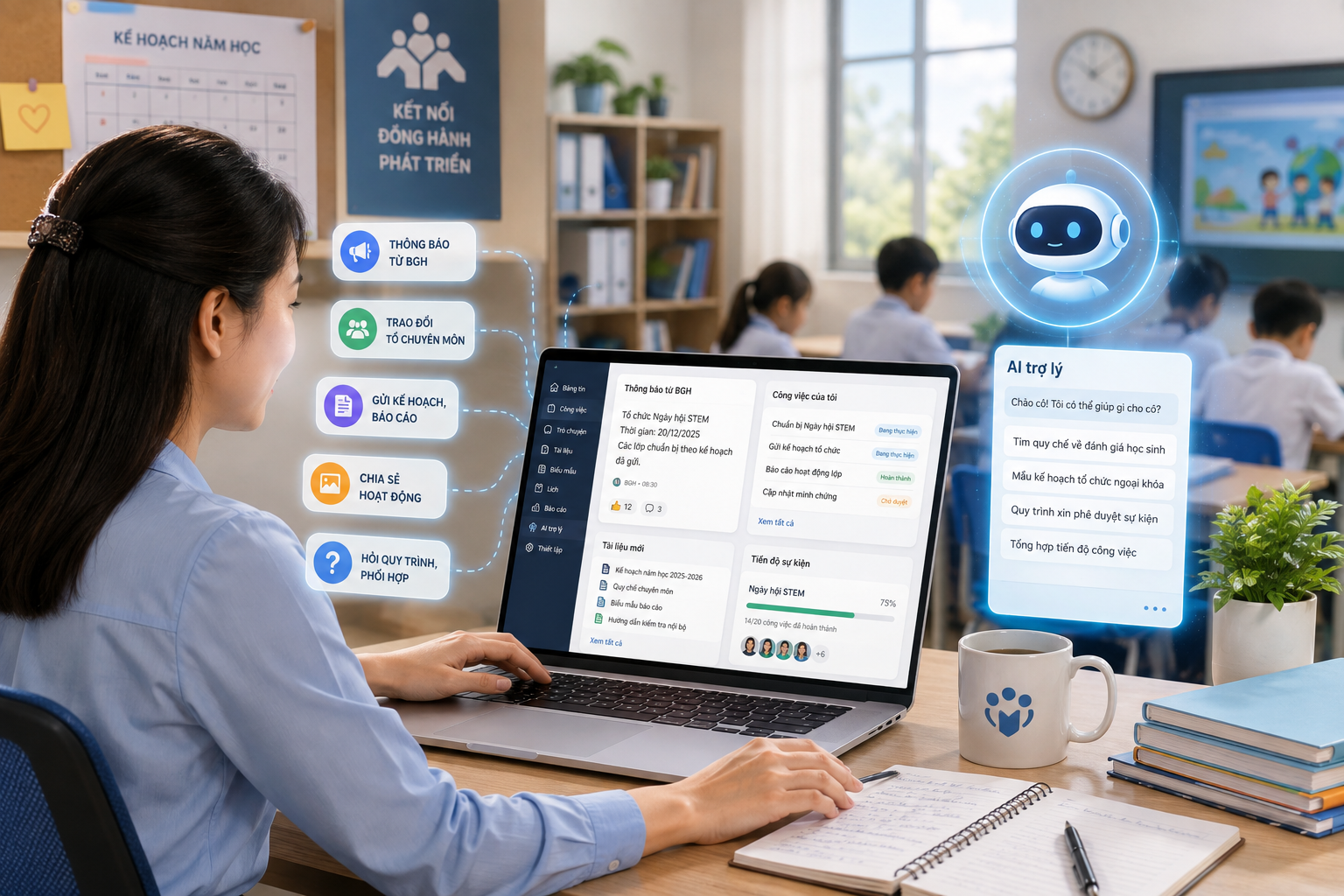
In just a few years, AI has become an everyday productivity tool for millions of people. Employees use AI to write emails, summarize meetings, translate documents, create plans, and analyze data. For many organizations, AI is no longer a technology of the future-it has become part of daily business operations.
However, alongside this excitement comes a major concern. As employees begin using AI, where does the company's internal data go?
This is why many business leaders ask questions such as: "Are employees uploading contracts to AI?", "Could customer data be exposed?", or "How can AI support our work while still protecting sensitive business information?"
Interestingly, the problem is not AI itself. The real challenge lies in how businesses manage their organizational knowledge.
AI Is Advancing Faster Than Businesses Can Manage Their Knowledge
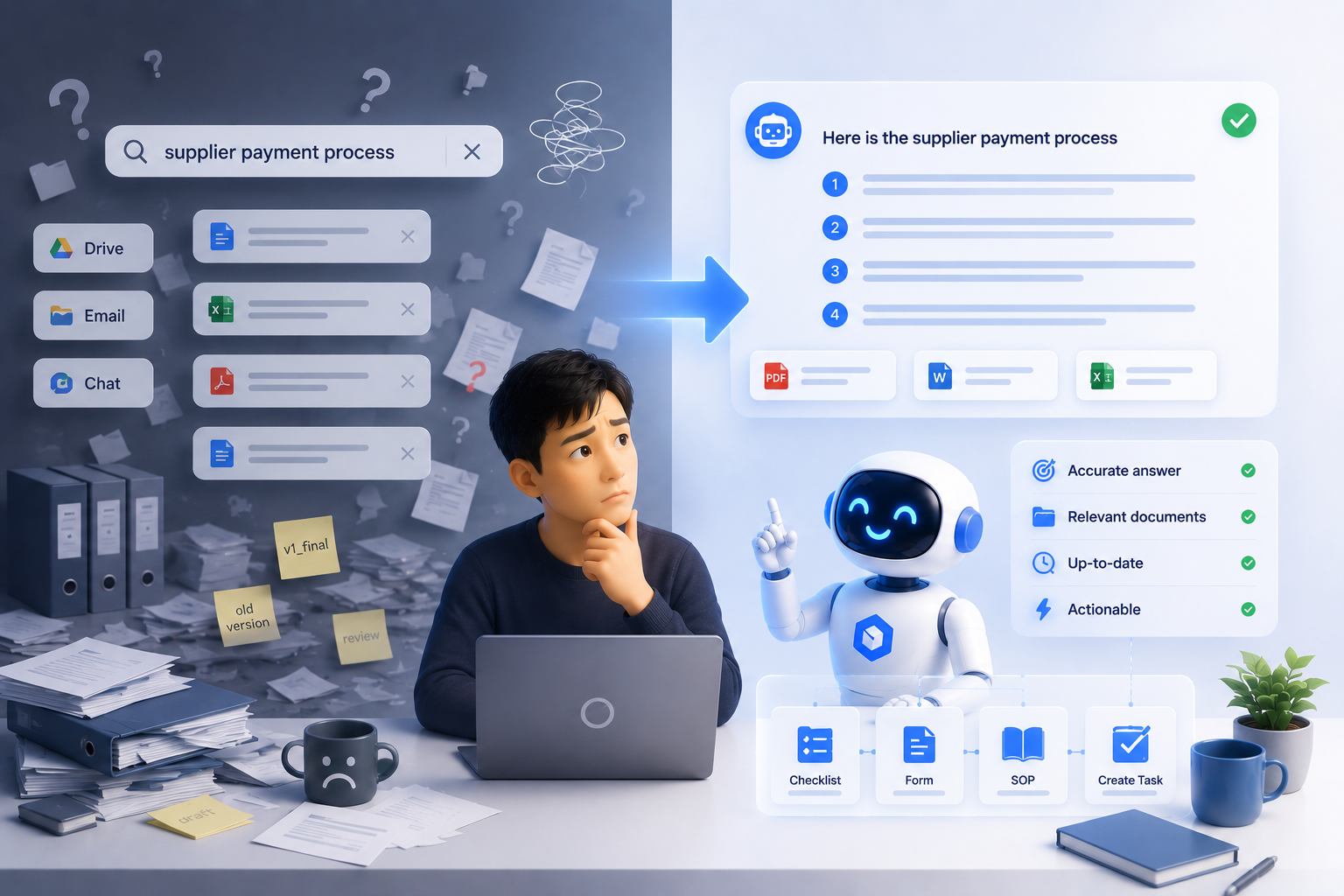
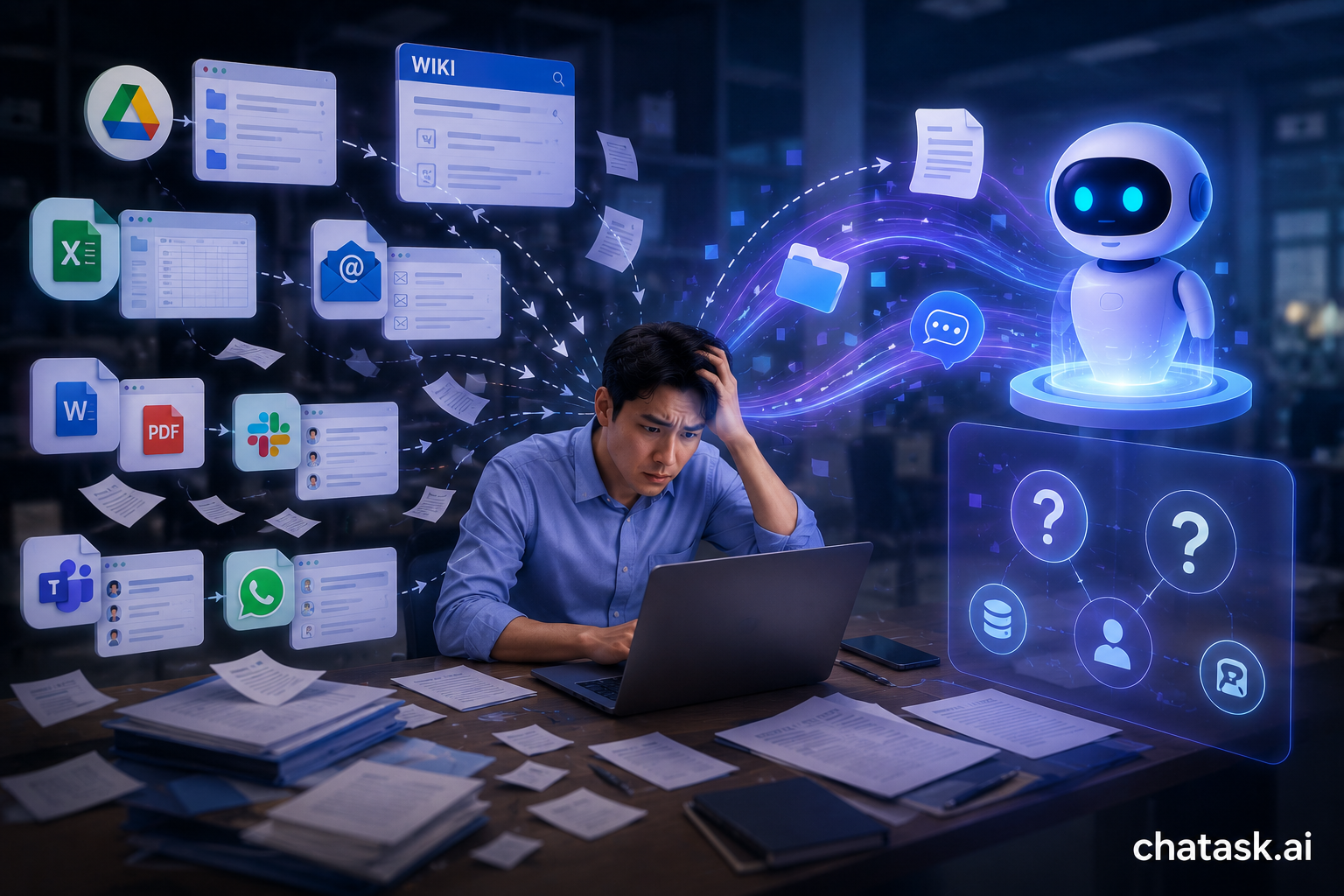
In many organizations, information is scattered across multiple locations. Contracts are stored in Google Drive, procedures are documented in an outdated Wiki system, forms are shared through email, while valuable operational knowledge often exists only in chat conversations or in the minds of experienced employees.
When employees use AI, they often have to gather information from all of these different sources before they can even ask a question. As a result, internal data is continuously copied and moved across different systems and AI tools.
Over time, businesses lose visibility into which data is being used, where it exists, and who has access to it.
Businesses Don't Want to Stop Using AI - They Want to Use It Safely
Most organizations clearly recognize the value that AI brings. It helps employees draft documents faster, find information more easily, and complete repetitive tasks in just a few minutes. The question is no longer whether businesses should use AI, but how they can use it while ensuring that their internal knowledge remains protected.
Without a centralized knowledge platform, every employee ends up using AI differently. Some upload documents for summarization, others copy SOPs to generate work instructions, while others submit contracts or customer information for AI to process.
What concerns businesses is not AI itself. What they need is a way for AI to support daily work while ensuring that company knowledge remains properly managed, permission-controlled, and accessed only within the organization's governance framework.
To Make AI Truly Effective, Businesses Need an Internal Knowledge Wiki
This is why more and more organizations are building a Wiki as the central knowledge hub of their business.
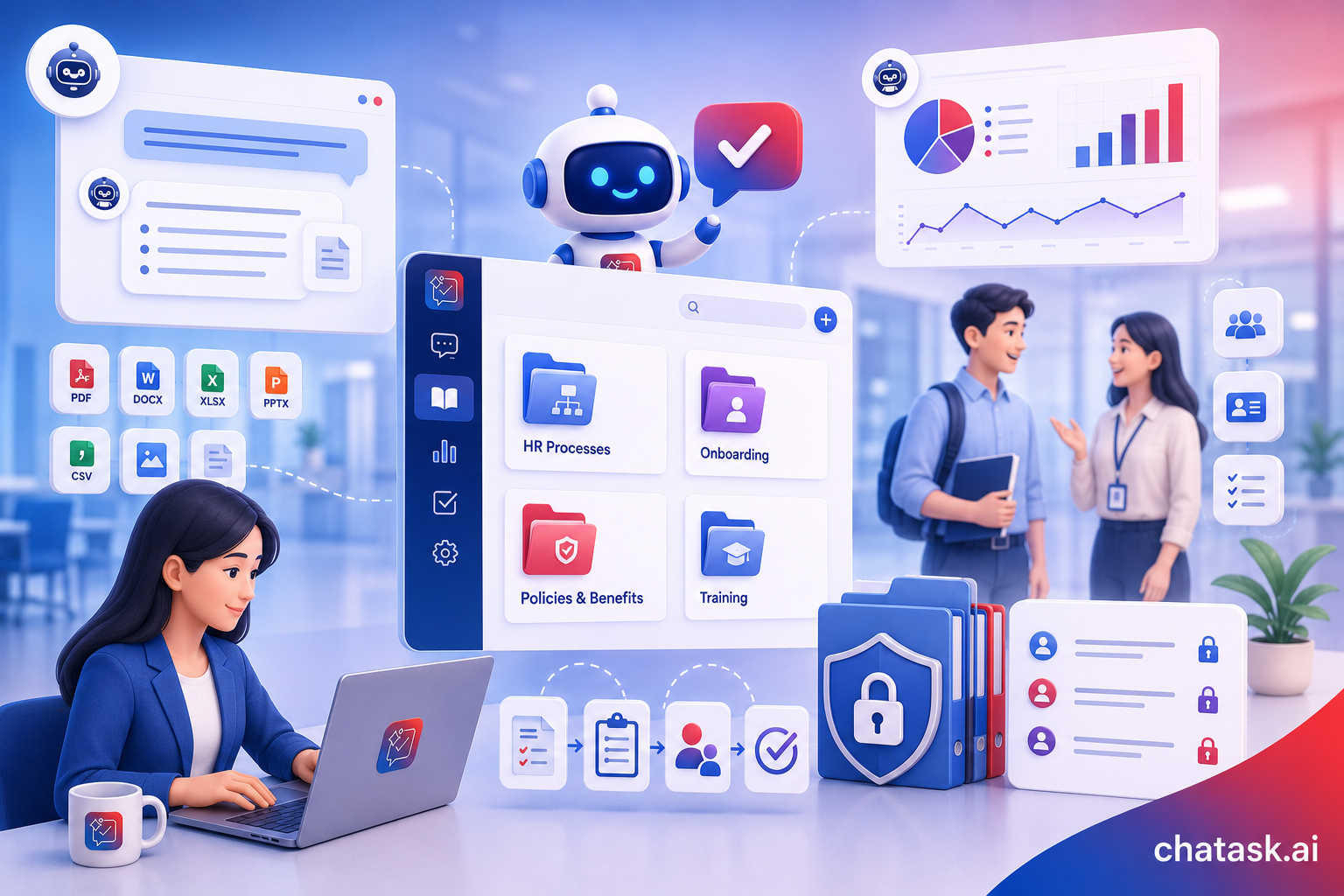
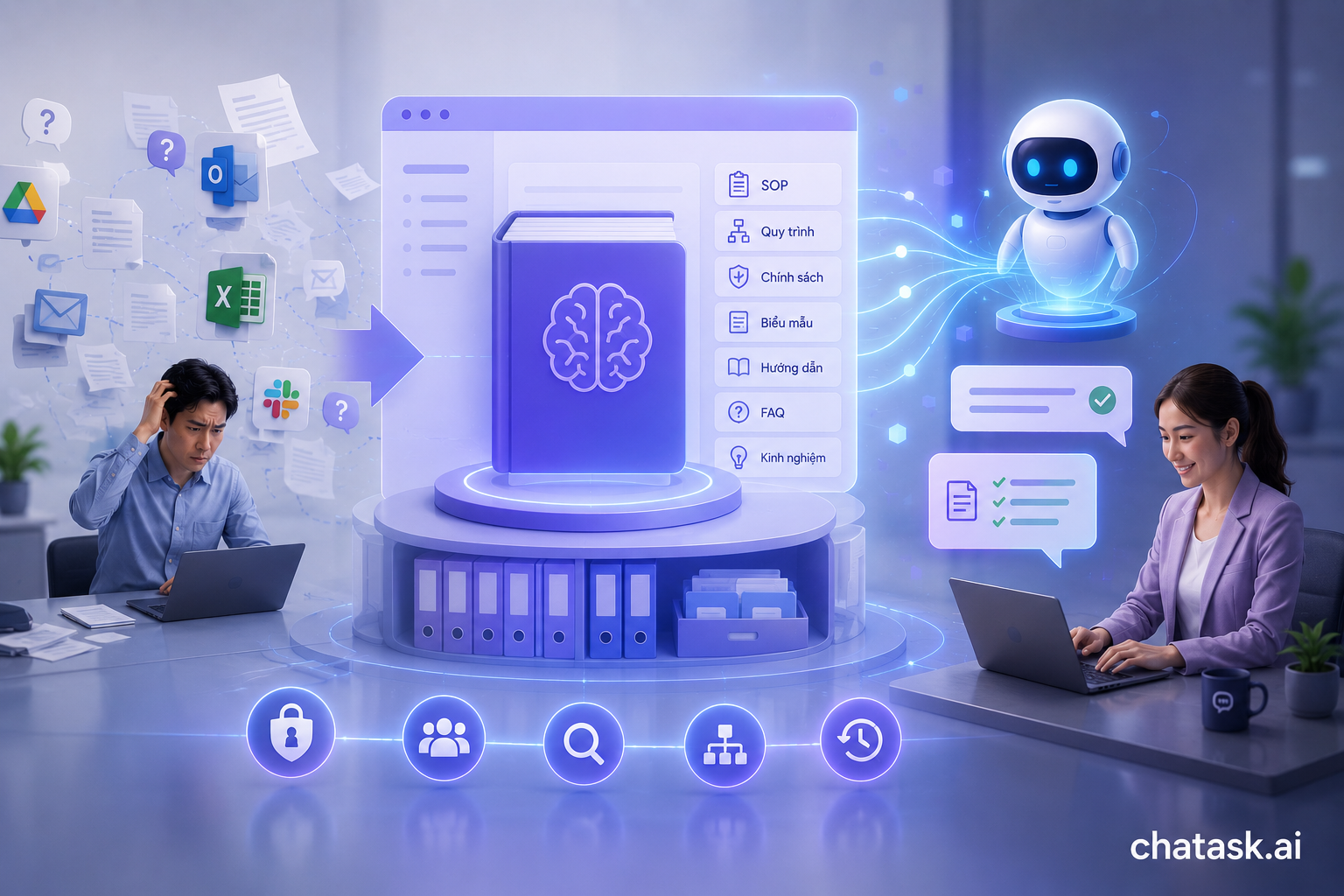
A Wiki is much more than a document repository. It centralizes SOPs, workflows, policies, templates, guidelines, FAQs, and operational know-how into a single knowledge platform.
When organizational knowledge is managed in one place, employees no longer need to search for documents individually or decide for themselves which information should be shared with AI.
A Wiki Helps Businesses Manage and Protect Their Internal Knowledge
A Wiki is not simply a place to store documents-it serves as the organization's knowledge center. Business processes, SOPs, templates, guidelines, and operational experience are all managed within a unified system, ensuring that everyone works from the same trusted source of information.
In addition, Wiki in ChaTask allows organizations to define permissions by Workspace, Project, and individual users. Every document can have its own viewing, editing, and sharing permissions, while maintaining a complete version history that makes management and auditing much easier.
When AI Agents are connected to the Wiki, these permission settings remain fully enforced. AI can only reference documents that the current user is authorized to access, enabling businesses to leverage AI while keeping their internal knowledge centralized, secure, and under full control.
Conclusion
The biggest concern businesses have when adopting AI is not that AI is becoming too intelligent. The real concern is that internal knowledge is scattered across different systems, difficult to manage, and lacks a single trusted source that AI can rely on.
Rather than avoiding AI, organizations need to build a trusted internal knowledge foundation that allows AI to operate safely and accurately. When a Wiki becomes the central knowledge hub and is connected with AI, businesses not only reduce data governance risks but also create the foundation for AI to truly understand their organization, support their teams, and become an effective part of everyday work.