In recent years, digital transformation has become one of the key priorities for many schools. Schools have invested in student management systems, electronic gradebooks, online learning platforms, online admissions systems, and parent portals.
These are all important steps forward. But one question is still worth asking: Where do teachers actually spend most of their working day? The answer is often not within any of those systems.
Every day, teachers receive announcements from the school leadership, communicate with subject departments, share lesson plans, upload classroom activity photos, submit reports, ask about procedures, and coordinate with different administrative offices. Most of these daily activities still take place in chat groups.
This highlights a common reality. Many schools have successfully digitized their data, but the way people work together has not yet truly been transformed.
Digital Transformation Is More Than Digitizing Data
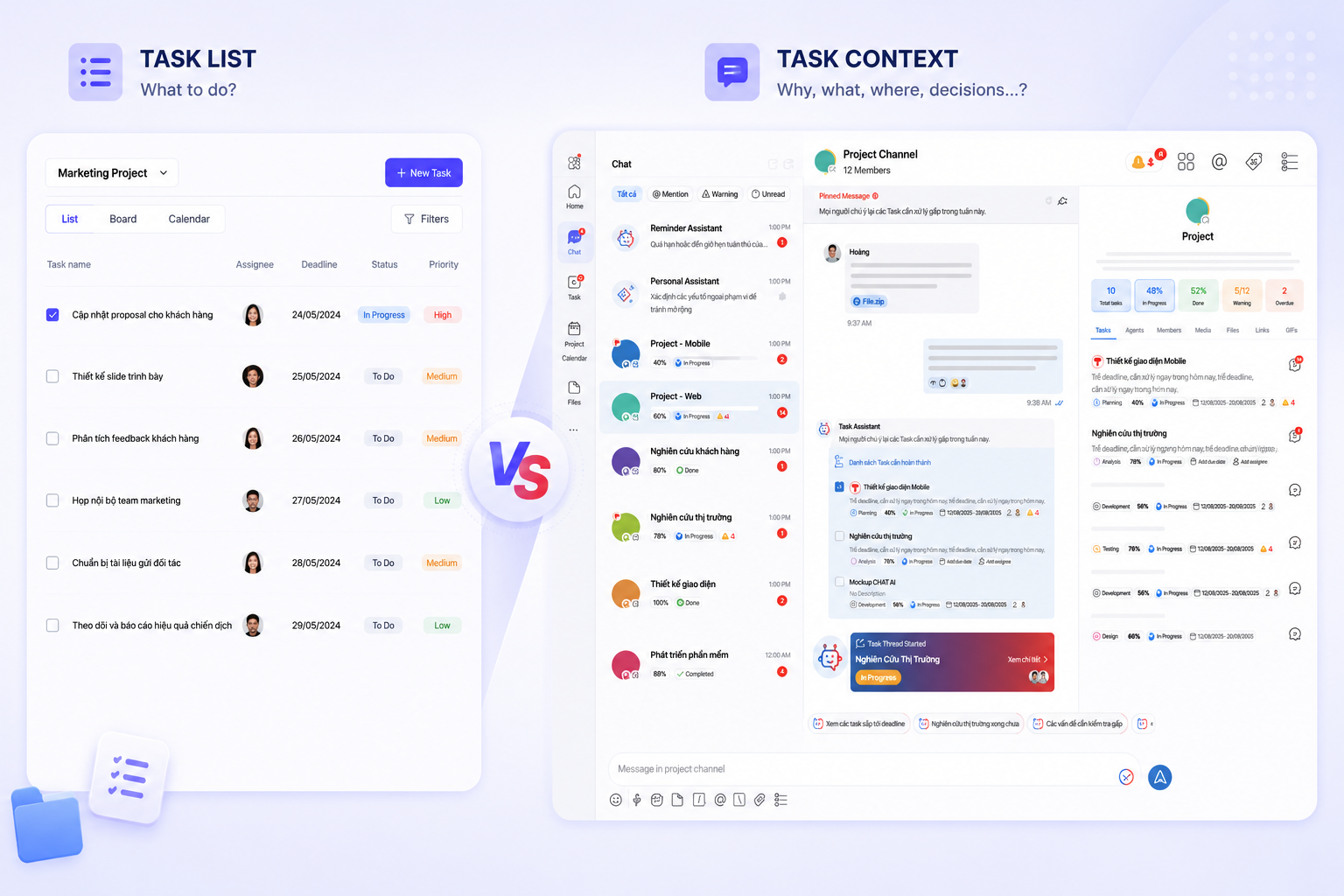
Many people think digital transformation simply means replacing paper documents with digital files or deploying more software systems. However, if teachers still have to search through chat history, assign tasks through messages, or ask colleagues to resend documents, the same old inefficiencies remain.
Digital transformation only delivers real value when work is better organized, information is connected, and people can find exactly what they need the moment they need it.

A Teacher's Day Is Filled with Countless Small Tasks
On any given morning, a teacher may receive an event plan, update preparation progress, share photos of classroom activities, seek approval from the school leadership, and search for a form that was shared several months ago.
Each task may take only a few minutes. But when these small tasks occur dozens of times throughout the day, they fragment valuable time and make collaboration across departments increasingly difficult.
That is why many teachers feel they spend too much time managing information instead of focusing on teaching and professional work.
The Place Where Teachers Work Every Day Should Also Be Where Work Is Managed
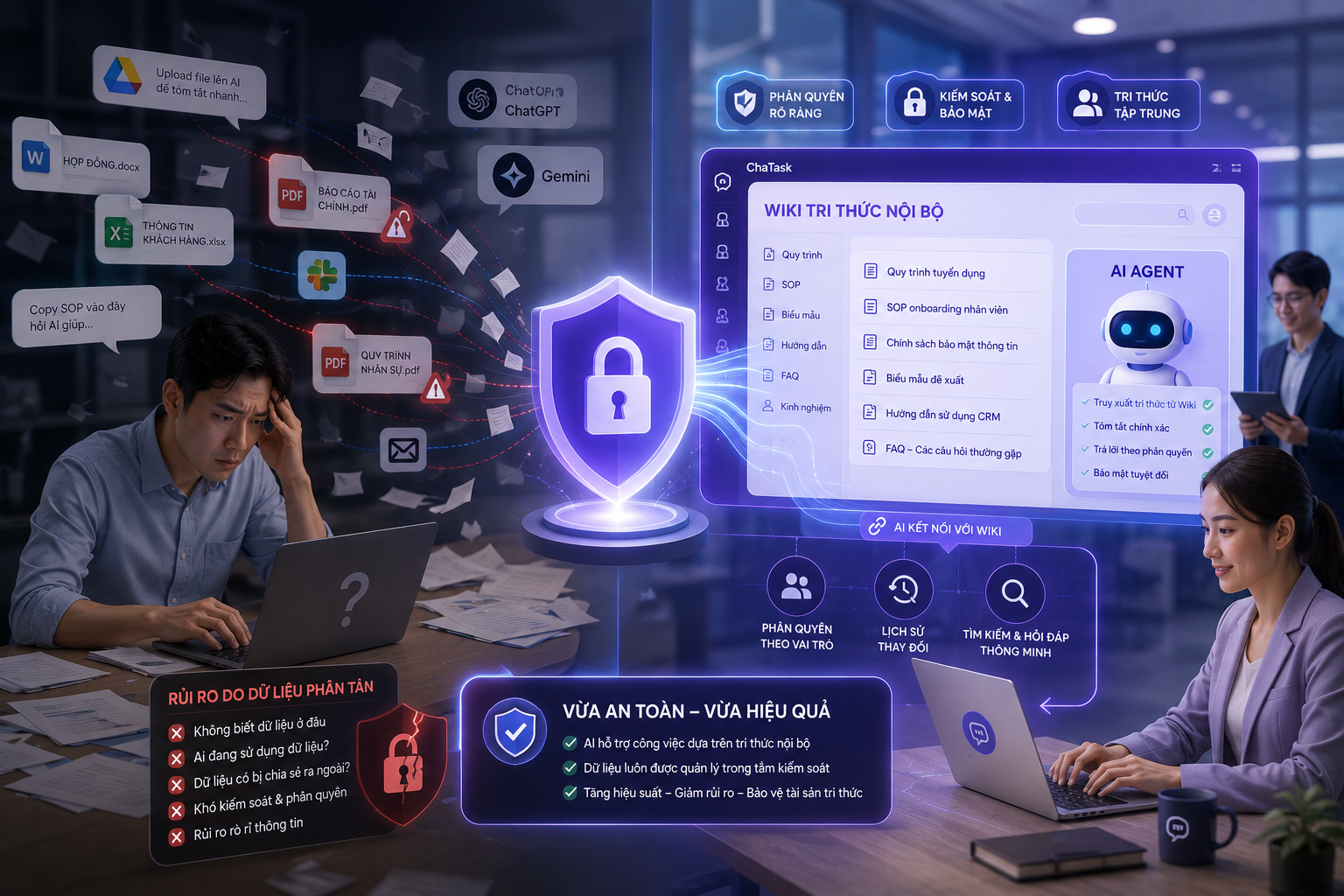
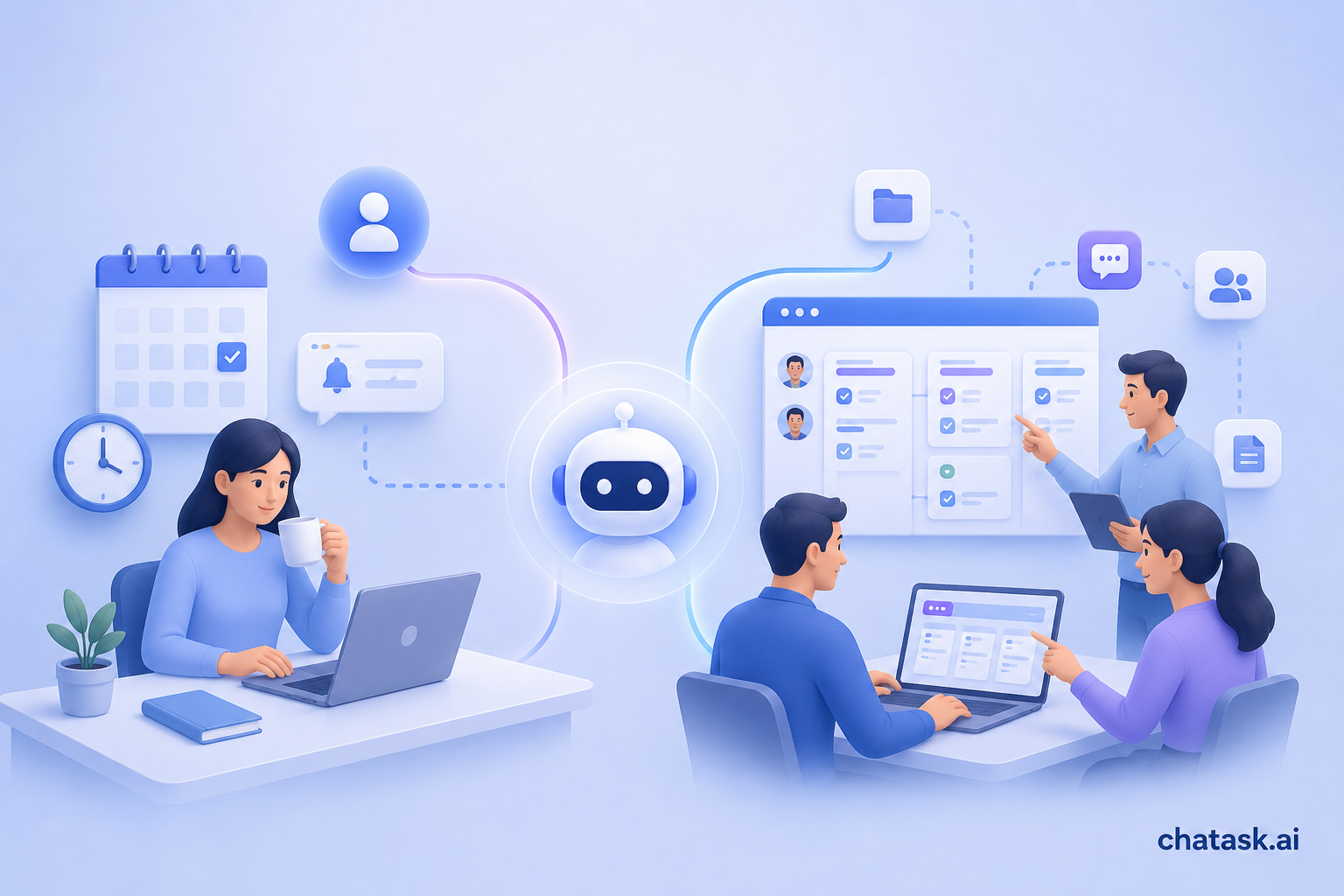
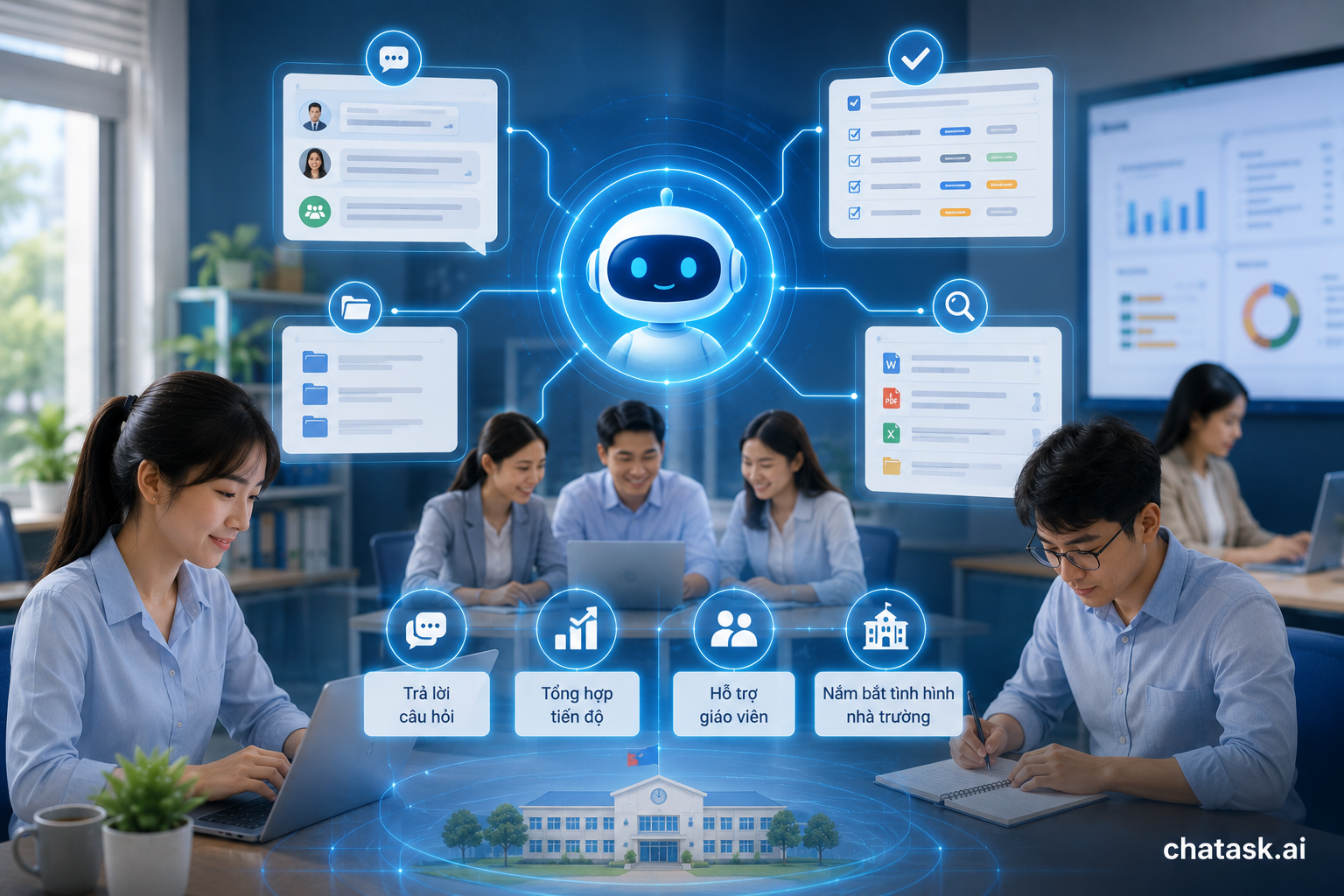
Instead of allowing conversations, task assignments, documents, and procedures to be scattered across multiple platforms, ChaTask brings everything together in a single workspace.
An announcement from the school leadership can instantly become an actionable task within the same conversation. An event plan can be assigned, tracked, and updated without switching between multiple applications.
Important documents such as school regulations, templates, teaching guidelines, and annual academic plans are no longer buried in chat history. They are stored in a centralized location where teachers can quickly retrieve them or simply ask AI whenever they need information.
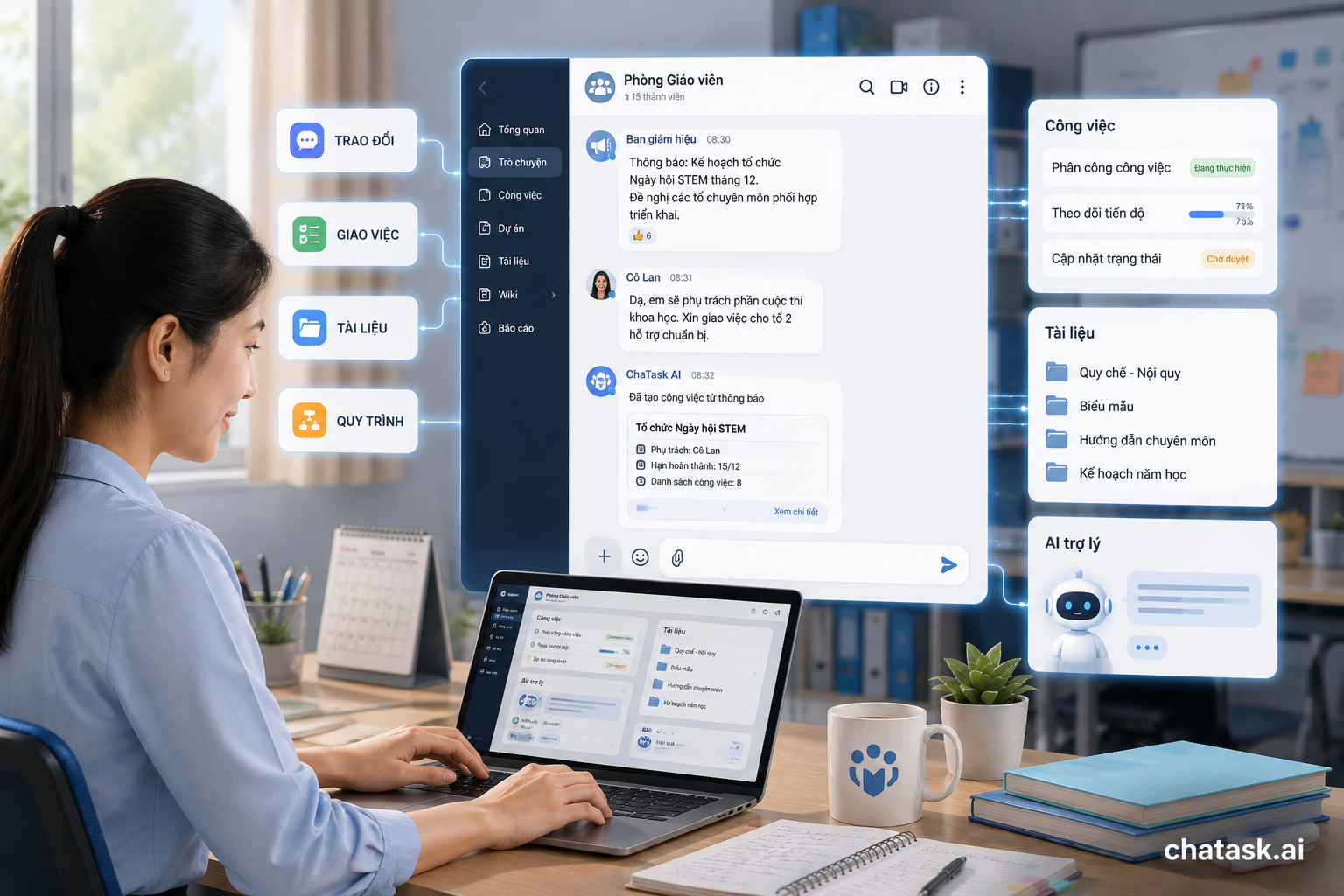
AI Is Only Valuable When It Understands the School's Context
An AI assistant cannot provide accurate answers if information is scattered across different places without sufficient context.
When conversations, tasks, documents, and institutional knowledge are connected within a single system, AI does much more than search for documents. It can answer questions, summarize progress, assist teachers, and help school leaders stay informed without waiting for multiple manual reports.
This is how many schools are gradually building a more modern working environment - one where AI supports not only individual teachers but also the operation of the entire school.
Digital Transformation Begins with the Smallest Everyday Tasks
Digital transformation in education does not necessarily have to begin with large-scale projects or complex technology systems.
Sometimes, it starts with teachers no longer searching through thousands of chat messages for a document, no longer missing tasks because conversations have been buried by newer messages, and no longer spending time repeatedly asking for information that already exists.
When the place where teachers work every day also becomes the place where work is managed, knowledge is preserved, and AI is seamlessly integrated, digital transformation is no longer just a long-term goal. It becomes a natural part of how the school operates every single day.