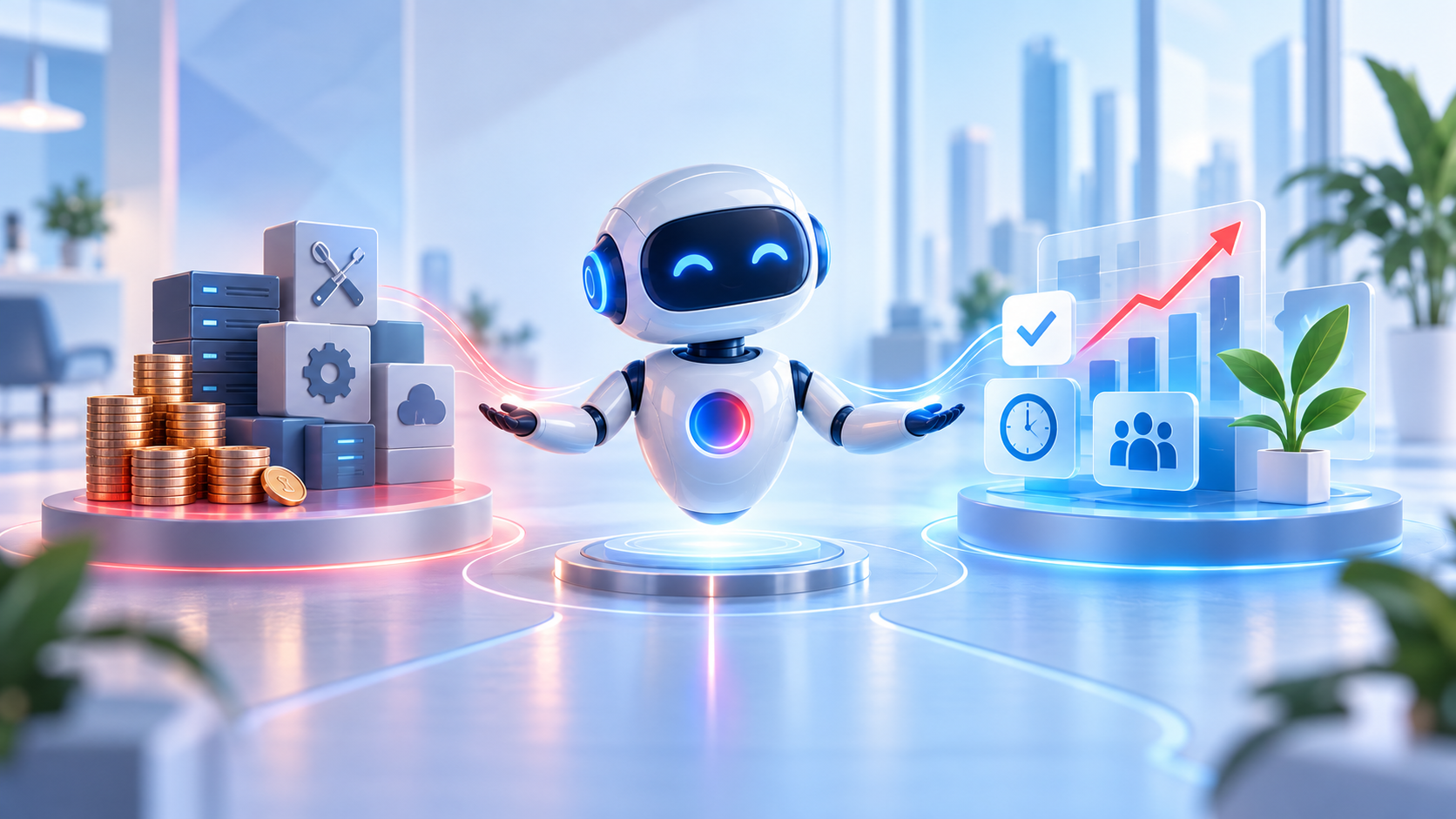
AI Agents are opening up a new way of working for businesses. Instead of simply answering questions like a chatbot, an Agent can read data, analyze situations, create tasks, update information, track work, and carry out a sequence of actions on behalf of humans.
The greater the level of automation, the greater the need for control. An Agent providing an inaccurate answer may only cause inconvenience, but an Agent with access to data and the ability to take incorrect actions can directly affect business processes, data, or operations.
For small and medium-sized enterprises (SMEs), the three main risk areas to consider when implementing AI Agents are data bias and drift, lack of oversight, and security.
1. Data Bias and Drift: An Agent Is Only as Good as Its Data
AI Agents make analyses and take actions based on the data they are given. Therefore, the quality of input data directly affects the quality of their output.
Two common issues are data bias and data drift.
Data bias - when historical data carries existing biases
If historical data contains existing biases, AI may continue to reproduce them.
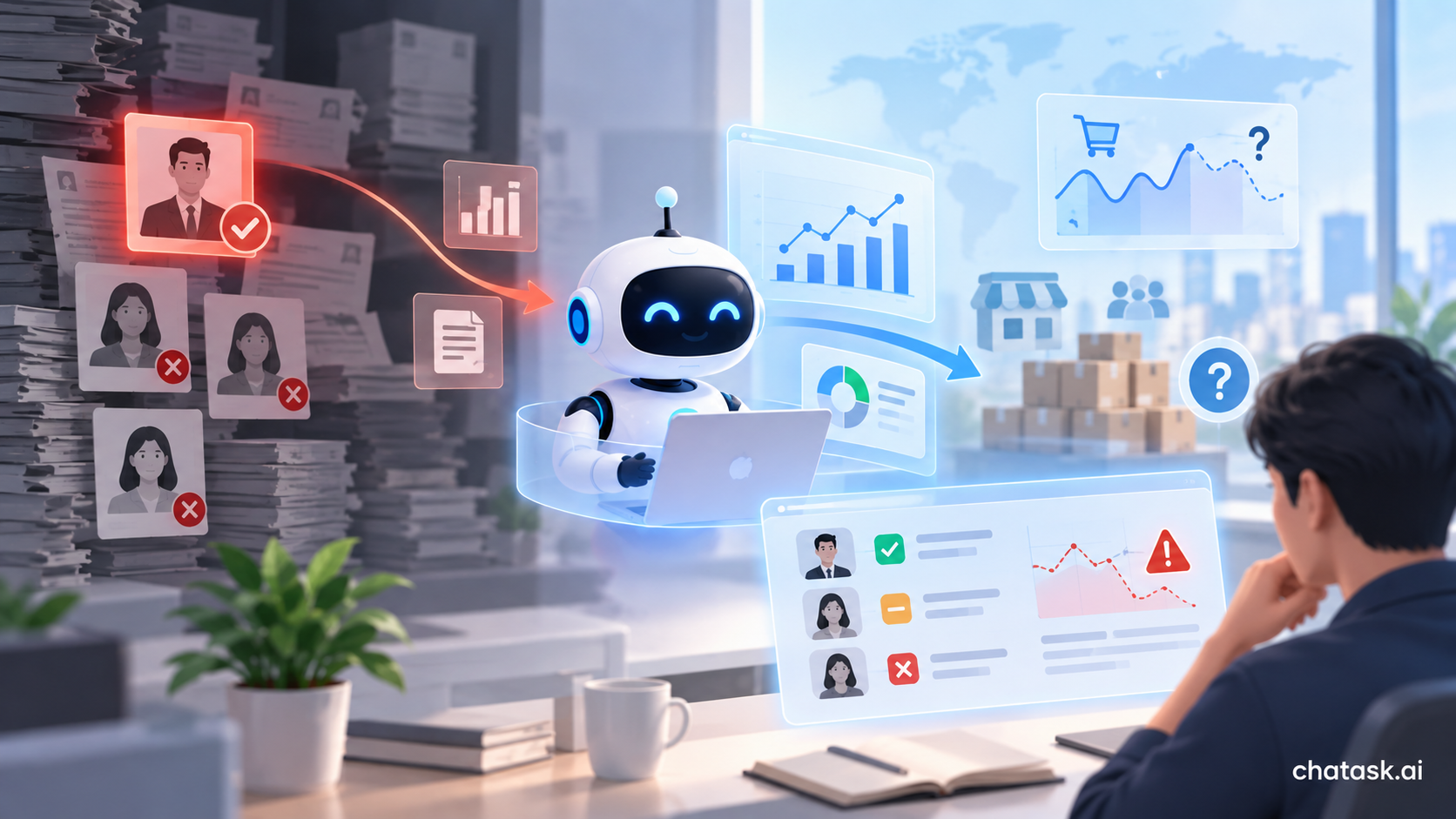
For example, a recruitment Agent may learn from historical hiring data. If past data unintentionally favored a particular group of candidates, the Agent may continue making recommendations that follow the same pattern, even though the business never explicitly created such a rule.
The risk becomes more significant when Agents are involved in decisions related to people, such as recruitment, performance evaluation, or customer classification.
Data drift - when reality changes but the data does not
An Agent may perform well when first deployed but gradually become less accurate as real-world conditions change.
For example, an Agent may forecast demand based on sales data from a period when the market was stable. If customer behavior changes significantly, historical data patterns may no longer accurately reflect current conditions.
If a business continues relying on these forecasts without reviewing them, decisions about inventory or resource allocation may be affected.
What should businesses do?
Before connecting an Agent, businesses should check whether the data is complete, up to date, and appropriate for its intended purpose. Data quality should also be monitored throughout operation rather than checked only once during implementation.
For important decisions, businesses should maintain a human-in-the-loop mechanism: AI supports analysis and recommendations, while humans retain the authority to review or provide final approval.
2. Lack of Oversight: When an Agent Can Take Action but No One Knows What It Has Done
The major difference between an AI Agent and a conventional chatbot lies in the ability to take action.
A chatbot mainly responds: “You should perform task A.”
An Agent, meanwhile, can directly say: “I created task A, assigned it to the person in charge, set the deadline, and sent a notification.”
This can significantly reduce manual work, but it also introduces new risks. If an Agent misunderstands a request, is granted overly broad permissions, or receives inappropriate instructions, the error no longer remains just an incorrect answer. It can become an actual action carried out within the system.
Shadow AI adds another layer of risk
As no-code and low-code platforms become more widely available, employees can build Agents for their own work without going through IT or management.
A small Agent created to read emails and summarize reports may unintentionally be granted access to more data than necessary. If the business does not even know that the Agent exists, controlling access, monitoring its activities, or responding to incidents becomes much more difficult.
This is a form of Shadow AI - AI being used outside the organization’s official governance framework.
Control Agents based on risk level
Not every Agent action requires human approval.
For example:
-
Low risk: summarizing content, searching for information in the Wiki, creating draft reports.
-
Medium risk: creating tasks, changing work statuses, sending internal notifications.
-
High risk: deleting data, changing access permissions, carrying out financial transactions, or modifying critical systems.
Businesses can allow Agents to automatically handle low-risk tasks, while actions with greater impact must go through a human Approval step.
This approach allows businesses to benefit from automation without handing over complete decision-making authority to AI from the outset.
3. Security: The Greater an Agent’s Access, the Greater the Risk
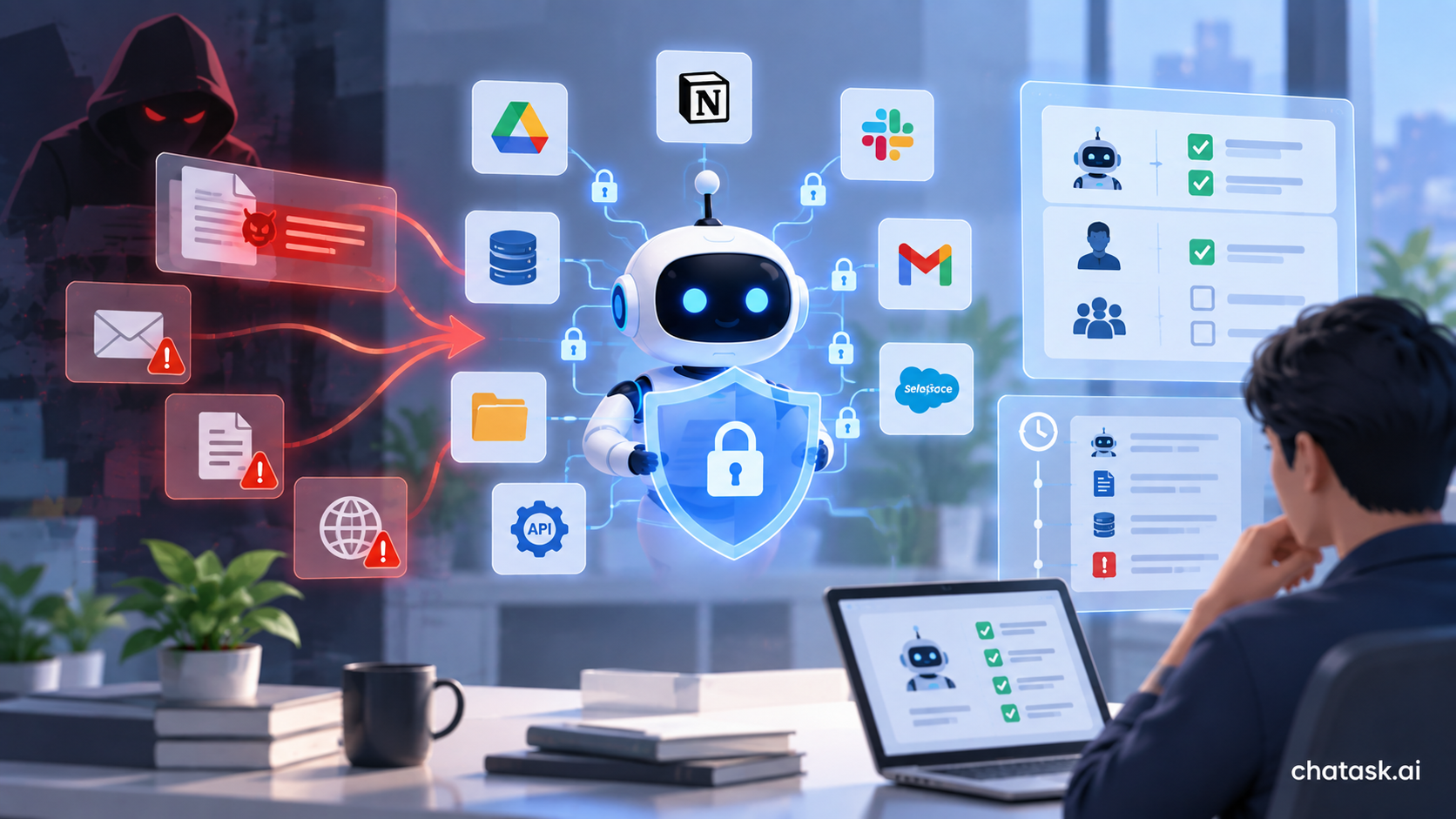
To perform its work, an AI Agent often needs to connect to multiple data sources and tools, including internal documents, email, task management systems, CRM, ERP, or other APIs.
This means that each Agent can effectively become a new identity with access to business systems.
Some of the key risks to consider include prompt injection, excessive access privileges, and inadequate Agent identity management.
Prompt injection
Prompt injection occurs when content read by an Agent contains instructions designed to alter the Agent’s behavior.
For example, an Agent may be asked to read a customer document and extract information. However, the document may contain instructions telling the Agent to ignore its original rules and retrieve additional, unrelated data.
If the Agent treats everything it reads as trusted instructions, it may carry out unintended actions.
Businesses therefore should not assume that emails, documents, or web data processed by an Agent are inherently safe.
Excessive access privileges
An important principle when implementing Agents is least privilege.
If an Agent only needs to read product data to answer questions, it does not need permission to modify that data. If an Agent only works within the HR department, it does not need access to the company’s financial data.
An Agent’s permissions should be limited to the specific scope of work it needs to perform.
Agents also need identity management
Each Agent can be treated as a “digital employee.”
An Agent should have its own identity, defined permission scope, and an activity history that can be reviewed. When an Agent is no longer in use, its access rights should also be revoked rather than remaining active indefinitely.
This approach helps businesses answer three important questions:
Which Agent performed the action? What data did the Agent use? What was the Agent authorized to do?
4. There Is No Need to Automate 100% from the Start
One common mistake when implementing AI Agents is trying to automate an entire process from the very first version.
Businesses can start with a smaller scope.
-
In Stage 1, the Agent mainly reads data and provides recommendations.
-
In Stage 2, the Agent is allowed to perform certain actions that can be easily reviewed or reversed, such as creating tasks, sending reminders, or preparing reports.
-
In Stage 3, once sufficient operational data and control mechanisms are in place, the business can expand to more complex automated actions.
This step-by-step approach allows businesses to measure the actual value of an Agent while identifying potential risks before expanding the scope of automation.
Risk Control Checklist Before Implementing an AI Agent
Before putting an Agent into actual operation, businesses can run through the following quick checklist:
-
Has the input data been reviewed for quality and suitability?
-
Is there a mechanism for detecting unusual changes in data or Agent performance?
-
Has the business identified which actions the Agent can perform automatically and which require human approval?
-
Are Agent activities logged so they can be traced when necessary?
-
Does the business know which Agents are currently operating and who created them?
-
Has each Agent’s access been limited according to its specific responsibilities?
-
Are emails, documents, and web content treated as untrusted input by default?
-
Is there a person or department responsible for AI governance within the organization?
If some of these questions cannot yet be answered clearly, the business should strengthen its control mechanisms before expanding the Agent’s level of autonomy.
How Can an AI Workspace Simplify Agent Governance?
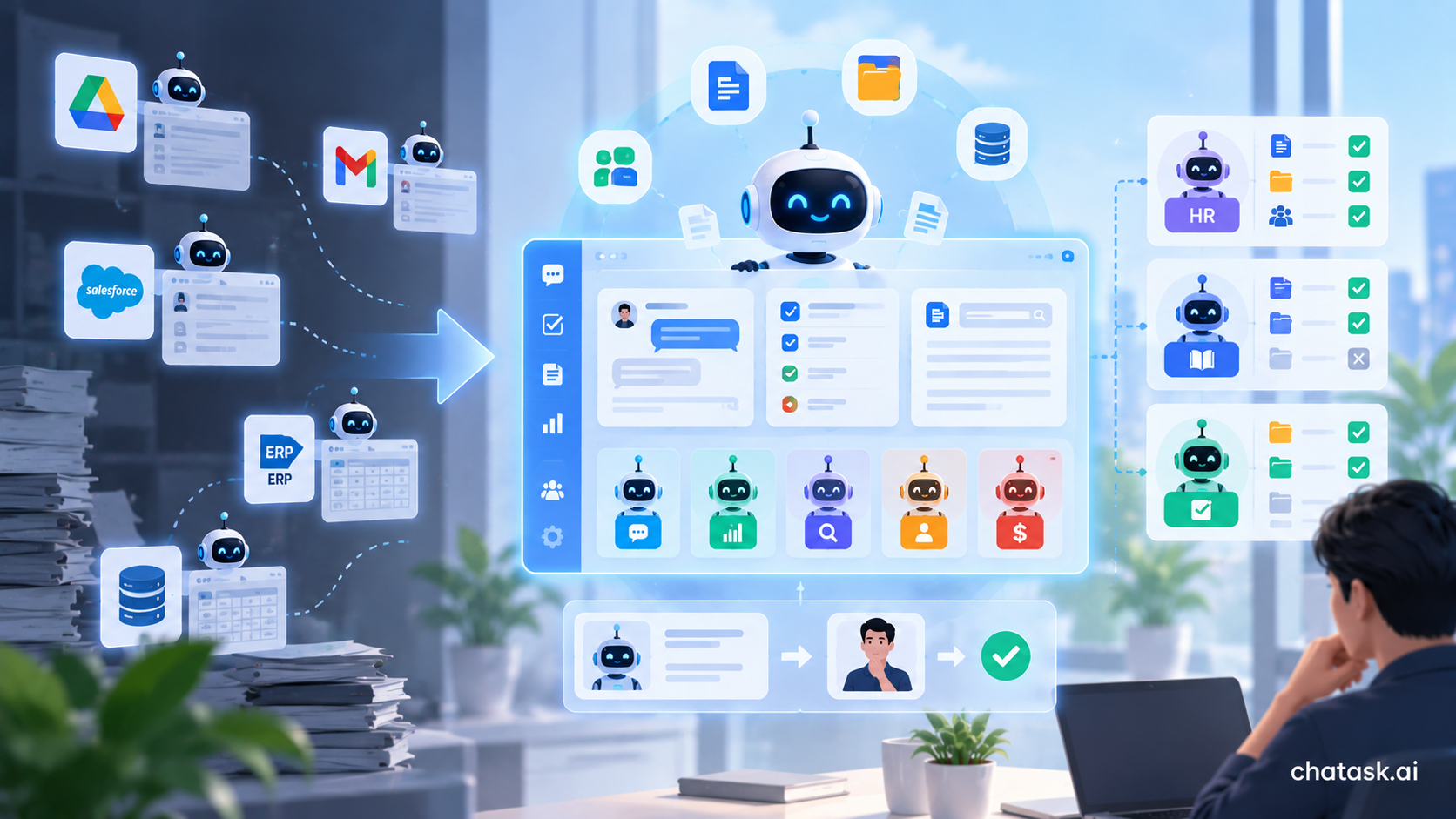
One challenge businesses face when using multiple independent AI Agents is that data and access permissions become fragmented.
One Agent reads Google Drive, another connects to the CRM, while another tracks work. Each system has its own data and permission structure. As the number of Agents grows, businesses have to manage an increasing number of connections, accounts, and access scopes.
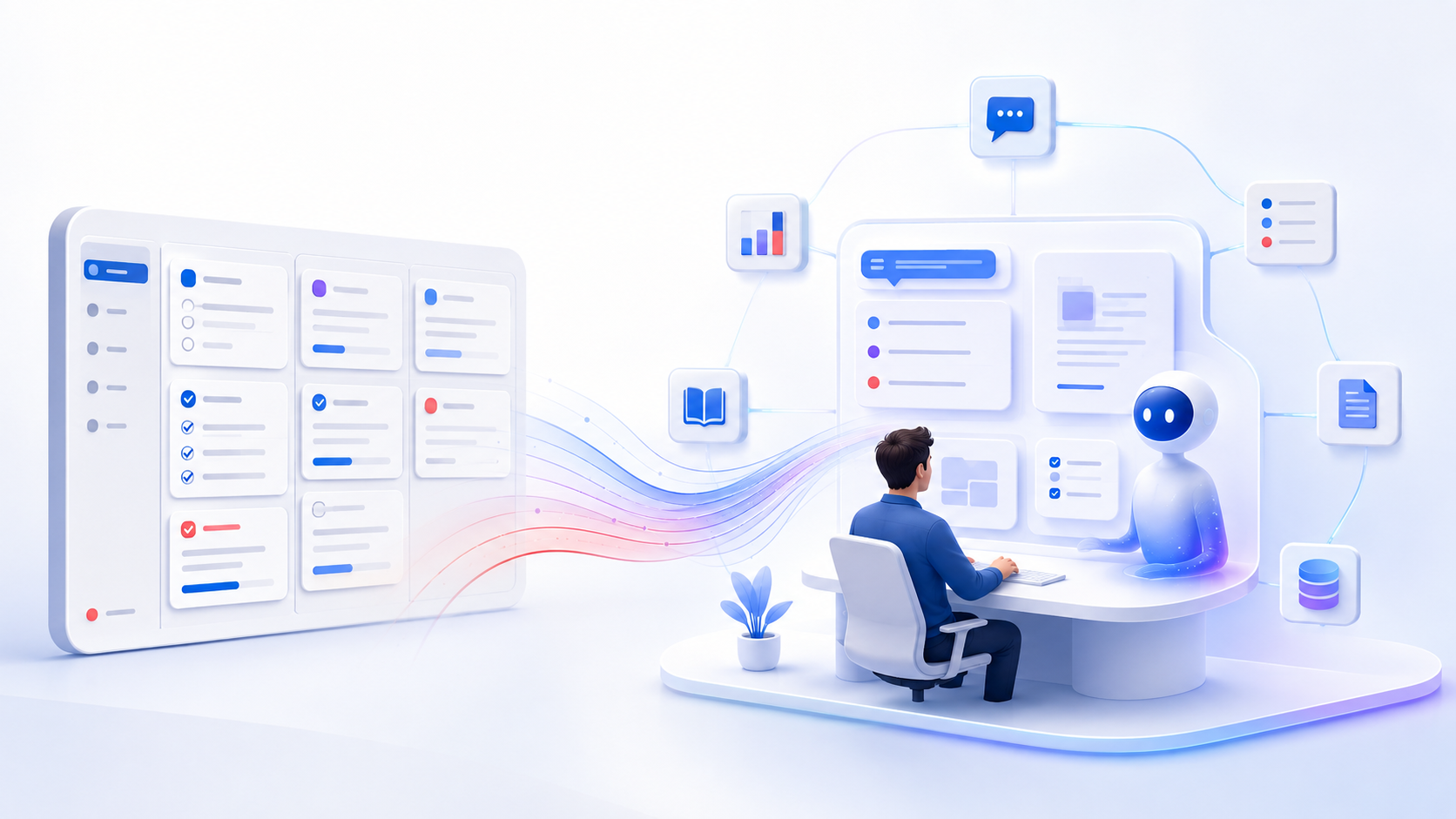
With an AI Workspace model, a significant portion of work-related data already exists within the same environment.
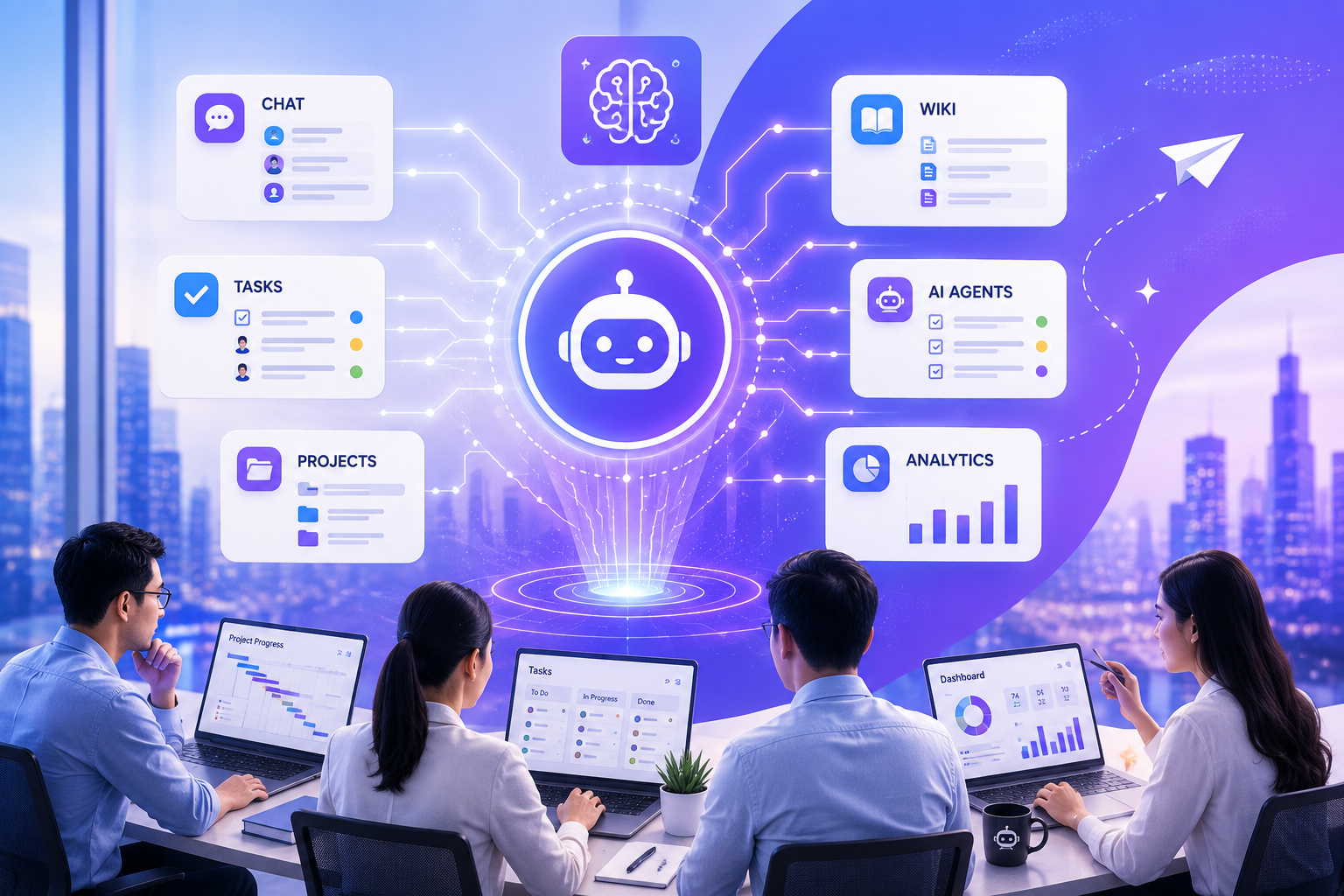
In ChaTask, Chat - Task - Wiki - AI Agents operate within the same workspace. Agents can use data generated through conversations, task management, and the knowledge base without requiring a completely separate data system for each Agent.
This also makes it possible for Agent access permissions to follow the workspace’s existing permission structure.
For example, an HR Agent should only use data that the HR scope is authorized to access. A Wiki Q&A Agent can search knowledge sources that the user has permission to view. A Task Follow-up Agent can track tasks within its assigned scope instead of requiring access to all company data.
When an important action needs to be performed, the Agent can send the request through an Approval step so that a human can confirm it before the process continues.
As a result, implementing AI Agents is no longer only about asking: “What can the Agent do?”
It must also include the questions: “What is the Agent allowed to do, what data can it access, and when is human approval required?”
Conclusion
The greatest value of AI Agents comes from their ability not only to understand requests but also to perform work. That same capability makes Agent governance an inseparable part of the implementation process.
Businesses do not necessarily need to build a complex AI Governance system from the start. The first three foundations to prioritize are reliable data, clearly defined boundaries for Agent permissions, and the ability to monitor or approve every important action.
With an AI Workspace such as ChaTask, Chat, Task, Wiki, and AI Agents operate within the same working environment and permission structure. This provides a foundation for businesses to gradually expand automation while maintaining control as the number of Agents and the scope of AI usage grow.
ChaTask – Human + AI Agents, All in One Chat.