Over the past decade, Applicant Tracking Systems (ATS) have become an essential part of modern recruitment. Instead of managing resumes through email or spreadsheets, HR teams can store CVs, track candidate statuses, and manage recruitment pipelines within a centralized system.
ATS has done an excellent job of solving the challenges of its time by helping organizations digitize their recruitment processes and manage candidates more efficiently. However, as AI becomes an integral part of everyday work, the needs of recruitment teams are beginning to evolve.
From Managing Candidates to Managing Work
Ten years ago, what HR needed most was visibility into where each candidate was in the recruitment process. Today, recruiters need much more than candidate status - they need the ability to efficiently manage the growing number of tasks that arise throughout the hiring journey.
A single hiring process can last for weeks or even months. During that time, HR teams review resumes, collaborate with hiring managers, send emails, schedule interviews, track candidate responses, prepare offers, and coordinate with IT and administrative teams for onboarding. As recruitment workflows become increasingly complex, AI has emerged as a familiar tool for improving productivity.
This creates a new requirement. Recruitment software should no longer be limited to storing data—it should enable people and AI to work together to accomplish tasks.
ATS Manages Data, AI Workspace Manages Context
An ATS is designed to manage recruitment data. Candidate profiles, hiring stages, and interview histories are stored in a structured format, making them easy to organize and track.
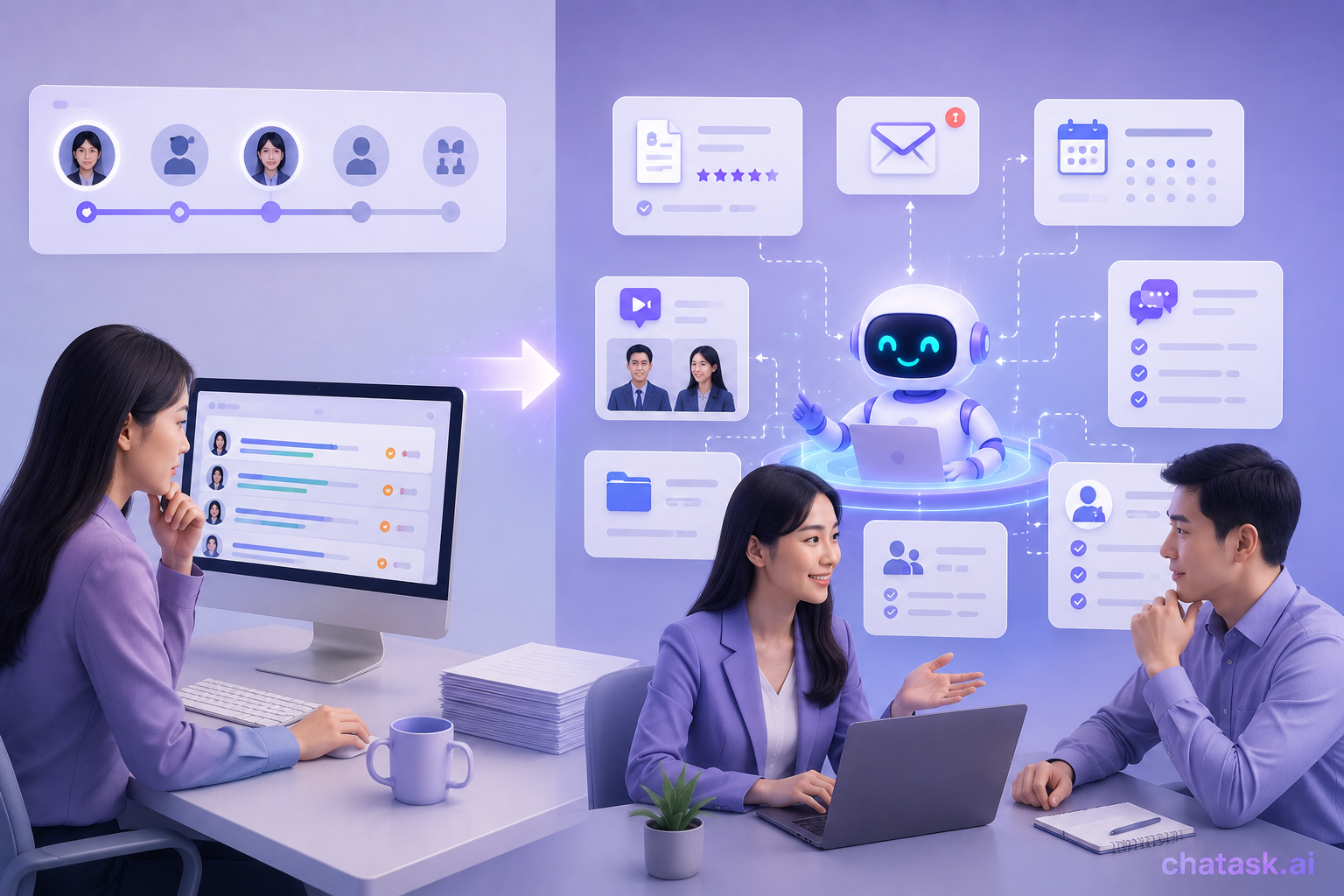
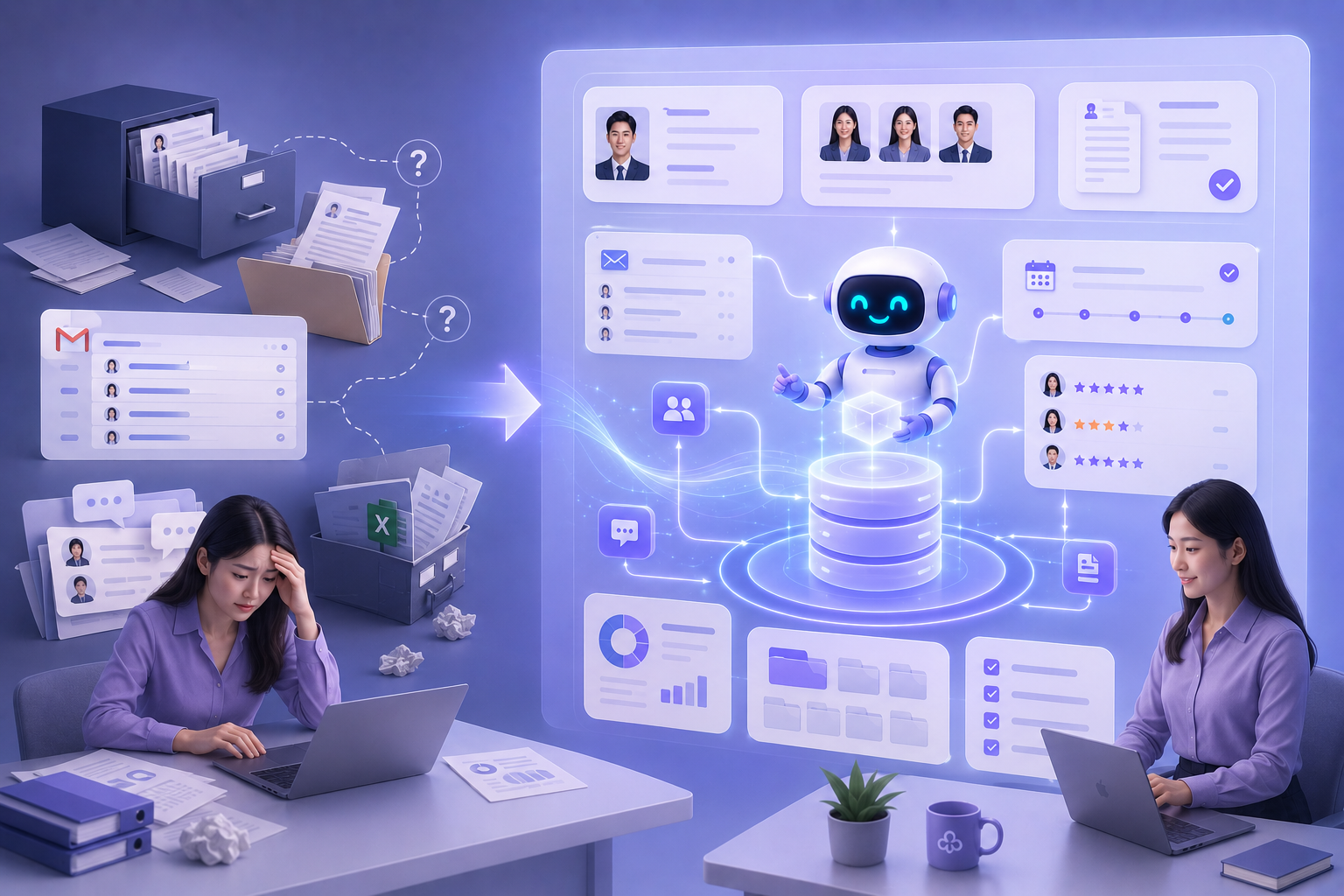
However, HR's work extends far beyond the ATS. Emails are sent through Gmail or Outlook, interviews are scheduled in Google Calendar, hiring managers leave feedback in chat applications, documents are stored in cloud drives, and onboarding checklists often live in entirely different systems.
When information is scattered across multiple tools, recruiters must constantly switch between applications to piece together a complete picture of each candidate. AI faces the same limitation. When it only has access to fragmented information, it cannot provide truly accurate or meaningful recommendations.
This is where the concept of an AI Workspace comes in.
AI Workspace Is Built for AI to Work
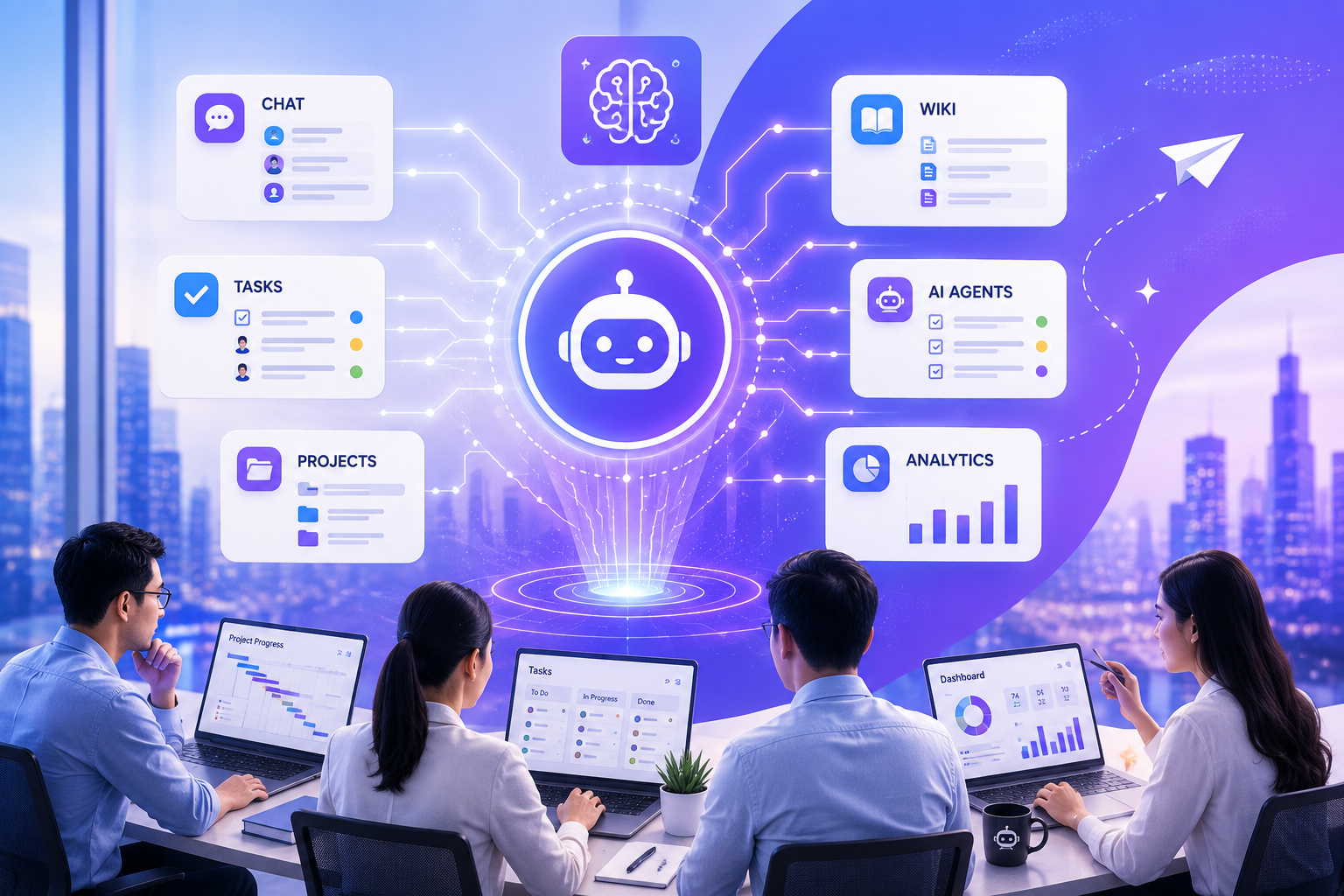
Unlike an ATS, an AI Workspace is more than just a place to store recruitment data. It is an environment where work, conversations, and organizational knowledge are connected, providing AI with the context it needs to support people effectively.
In recruitment, every candidate represents much more than a resume. They also have a matched Job Description (JD), CV evaluation results, email conversations, interview schedules, feedback from multiple interviewers, offer discussions, onboarding checklists, and countless decisions made throughout the hiring journey.
When all of this information is connected within the same workspace, AI becomes more than a question-answering tool. It gains a complete understanding of the candidate's context and can support HR throughout every stage of the recruitment process.
AI Doesn't Just Respond - It Takes Action
One of the biggest shifts introduced by AI Workspace is the evolving role of AI.
Previously, AI was primarily used to generate content or answer questions. Within an AI Workspace, AI actively participates in day-to-day recruitment activities.
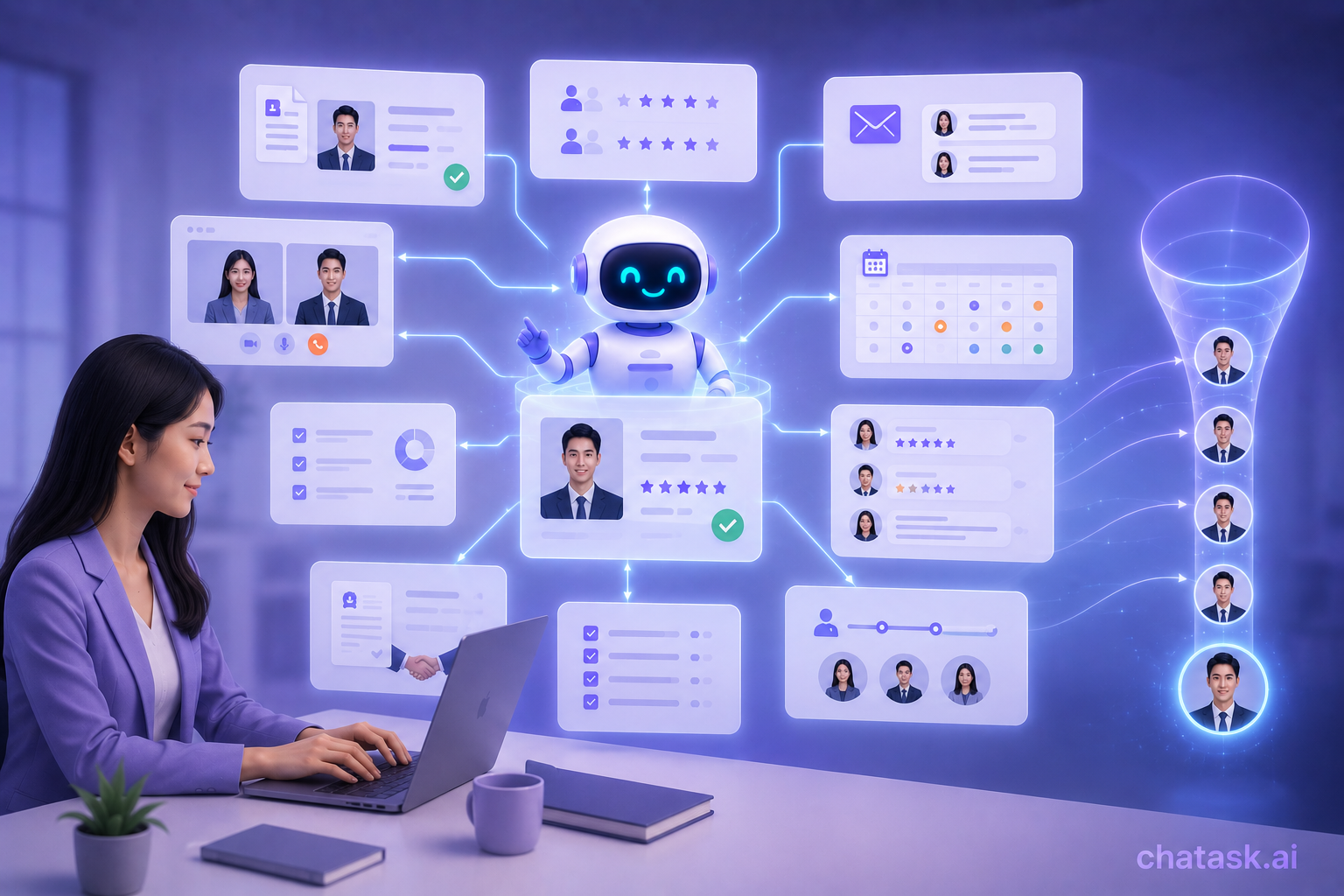
AI can evaluate resumes against a Job Description, draft interview invitation emails, recommend interview questions, monitor candidate responses, send reminders, prepare onboarding checklists, and even recommend suitable candidates from the Candidate Pool.
More importantly, AI does not perform these tasks in isolation. Every action is driven by the context accumulated throughout the entire recruitment journey.
Recruitment Knowledge Becomes a Business Asset
In many organizations, the end of a hiring campaign also marks the end of valuable recruitment knowledge.
Resumes are stored in folders, emails remain in HR inboxes, and interview feedback stays inside individual interviewers' documents. When the company needs to hire for a similar position again, recruiters often have to start the entire process from scratch.
AI Workspace changes this by preserving all recruitment knowledge within a unified environment. After every hiring campaign, organizations accumulate not only candidate profiles but also evaluation data, hiring experience, and the reasoning behind previous recruitment decisions.
Over time, this evolves into a Recruitment Knowledge Base that AI can leverage to support future hiring efforts.
AI Workspace Does Not Replace ATS
AI Workspace is not designed to replace an ATS. In fact, ATS remains a critical platform for managing candidate records and recruitment pipelines.
The difference is that an ATS helps organizations understand what has happened, while an AI Workspace helps them determine what should happen next.
As AI becomes an everyday part of work, recruitment teams need more than a system for storing data. They need an environment where AI understands context, collaborates with people, and proactively supports recruitment activities from beginning to end.
The Next Evolution of Recruitment Software
The evolution of recruitment software does not stop at digitizing hiring processes. The next step is creating a workspace where data, work, people, and AI are seamlessly connected within a single system.
That is why AI Workspace is emerging as the next evolution of recruitment software. Rather than simply helping HR manage candidates, an AI Workspace enables the entire recruitment team to work more efficiently, make better use of accumulated knowledge, and allow AI to become a true digital teammate throughout every stage of the hiring process.