For more than a decade, chat apps have been at the center of business communication. From email, Slack, and Microsoft Teams to internal messaging platforms, most work begins with a conversation. A new idea emerges in a team chat, a customer request arrives via message, or an important decision is made after a virtual meeting.
Thanks to real-time communication, chat apps have significantly reduced the distance between individuals and departments. Information moves faster, collaboration becomes more flexible, and teams can work from virtually anywhere.
However, as organizations continue to grow, many businesses are realizing that effective communication does not necessarily lead to effective execution. Chat helps people communicate better, but it does not always help work get completed more efficiently.
The Problem Is No Longer Communication
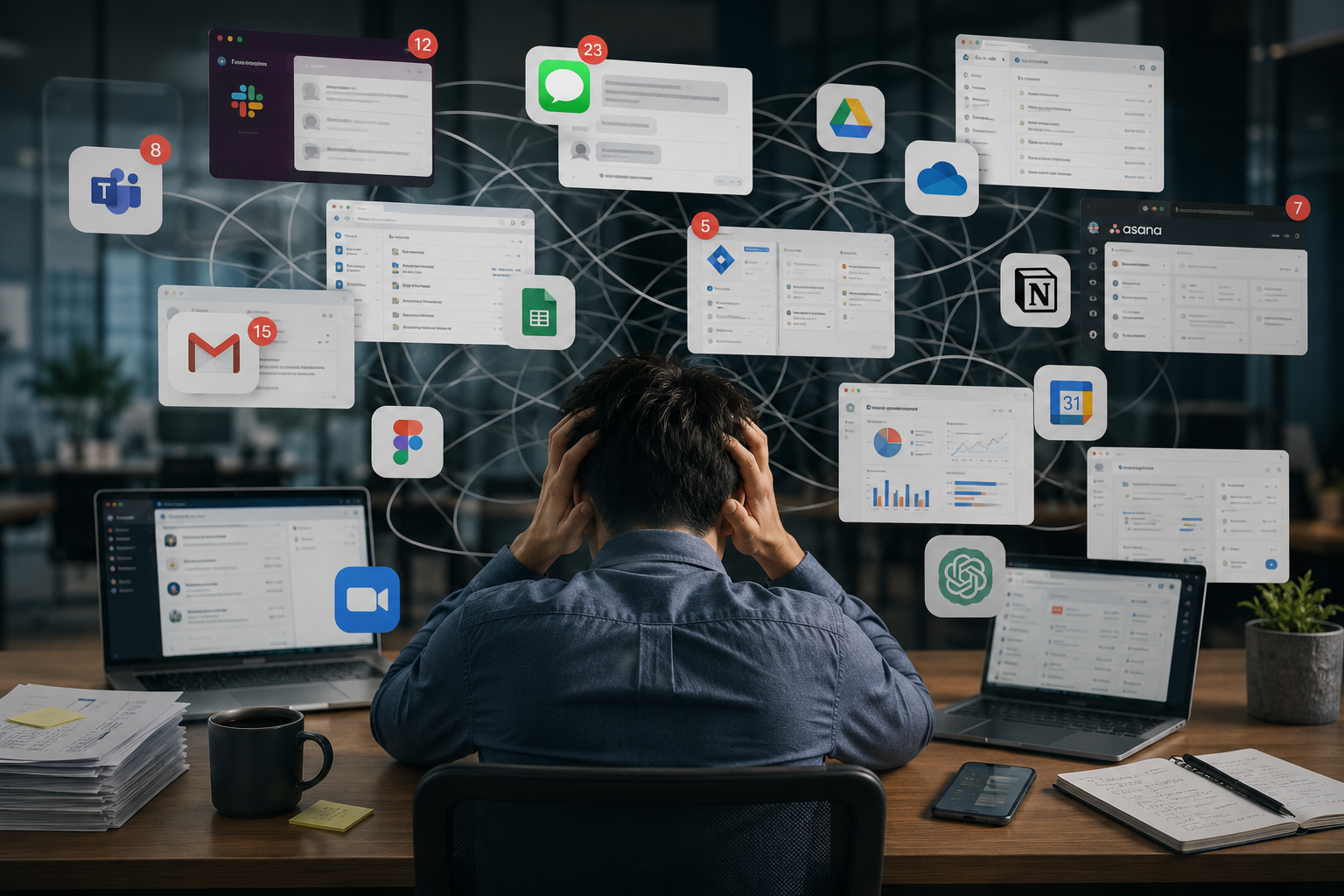
Most businesses today do not suffer from a lack of communication tools. In fact, many organizations have too many of them. Teams use chat applications for discussions, project management platforms for tracking tasks, wiki systems for storing knowledge, dashboards for monitoring data, and separate AI tools to support employees.
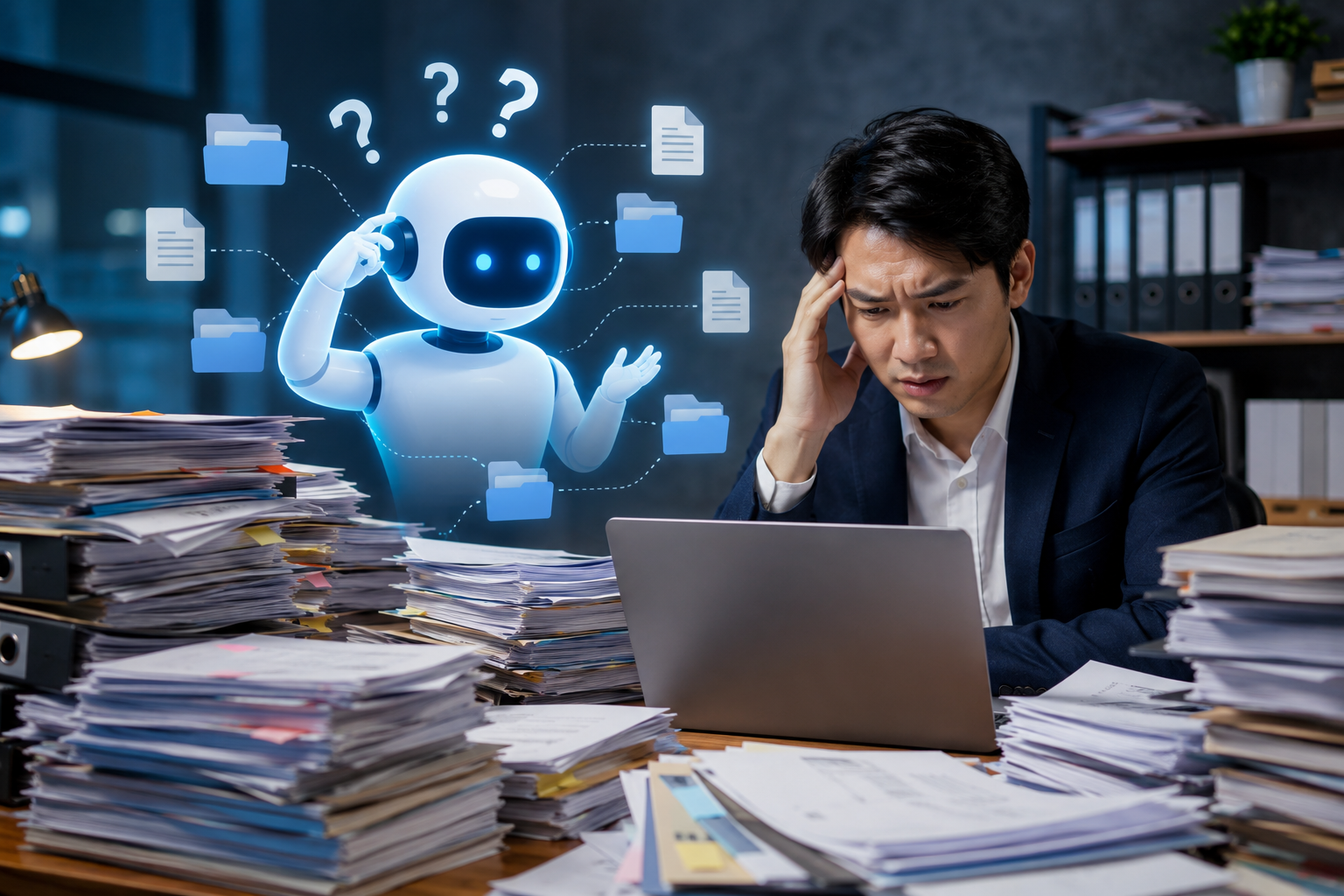
Over time, a common problem begins to emerge: work becomes fragmented across multiple platforms. Decisions made during meetings are not reflected in task systems. Important documents are stored elsewhere and become difficult to find when needed. Reports are generated but remain disconnected from the context of the work they relate to.
As a result, employees spend more and more time switching between tools instead of focusing on meaningful work. The biggest challenge facing modern organizations is no longer a lack of information, but rather a lack of connection between different sources of information.
When AI Starts Becoming Part of the Team
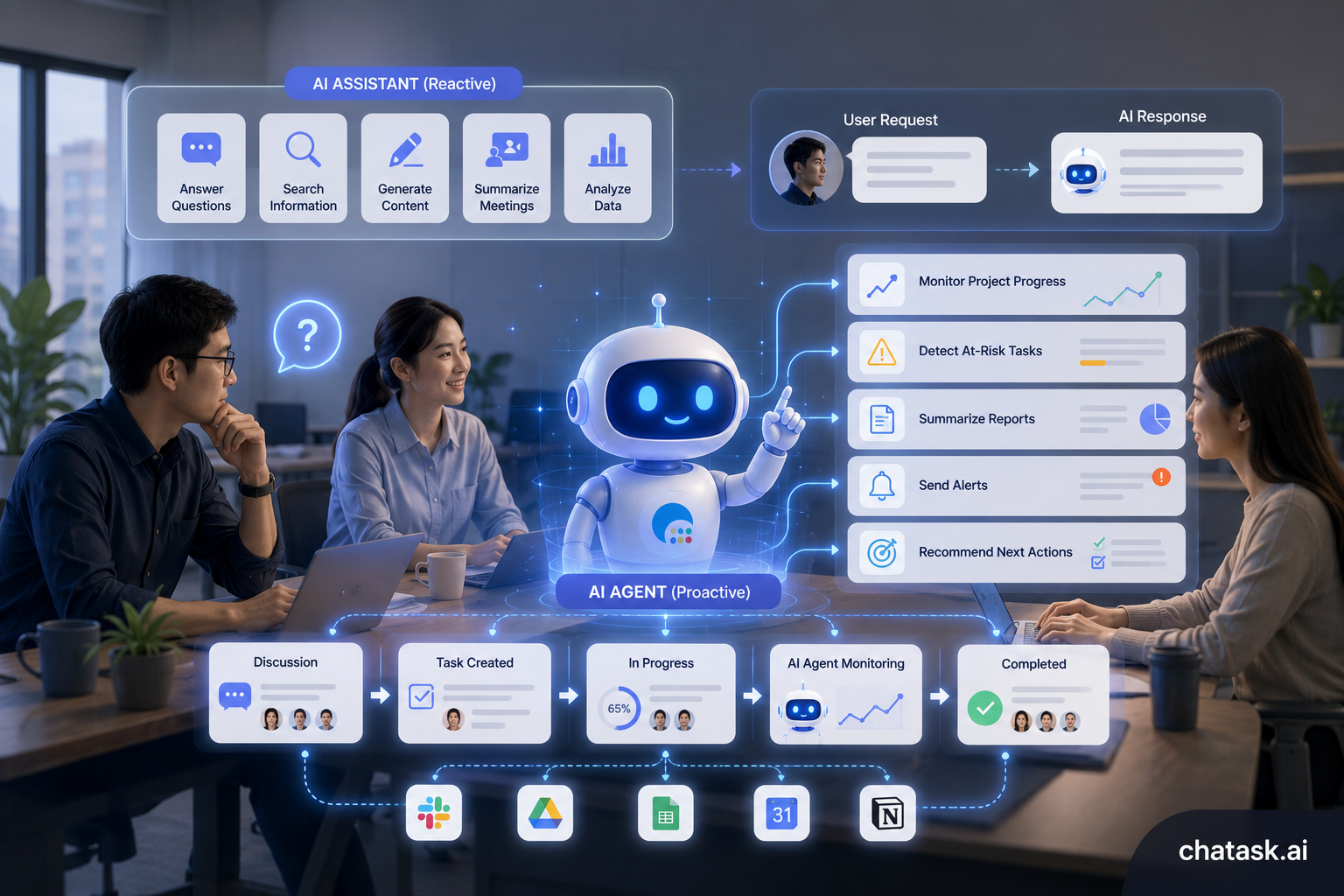
The rise of Generative AI marked the first major transformation in enterprise software. AI can answer questions, help users find information, generate content, summarize meetings, and assist with data analysis. This is the era in which AI Assistants became a common feature across workplace platforms.
However, most AI Assistants today still operate in a reactive manner. Users submit requests, and AI returns results. While AI helps people work faster, it does not actively participate in business operations.
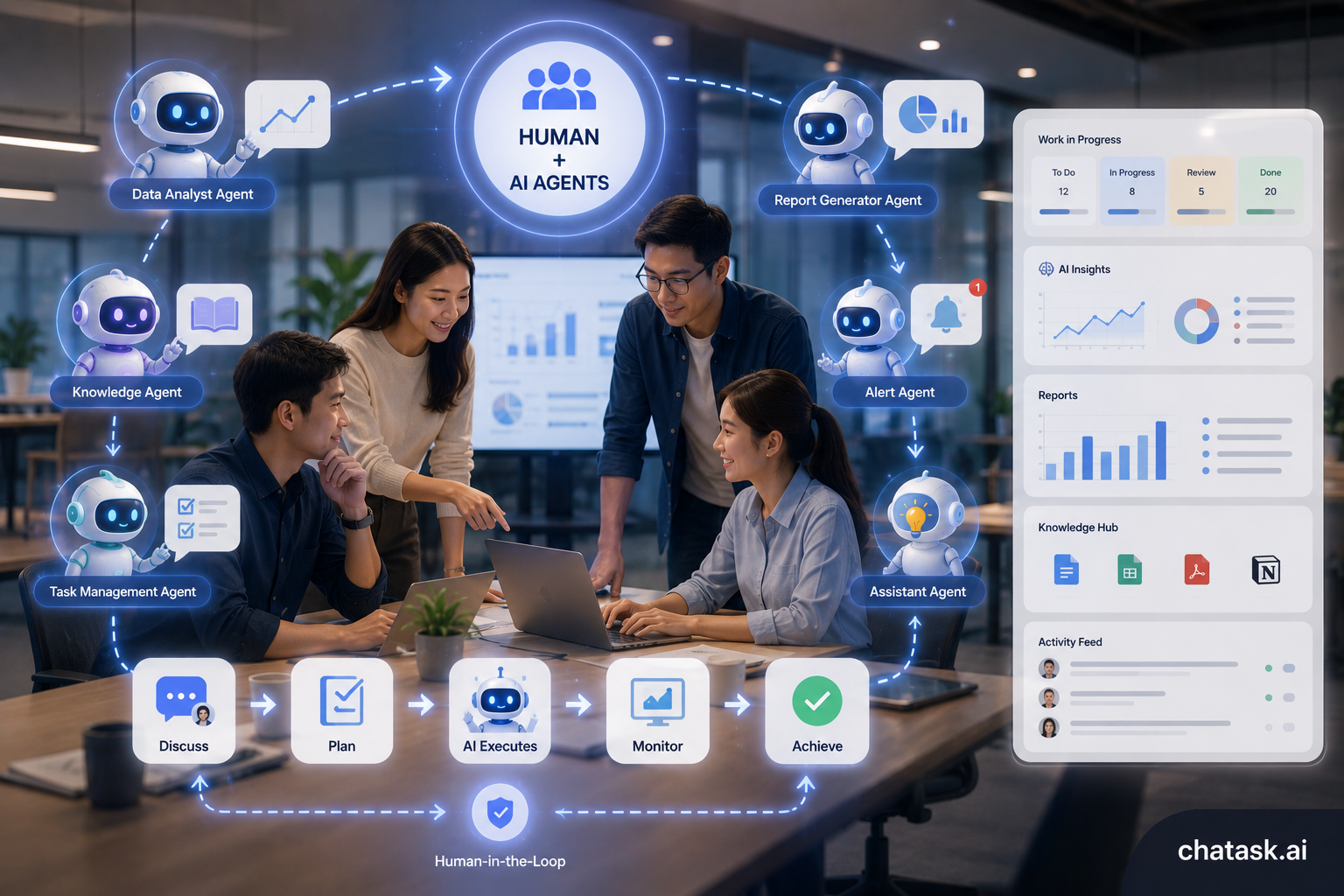
A new trend is now emerging: AI Agents. Instead of simply answering questions, AI can monitor project progress, identify tasks at risk of delay, generate reports, send alerts, and recommend next actions. AI is evolving from a support tool into a digital teammate that actively participates in organizational workflows.
From Chat Apps to AI Workspaces
The growth of AI Agents is driving demand for an entirely new type of work environment. This is why the concept of the AI Workspace is gaining increasing attention across the enterprise software industry.
If chat apps were built to facilitate communication, AI Workspaces are built to facilitate execution. They are not just places where people exchange information; they are environments where work is created, tracked, executed, and evaluated.
In an AI Workspace, conversations no longer end once a team agrees on a course of action. Tasks can be generated directly from discussions, AI can monitor progress, data can be updated in real time, and reports can be continuously built throughout the execution process.
Why Businesses Are Moving Toward AI Workspaces
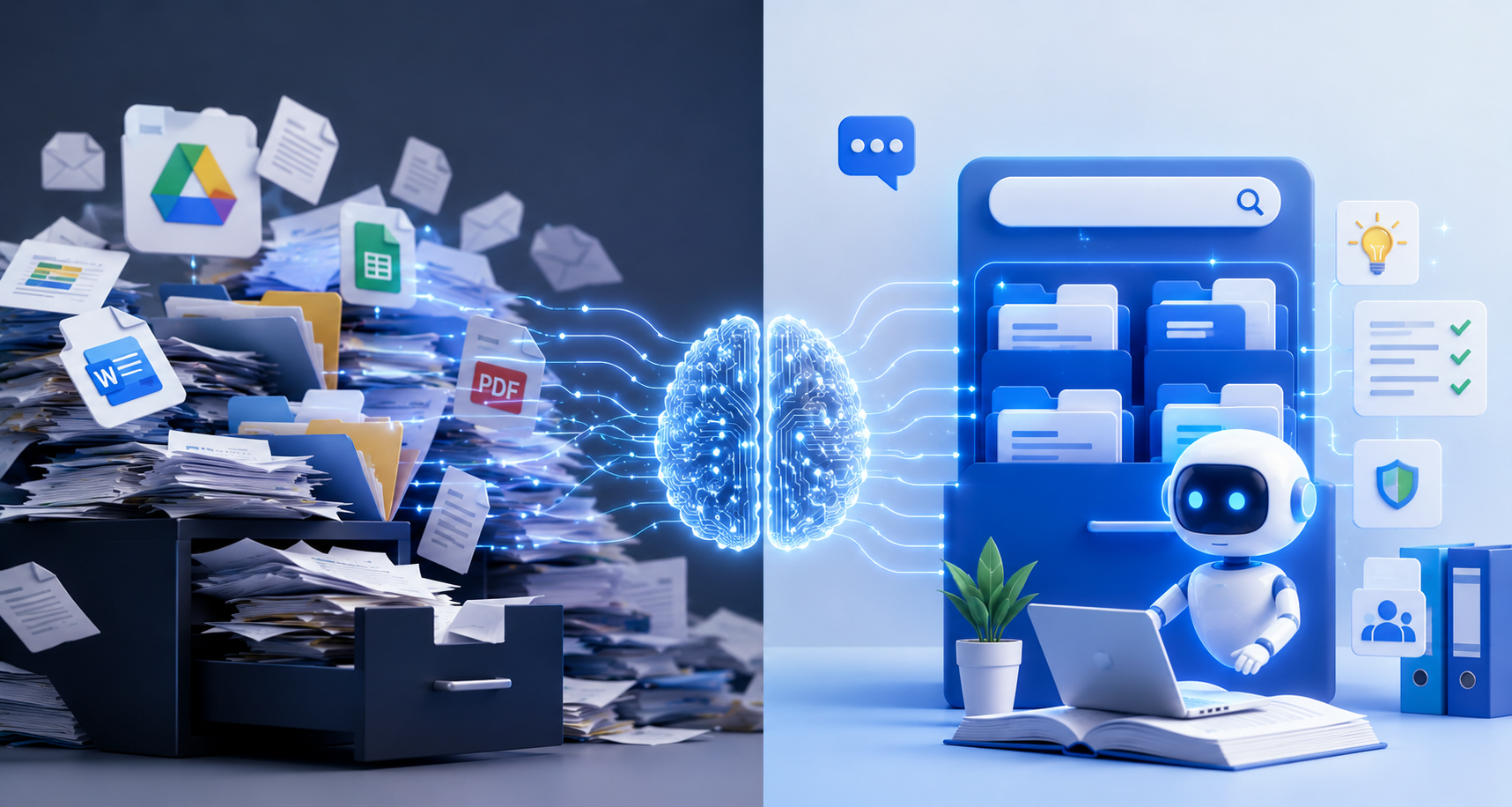
The most important reason is the desire to reduce operational fragmentation. When work, data, knowledge, and AI exist within a unified environment, collaboration becomes significantly easier.
Instead of searching for information across multiple platforms, employees can access the full context of their work directly where the work is happening. Decisions no longer disappear into chat histories. Tasks remain connected to their original context. AI also gains access to the information it needs to provide more accurate and meaningful support.
More importantly, AI Workspaces help organizations shift from tool-centric management to workflow-centric management. The focus is no longer on how many applications a company uses, but on how effectively work is executed.
The Future of Workspaces Will Be Human + AI Agents
In the coming years, AI Agents will increasingly become part of the workforce, helping teams track work, manage knowledge, generate reports, and handle repetitive tasks. However, the future of work is not about AI replacing humans. It is about humans and AI collaborating within the same workflow.
Through a Human-in-the-Loop approach, AI handles routine operations and data processing while humans focus on strategic thinking, creativity, judgment, and decision-making. This allows organizations to leverage the power of AI while maintaining control, accountability, and business oversight.
This is also why AI Workspaces are widely viewed as the next evolution of enterprise software. Beyond improving communication, they create an environment where humans and AI can work together, transforming discussions into actions and ideas into tangible results.
Conclusion
Chat apps transformed the way businesses communicate. However, the next phase of digital transformation is no longer about communication alone-it is about execution and coordination.
As AI becomes an increasingly important part of the workforce, organizations need more than a messaging platform. They need an AI Workspace where people, work, knowledge, and AI are connected within a single operational ecosystem.
The future of work is not simply a place where people talk to each other. It is a place where every conversation can become action, every task remains connected to its context, and every idea has the opportunity to become a real outcome.