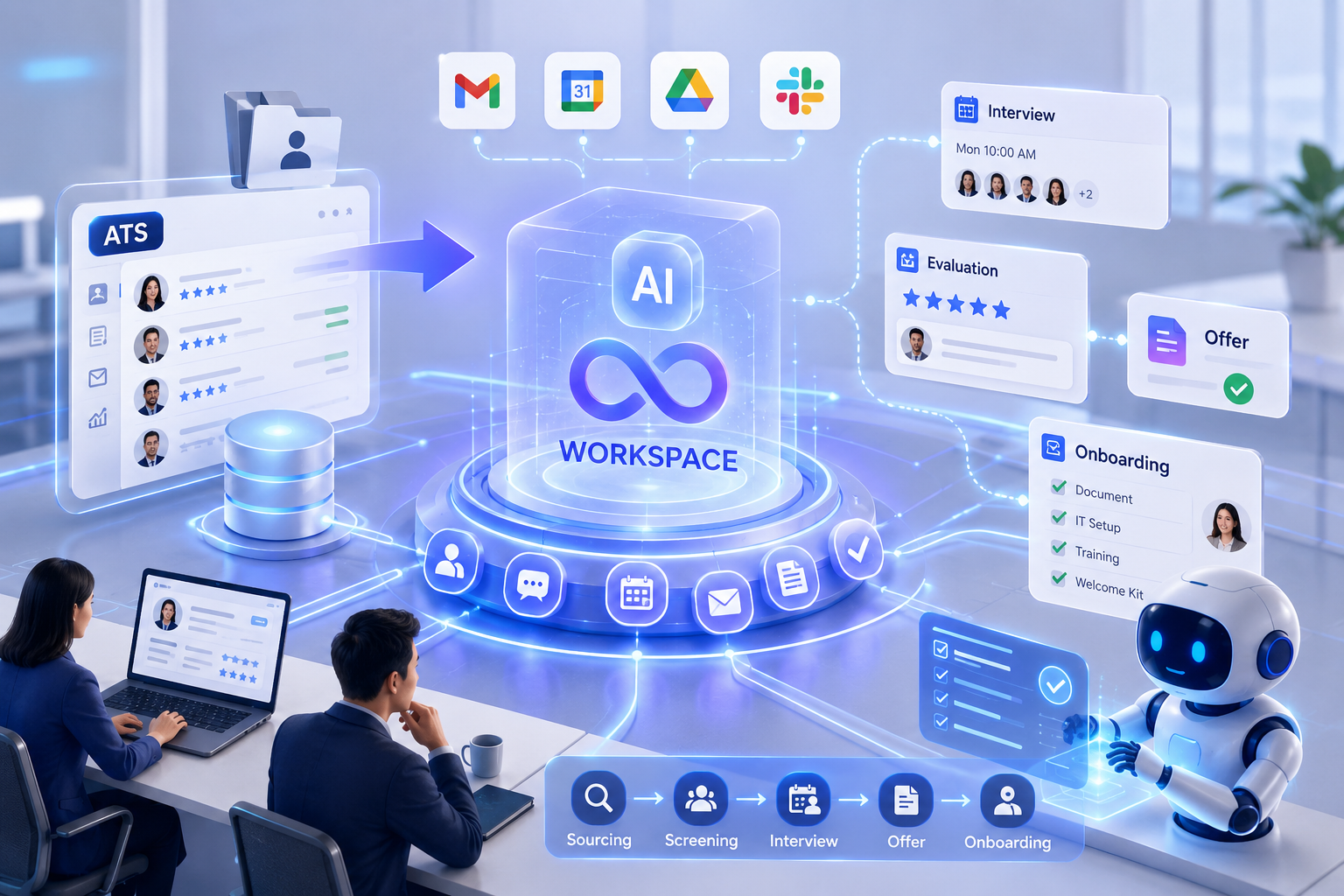
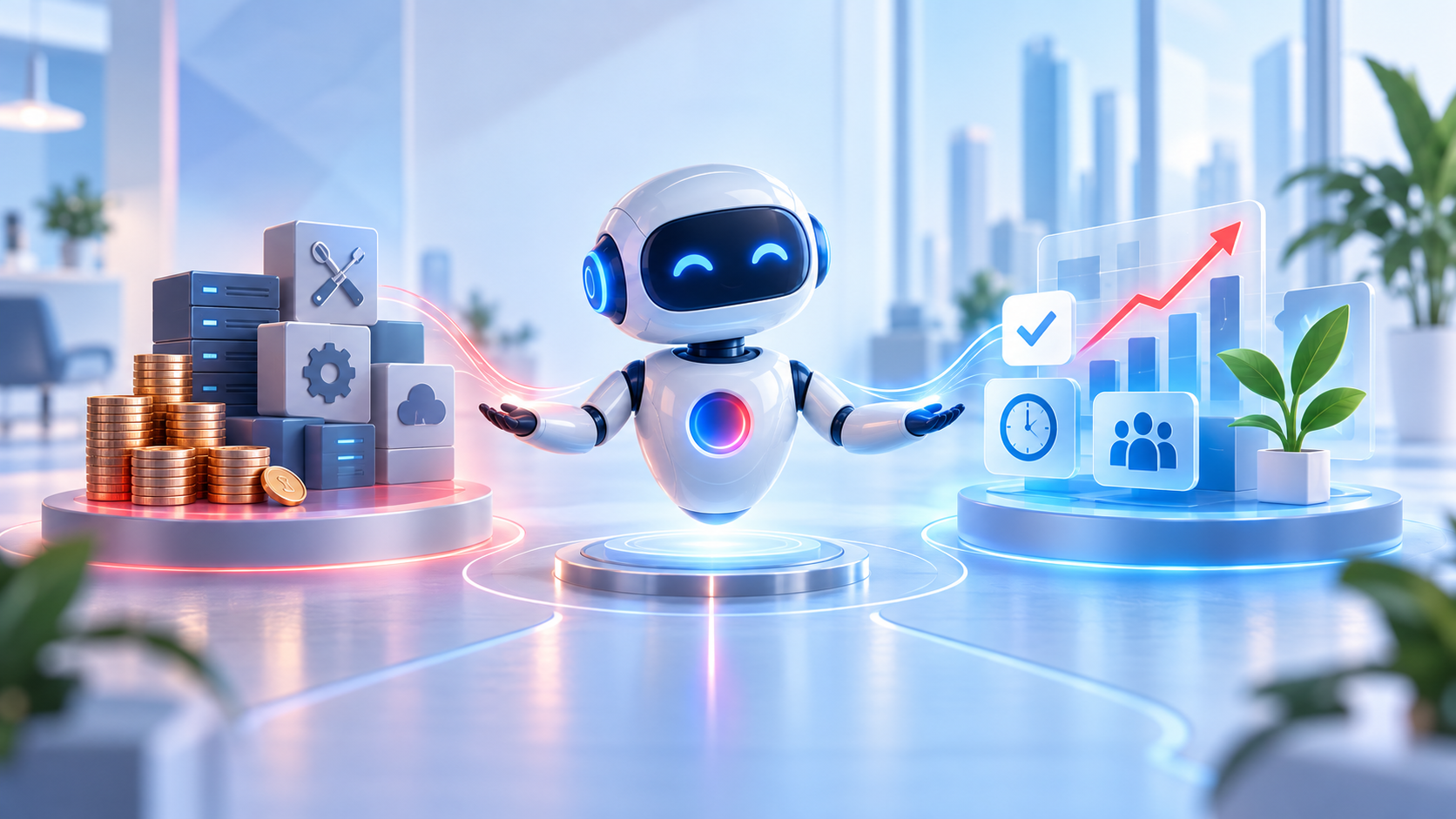
A few years ago, when people talked about AI in the workplace, most immediately thought of chatbots.
You ask a question. AI provides an answer. The conversation ends.
Today, the way businesses use AI is changing rapidly. AI no longer appears only when users open a chat window and type a question. Instead, AI is beginning to participate directly in the execution of work.
AI can track project progress, remind teams about tasks at risk of missing deadlines, generate reports, retrieve information related to specific assignments, and proactively alert teams to issues that require attention.
This is also why major technology companies such as Microsoft, OpenAI, Google, and Anthropic are increasingly talking about AI Agents and Digital Teammates rather than chatbots.
From Chatbots to Digital Teammates
The evolution of AI in the workplace can be viewed as a continuous progression.
Initially, AI served primarily as a chatbot whose main responsibility was answering questions. Later, AI Assistants emerged to support individual productivity through content creation, document summarization, and data analysis.
The next step was the AI Agent. Instead of simply responding to prompts, AI Agents can track goals, execute multi-step tasks, and use various tools to achieve desired outcomes.
The story of AI in business is not just about smarter models. More importantly, it is about the changing role of AI - from a tool that answers questions to a collaborator capable of participating directly in organizational workflows.
| Aspect | Chatbot (AI 2.0 Era) | AI Agent (AI 3.0 Era) |
| Trigger | User asks a question or submits a request | Goals, events, or schedules defined in advance |
| How it works | Receives prompts and generates responses using language models | Breaks down goals, plans actions, and uses tools to complete tasks |
| Scope of work | A single conversation or request | Multi-step processes that may span multiple systems |
| System access | Limited or none | Can access APIs, databases, documents, and business systems |
| Output | Generated text, content, or answers | Completed tasks, updated data, and executed workflows |
| Level of autonomy | Fully dependent on human prompts | Can perform actions autonomously within defined permissions |
If chatbots are designed to answer questions, AI Agents are designed to help get work done. This is why many organizations are beginning to view AI Agents as Digital Teammates - digital coworkers that participate directly in workflows rather than simply responding to isolated requests.
How Are AI Agents Changing the Way Businesses Work?
If chatbots primarily help individuals find information or complete specific tasks, AI Agents are designed to participate directly in operational workflows.
The value of AI is no longer measured by how quickly it can generate answers. Instead, it is measured by its ability to help entire workflows operate more efficiently. From sales and project management to customer support and software development, AI Agents are increasingly taking on repetitive tasks, tracking progress, and helping teams make decisions faster.
This shift explains why many organizations no longer see AI as a standalone tool. Instead, they view AI as a Digital Teammate - a digital coworker capable of contributing directly to everyday work.
Sales Teams
Sales professionals often manage dozens of opportunities simultaneously. An AI Agent can monitor the sales pipeline, remind users about customer follow-ups, summarize interaction histories before meetings, and identify opportunities that may be at risk of being overlooked.
Salespeople still build relationships and close deals, but AI significantly reduces the amount of manual tracking required.
Project Management
Project managers often spend substantial time gathering information from different team members.
AI Agents can track task progress, identify work items at risk of delay, summarize outstanding issues, and automatically prepare reports before meetings. As a result, managers can spend more time making decisions and less time collecting information.
Customer Support
AI does not necessarily need to replace customer service representatives.
An AI Agent can prepare customer histories, summarize issues, and suggest appropriate responses. Customers continue interacting with humans while receiving faster and more consistent support.
Software Development
Within engineering teams, AI can assist with code reviews, bug tracking, technical documentation, and sprint monitoring.
Developers are not being replaced. Instead, their roles are evolving toward solution design, quality assurance, and collaboration with AI Agents throughout the product development process.
Human-in-the-Loop Remains at the Center
The rise of AI Agents does not mean AI will replace humans.
In fact, most modern Agentic AI systems are built around the Human-in-the-Loop model. AI handles data processing, workflow monitoring, and repetitive tasks, while humans remain responsible for evaluation, decision-making, and accountability.
The goal is not to build organizations operated entirely by AI.
The goal is to build teams where humans and AI work together, each contributing their unique strengths.
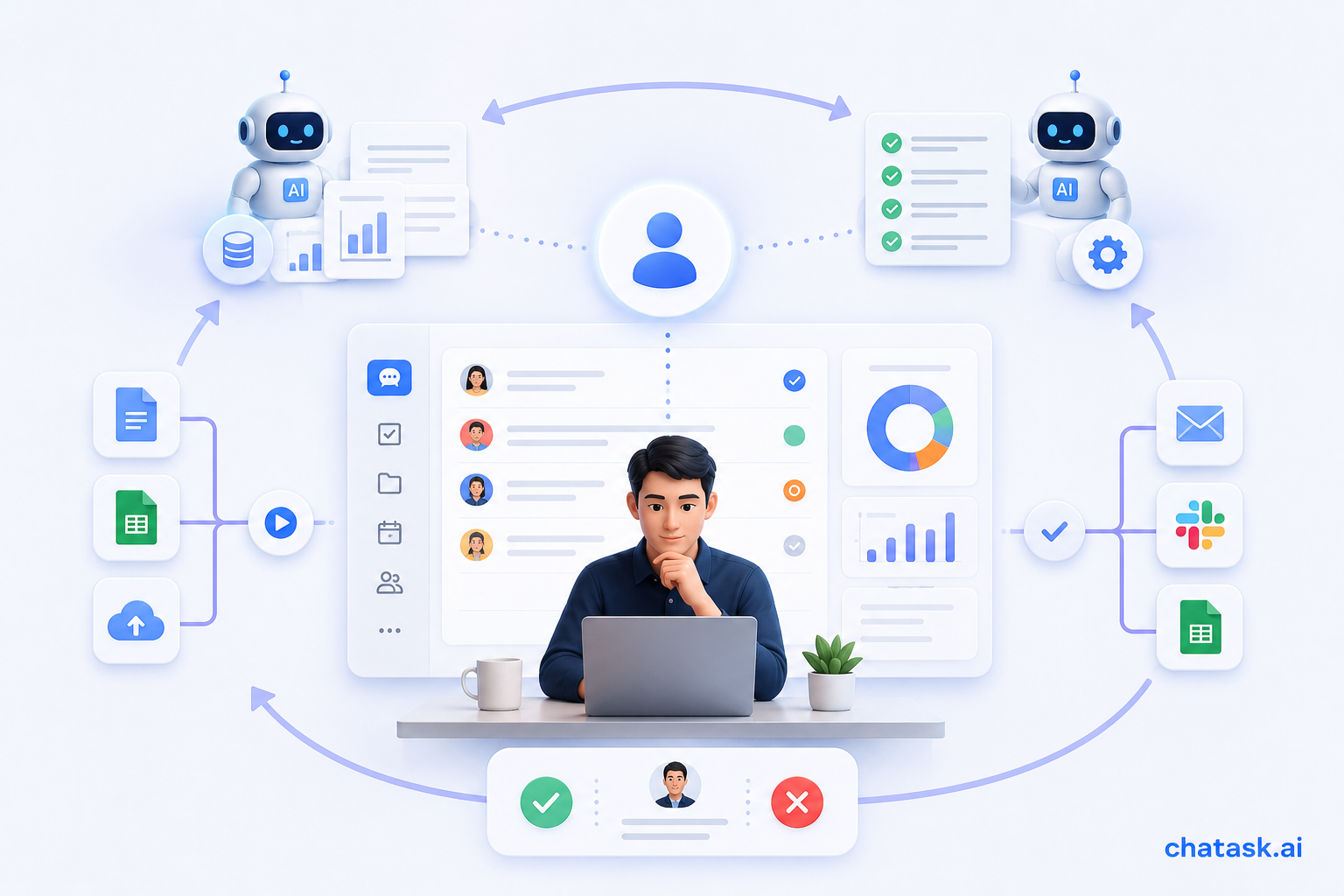
Digital Teammates Are No Longer the Future - They Are Already Here in ChaTask
At ChaTask, we believe AI delivers the greatest value when it is integrated directly into workflows rather than existing as a separate tool.
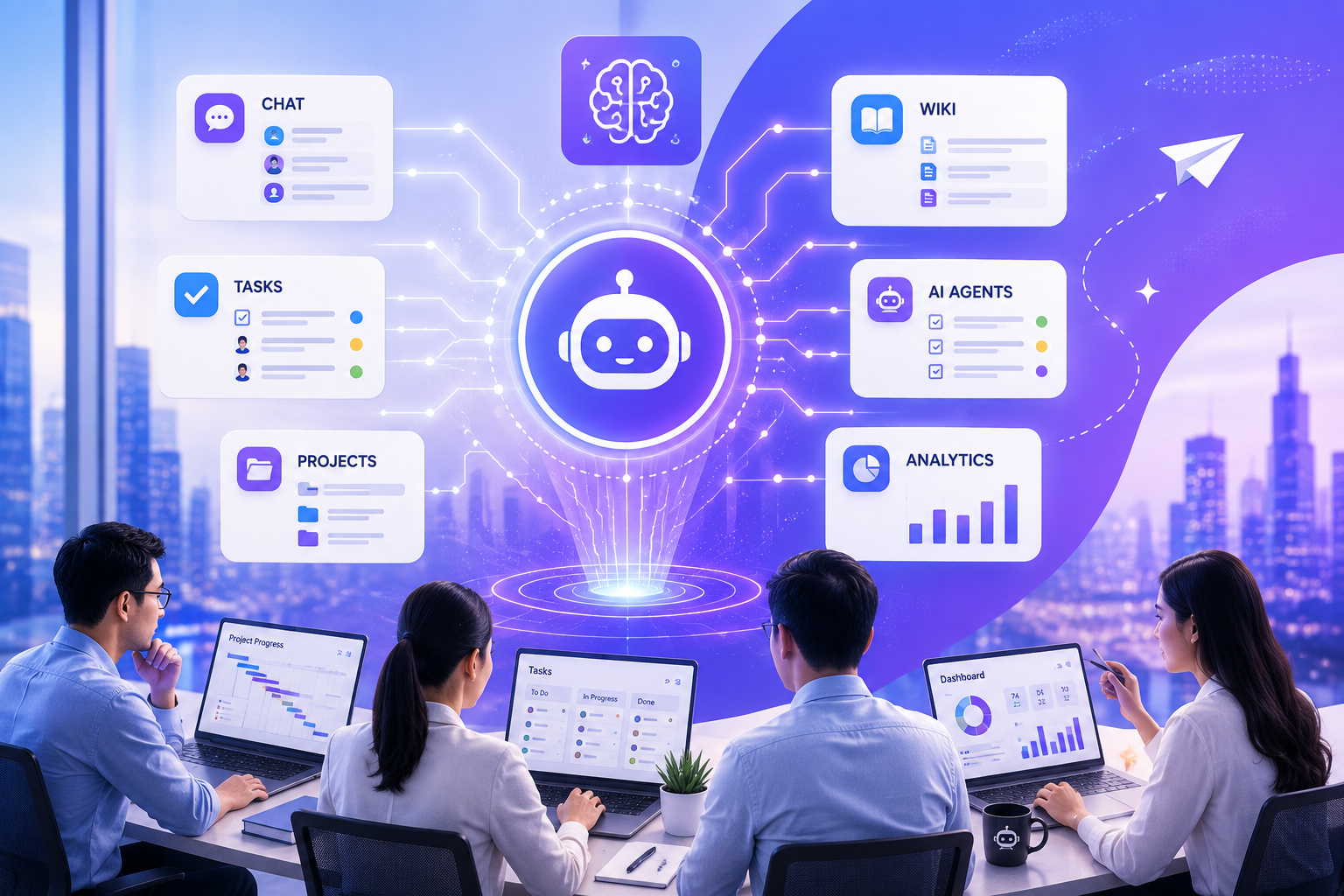
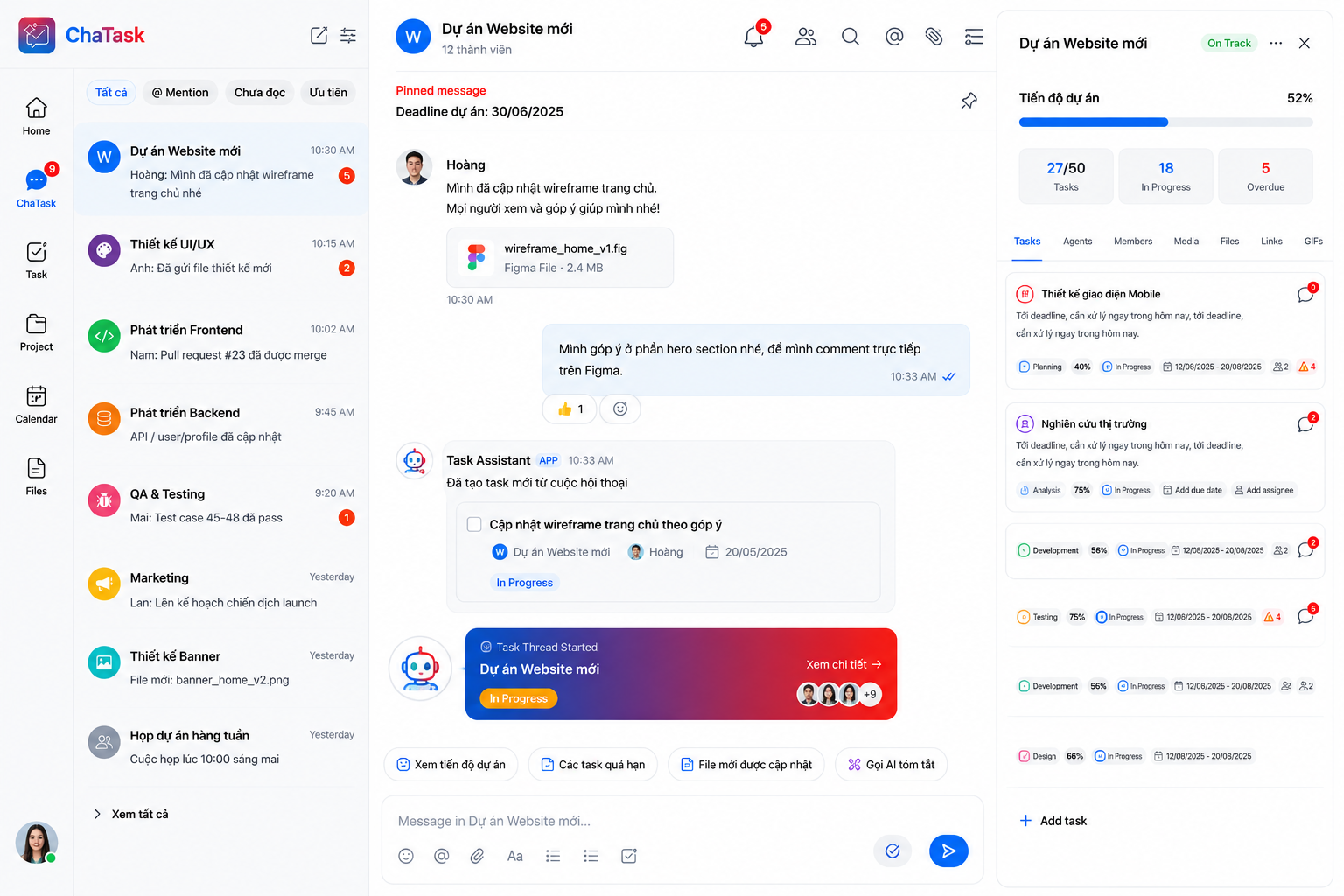
That is why ChaTask is built as an AI Workspace where Chat, Tasks, Knowledge, and AI Agents coexist within a unified work context.
Instead of switching between multiple tools, users can collaborate with AI Agents directly within ongoing conversations and projects.
For example, Task Assistant can monitor work progress and identify tasks at risk of delay. Project Assistant can summarize project status and prepare reports. Knowledge Assistant helps users search internal knowledge. Personal Assistant supports schedules and personal productivity. AI Follow-up Agent tracks commitments that have not yet been completed within conversations.
In this model, AI is no longer a standalone chatbot.
AI becomes a Digital Teammate operating directly within the day-to-day work environment.
Conclusion
The evolution of AI in business is moving from Chatbots to AI Assistants, from AI Agents to Digital Teammates.
The key difference is not that AI is becoming better at answering questions. The real transformation is that AI is becoming capable of participating more deeply in the execution of work.
In the future, businesses will not simply own AI tools. They will build teams where humans and AI Agents collaborate within a shared workflow.
This is how ChaTask envisions the future of work: Human + AI Agents, All in One Chat.