"What's the current status of Project ABC?"
This is one of the most common questions in any business. Yet answering it often requires employees to open the project management system, check emails, review chat histories, ask colleagues for updates, and finally compile everything into a report for management. A question that takes only a few seconds to ask can sometimes take hours - or even an entire day - to answer.
The important thing to understand is that this is not the employees' fault. They are doing their jobs as expected. The real issue is that business information is scattered across multiple systems, and managers can only see the full picture after someone manually consolidates everything into a report.
Why Do Managers Always Have to Wait for Reports?
In many organizations, reports have become the bridge between managers and day-to-day operations. To understand how a project is progressing, managers wait for the Project Manager's report. To check today's sales performance, they wait for the Sales team to compile the numbers. To identify delayed tasks, they rely on team leaders to investigate and provide updates.
This approach worked well when business data wasn't digitized. However, as organizations grow, projects multiply, departments expand, and thousands of tasks are created every day, relying on reports significantly slows down decision-making.
More importantly, reports always represent the past. By the time a report has been compiled, reviewed, and delivered, the actual situation may already have changed. A deadline may have been missed, a customer may have canceled an order, or a new risk may have emerged without being reflected in the latest report.
What Managers Really Need Isn't Another Report
Imagine a familiar situation. The CEO walks into a meeting and asks:
"What issues is the implementation project for Client A currently facing?"
No one has an immediate answer. One person opens the project management software. Another searches through emails. Someone else reviews the team's chat history. After about fifteen minutes, everyone pieces together fragments of information before finally responding.
The time isn't lost because the question is difficult. It's lost because the organization has to search for information every time someone asks a question.
Managers don't need another report. What they truly need is the ability to ask any question and receive an accurate answer immediately.
When Data Is Scattered, Answers Will Always Be Slow
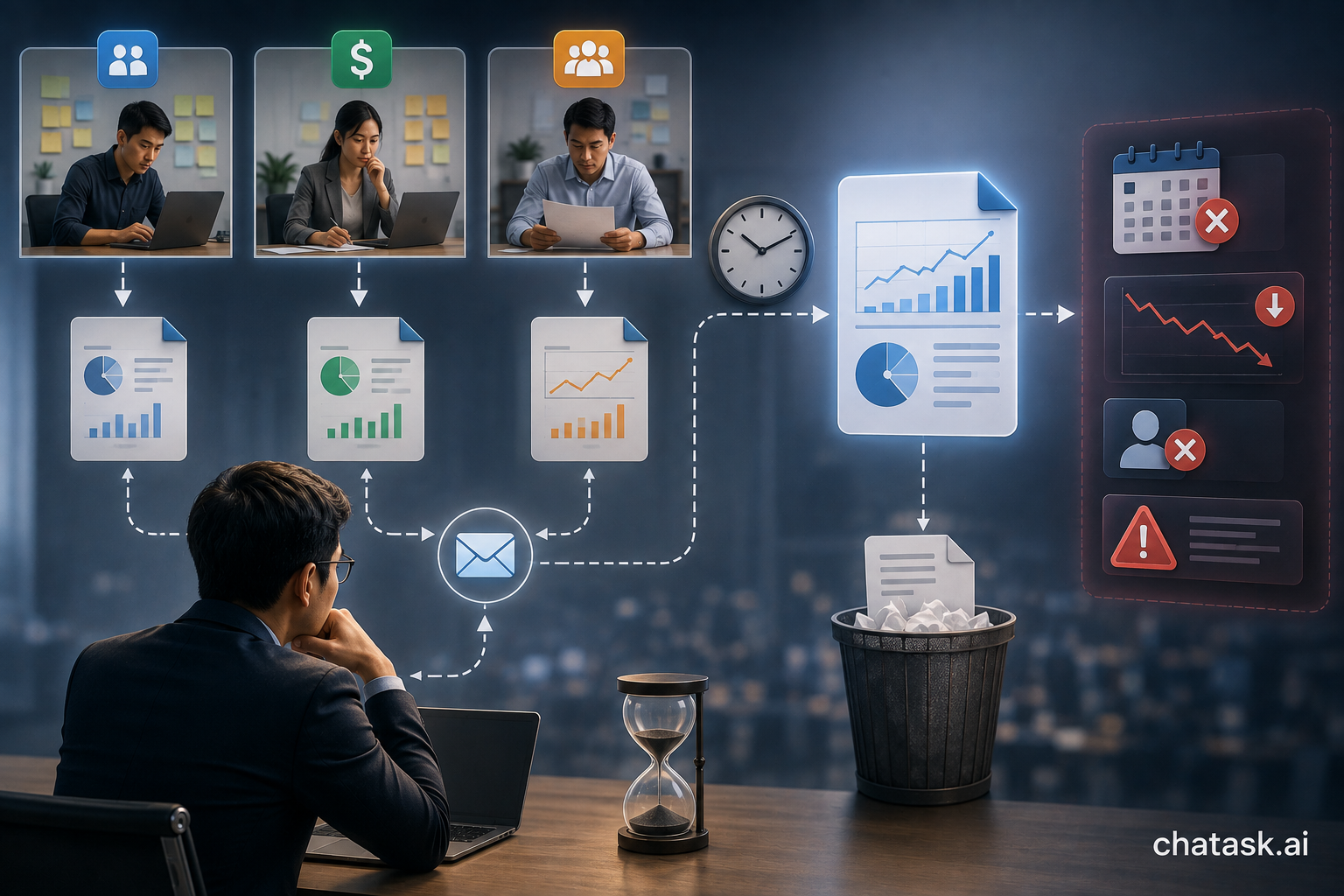
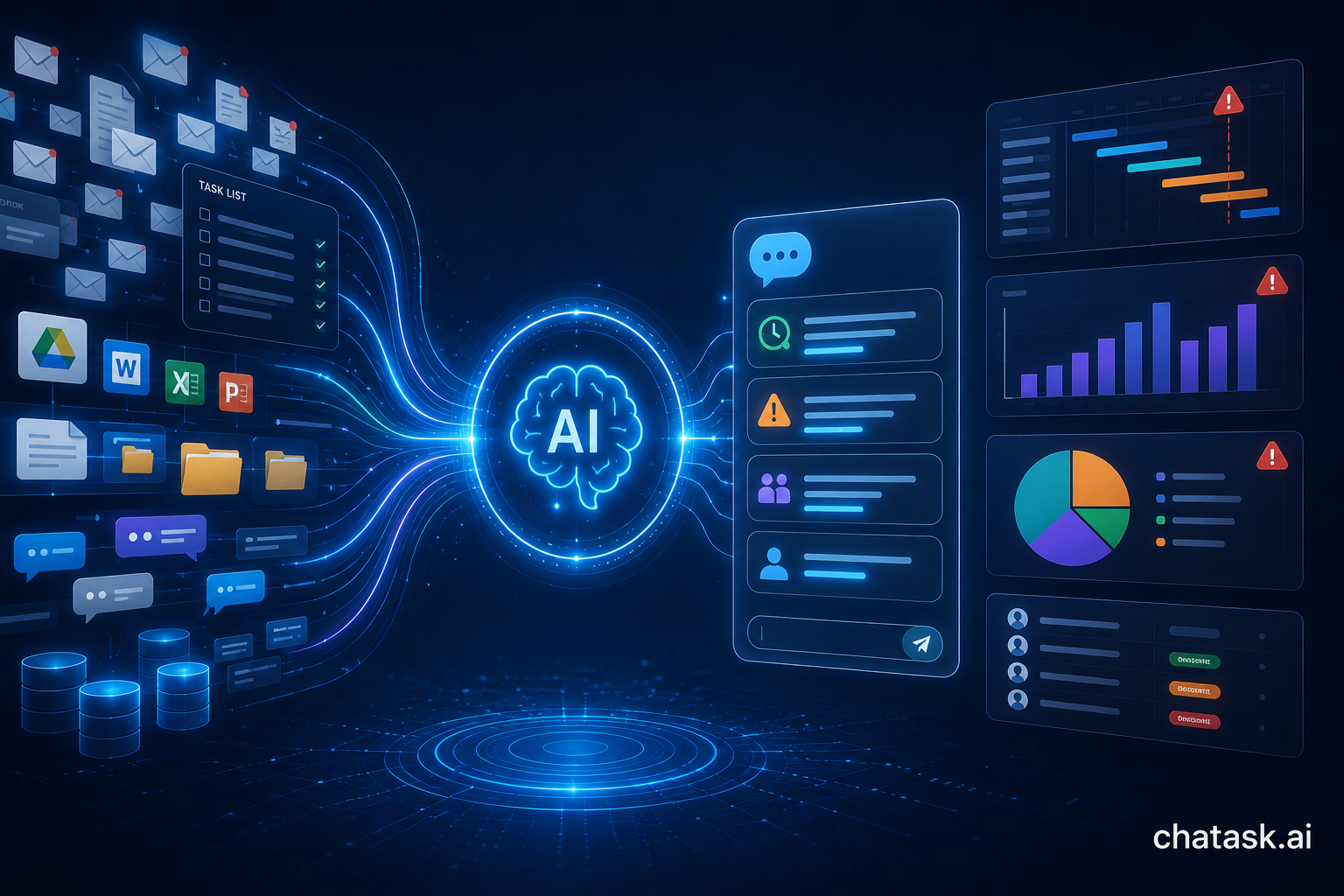
In many businesses, a single task may begin in an email, be discussed through a chat application, have its documents stored in Google Drive, its progress tracked in Excel, and eventually be summarized in a PowerPoint presentation for management.
Each tool contains only part of the story. No single platform reflects the complete workflow. As a result, whenever managers need to understand what's happening, the organization has to start assembling information from multiple disconnected sources.
This is also why many weekly meetings exist solely for status updates. People aren't meeting to solve problems - they're meeting to find information.
AI Is Changing How Managers Get Answers
In the past, AI was often associated with writing content or generating images. In today's workplace, however, its greatest value lies in its ability to consolidate and analyze business data.
Instead of reading dozens of emails, reviewing task lists, or opening multiple reports, AI can analyze all available business data and answer management questions within seconds.
For example, a manager can simply ask:
-
Which projects are at risk of falling behind schedule?
-
Which overdue tasks are still unresolved?
-
Which department currently has the largest task backlog?
-
Which customers haven't received a response within the last 48 hours?
Rather than waiting for an employee to gather and summarize the information, AI can provide direct answers based on real-time business data.
To Get Instant Answers, Businesses Need a Single Source of Truth
AI cannot generate accurate answers if business data remains scattered across different systems.
If managers want to ask a question and receive an immediate answer, organizations must build a unified work environment where tasks, conversations, documents, and organizational knowledge are connected instead of existing in isolated platforms.
When all information is continuously updated and linked together, management questions no longer need to pass through multiple layers of manual reporting. The system itself can respond using live operational data.
How Chatask Helps Managers Get Answers Instantly
Chatask is designed to help businesses move beyond relying on manually prepared reports to understand what's happening across the organization.
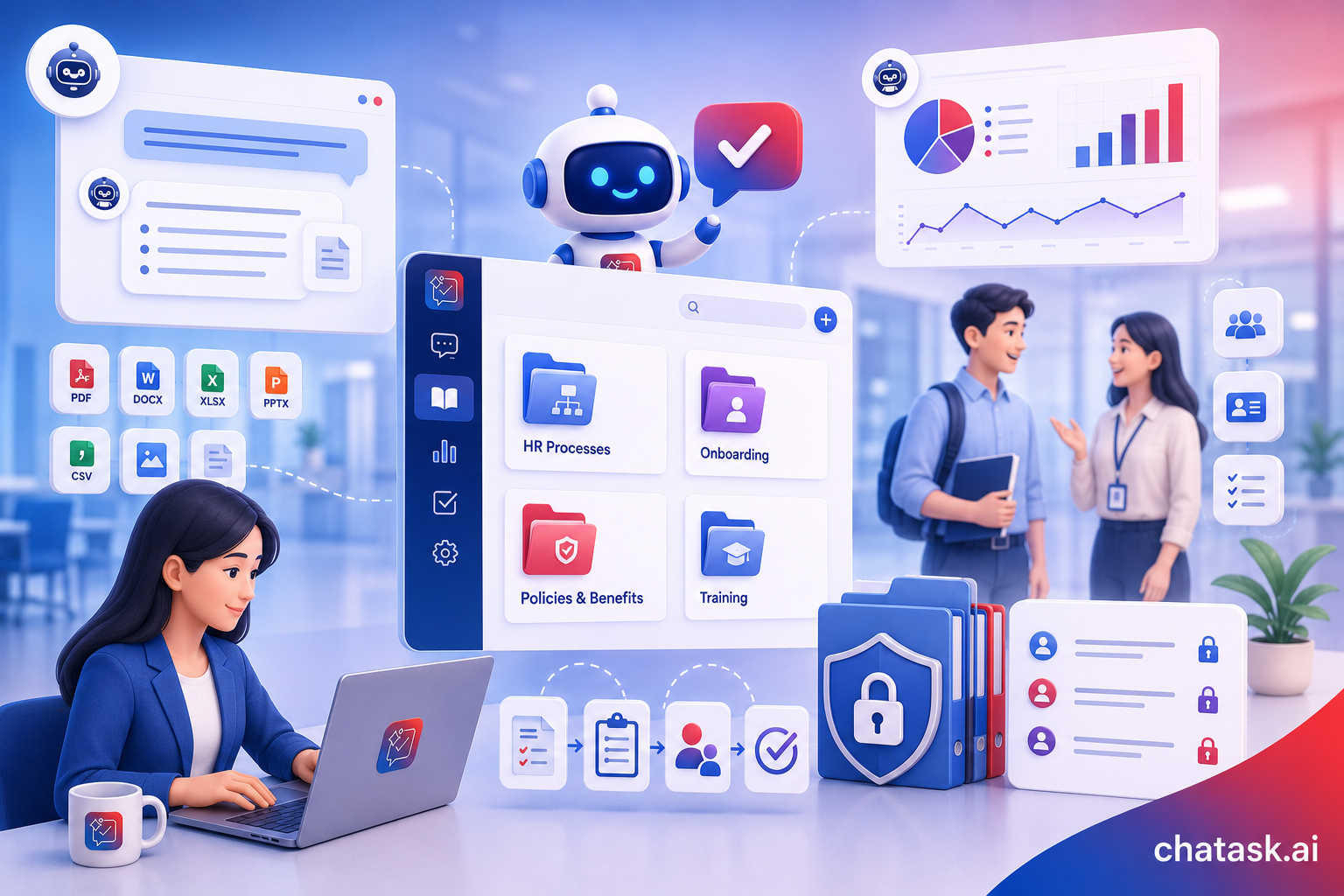
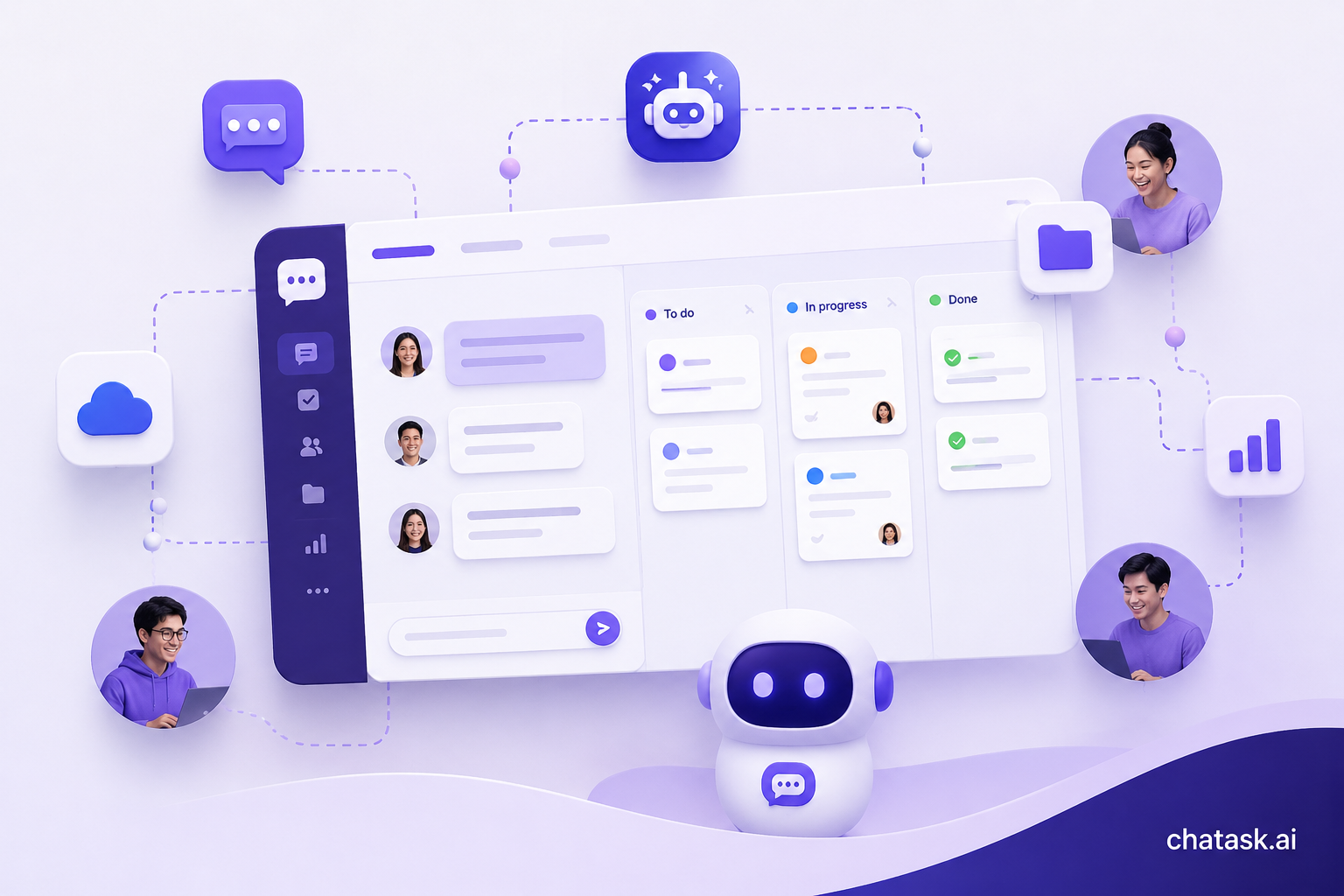
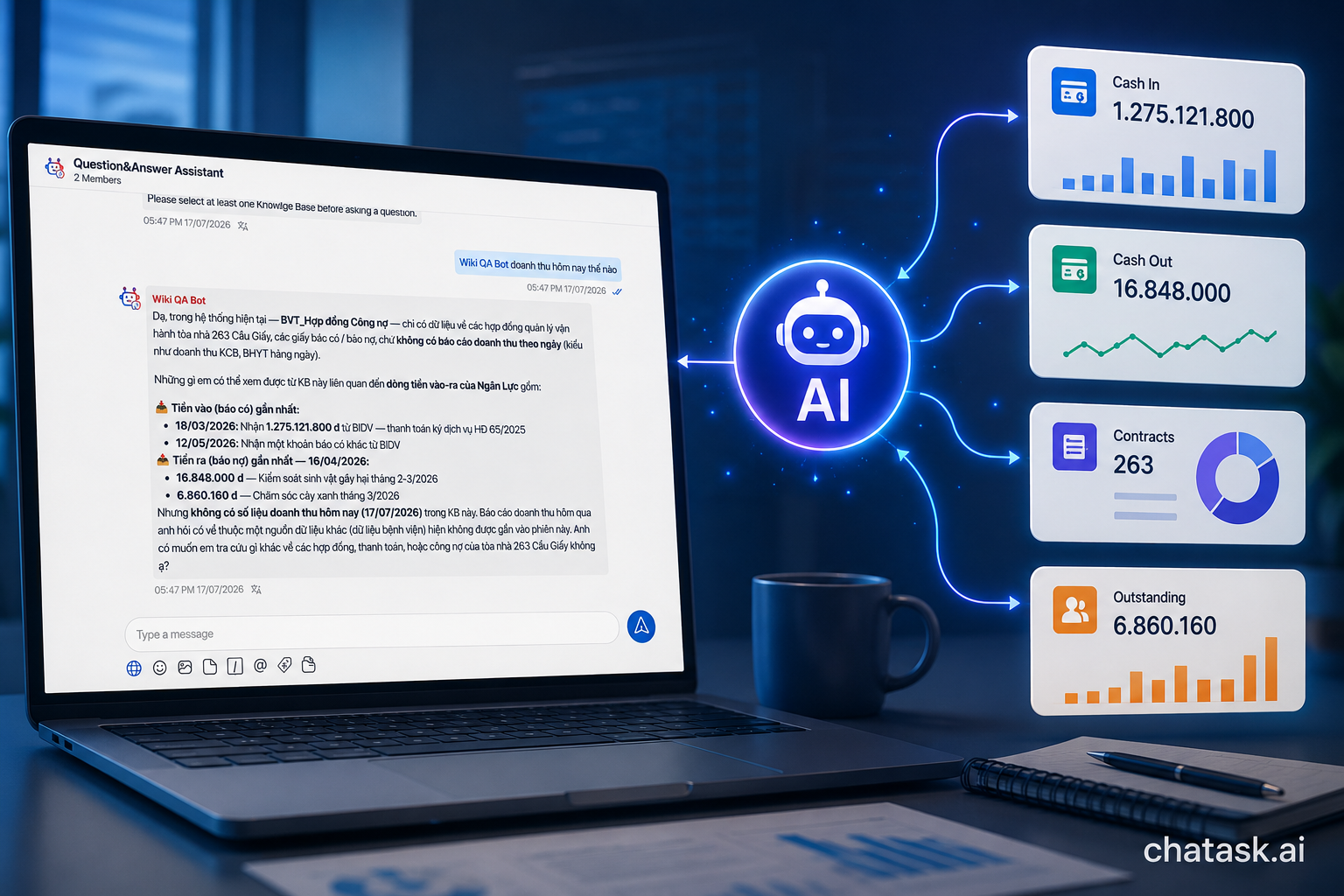
Within Chatask, conversations are connected to Tasks, Tasks are linked to Projects, documents are organized through the company Wiki, and AI Agents continuously monitor the entire workflow. When managers need information, AI doesn't simply read a report - it analyzes data across the entire workspace to generate meaningful answers.
Instead of waiting for employees to prepare reports, managers can directly ask questions such as:
"Which projects are at risk of delay?", "Which tasks don't have an assigned owner?", or "What issues require immediate attention today?"
AI analyzes the latest business data in real time and provides answers within seconds.
Conclusion
For many years, reports have been considered the primary way for managers to understand what's happening inside their organizations. However, as business data becomes increasingly digital and AI continues to evolve, managers no longer need to wait until the end of the day - or even the end of the week - for someone to deliver a report.
What truly matters is the ability to ask questions at any moment and receive accurate answers immediately. When businesses shift from "managing through reports" to "managing through real-time data," decision-making becomes faster, status update meetings become less frequent, and managers can spend more time on what creates the greatest value: making better decisions for the business.