"I thought Alex was in charge."
"I thought Sarah had already taken care of it."
"I didn't know this was due today."
These are phrases that many managers have heard after a task falls behind schedule - or worse, gets completely overlooked. What's interesting is that, in many cases, employees are not intentionally avoiding responsibility. They genuinely believe that someone else is handling the task or that it isn't their turn to take action yet.
If this only happens once or twice, it may simply be an individual mistake. But if it keeps happening across different projects, departments, and teams, the problem is likely not the people - it's the way the organization manages work.
Work Usually Starts with a Conversation
Very few tasks begin with someone creating a task in a project management system. Most of the time, work starts during a meeting, in a group chat, through an email, or simply from a quick conversation between team members.
A manager might send a message saying, "Please update the quotation this afternoon." A colleague might say, "Don't forget to send the contract to the customer tomorrow." At that moment, everyone understands what is being discussed and assumes that the reminder is enough.
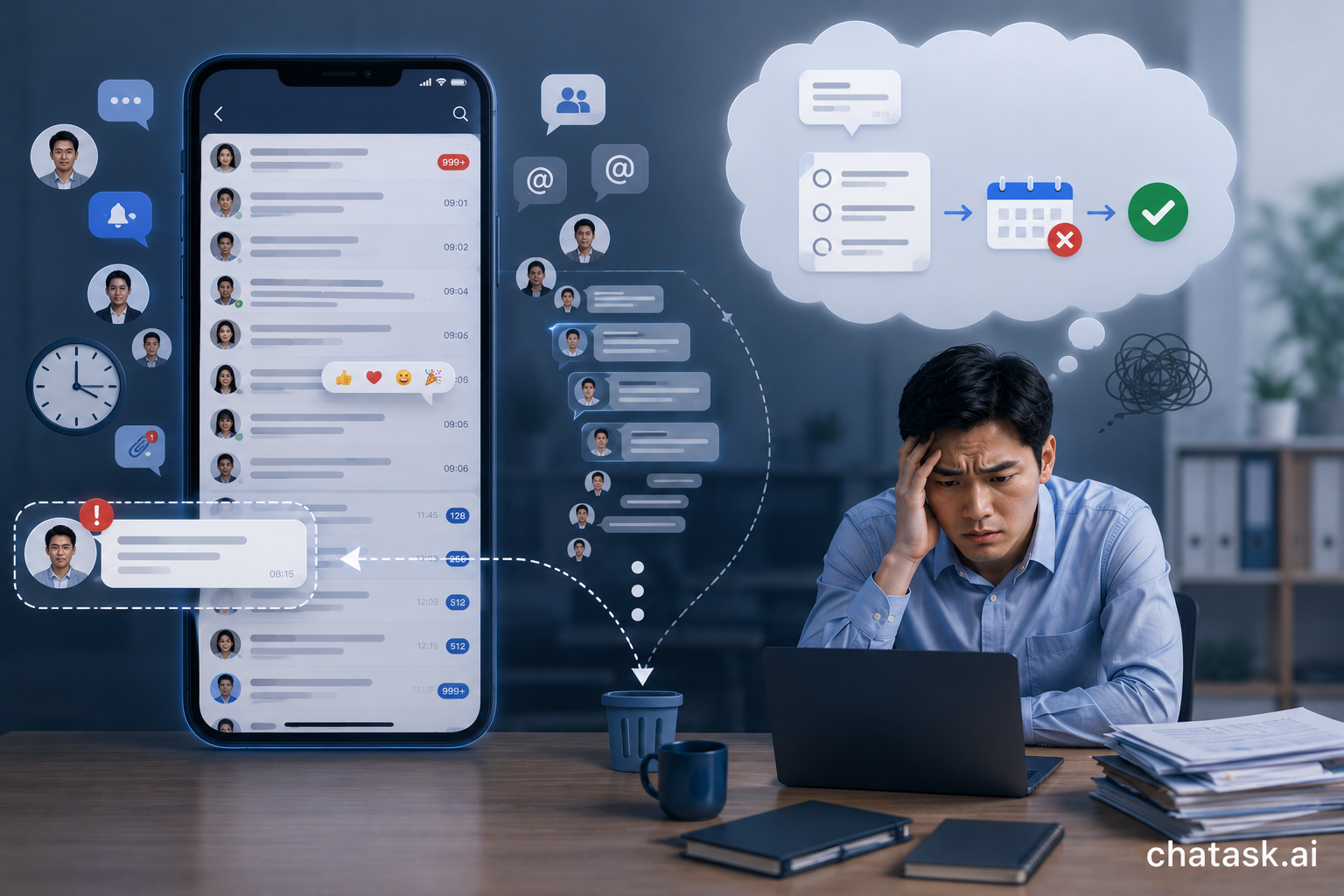
The problem is that a few hours - or a few days - later, that conversation has already been buried beneath hundreds of newer messages. The person assigning the task believes it has been delegated, while the recipient assumes it was just a reminder or that someone else will take care of it. In the end, nobody is truly certain who owns the task.

"I Thought Someone Else Was Handling It" Is Really an Ownership Problem
A single task often involves many people. Some propose ideas, others discuss them, some provide support, and others approve the final result. However, the most important question - who actually owns the task - is not always clearly defined.
Without a clearly assigned owner, every team member naturally assumes that someone else will handle it. By the time the deadline approaches or the customer asks for an update, the team suddenly realizes that the work hasn't even started.
This is why many organizations have enough employees and plenty of tools, yet still experience tasks being forgotten or overlooked.
Traditional Chat Tools Were Never Designed to Manage Work
Chat applications have become the communication hub for most organizations. Every day, teams exchange hundreds or even thousands of messages, ranging from project updates and technical discussions to quick questions and casual conversations.
Ironically, this speed makes important information disappear very quickly. A request sent in the morning may already be buried beneath dozens of conversations just a few hours later. Without a mechanism to highlight and track important messages, missing critical tasks becomes almost inevitable.
This doesn't mean employees are irresponsible. Chat applications were designed for communication - not for managing the entire lifecycle of a task.
Not Every Message Needs to Become a Task
A common reaction is to convert every conversation into a task. However, as task lists continue to grow with countless small activities, people often spend more time updating tasks than actually completing meaningful work.
What organizations truly need is not more tasks. They need a way to distinguish between information that requires ongoing tracking and ordinary conversations.
An important request, a new deadline, or a change in project scope should be recognized the moment it appears in the conversation. This allows teams to focus on tracking information that genuinely affects progress instead of overwhelming the system with hundreds of unnecessary tasks.
The Hardest Part Isn't Assigning Work - It's Tracking What Changes Afterwards
Tasks rarely stay exactly the same from start to finish. During execution, customers may change their requirements, project scope may expand, and deadlines may be adjusted.
If these changes only exist inside chat conversations, it's easy for different team members to develop different understandings of the same task. The person doing the work may continue following the original requirements, while the manager assumes everyone is already aware of the latest updates.
This is exactly why ChaTask developed Label Warning. Instead of allowing important changes to disappear among hundreds of chat messages, the system highlights critical updates directly within the conversation so every team member can recognize and respond to them promptly.

AI Doesn't Replace Employees - It Makes Sure Work Doesn't Get Forgotten
When people think about AI, they often imagine content generation or answering questions. However, one of AI's greatest values in work management is its ability to monitor progress and detect potential risks.
Instead of waiting until a deadline has already been missed, Task Follow-up Agent continuously monitors task progress, identifies tasks that haven't been updated for a long time, and detects work that is at risk of falling behind schedule. This allows managers to discover problems much earlier without constantly reviewing every project or rereading lengthy chat histories.
AI does not replace managers. It simply helps ensure that important work is never forgotten just because it has disappeared from the chat window.
To Eliminate "I Thought Someone Else Was Handling It," Organizations Need to Rethink Work Management
When this phrase becomes common, many organizations respond by scheduling more meetings, sending more reminders, or asking employees to submit more status reports. While these approaches may provide short-term improvements, they rarely solve the underlying problem.
What organizations really need is a workflow where every task has a clearly assigned owner, every important change is captured as soon as it happens, and every potential risk is identified before it becomes an actual issue.
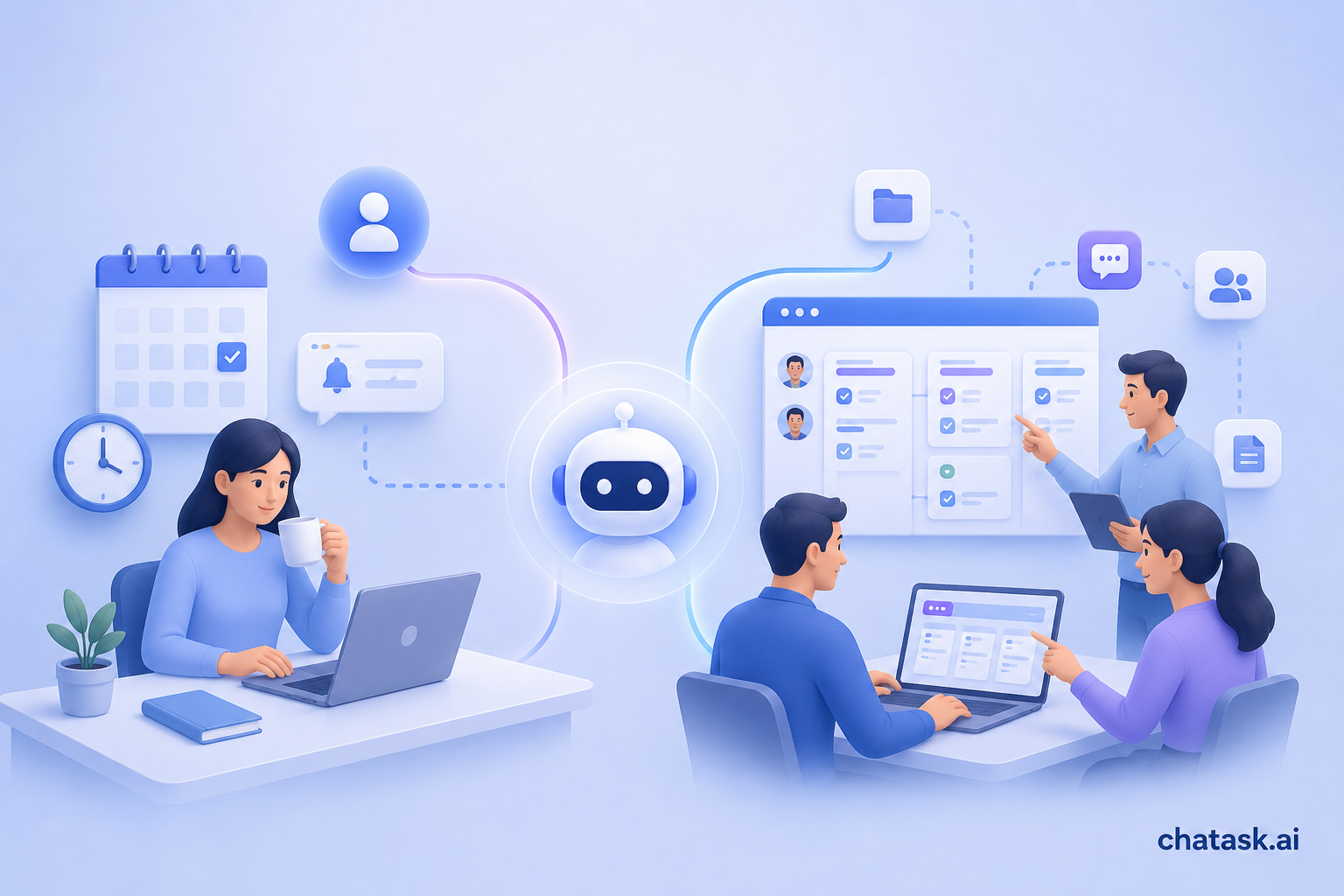
When work is created, tracked, and updated directly within the conversation where it begins, everyone shares the same understanding of progress, responsibilities, and priorities. At that point, "I thought someone else was handling it" is no longer the default explanation after a missed deadline.

Conclusion
A missed task rarely happens because of a single mistake. More often, it is the result of several issues combined - unclear ownership, scattered information, undocumented changes, and a lack of continuous tracking throughout the execution process.
Solving this problem is not simply about assigning work more effectively. It is about managing everything that happens after the work has been assigned. When organizations connect conversations, tasks, and AI within a single workflow, task tracking becomes proactive, and potential risks can be identified much earlier.
That is how organizations can gradually eliminate phrases like "I thought someone else was handling it" and replace them with a workplace where everyone clearly understands what they are responsible for, where each task stands, and what has changed along the way.