Businesses have invested heavily in specialized software to improve productivity. Each tool is designed to solve a specific problem. Chat platforms facilitate communication. Project management software helps track progress. Storage systems support document management. AI tools assist with information processing and automation.
Individually, each platform provides clear value. However, as the number of tools continues to grow, another challenge begins to emerge. It is the cost created by employees constantly moving between different systems to complete what appears to be a simple task.
What makes this particularly interesting is that these costs rarely appear in financial reports. Organizations can accurately calculate how much they spend on software subscriptions each month, but it is much harder to see how much time, focus, and productivity are lost during day-to-day work.
Work Rarely Happens on a Single Platform
Consider how an office employee handles a typical task.
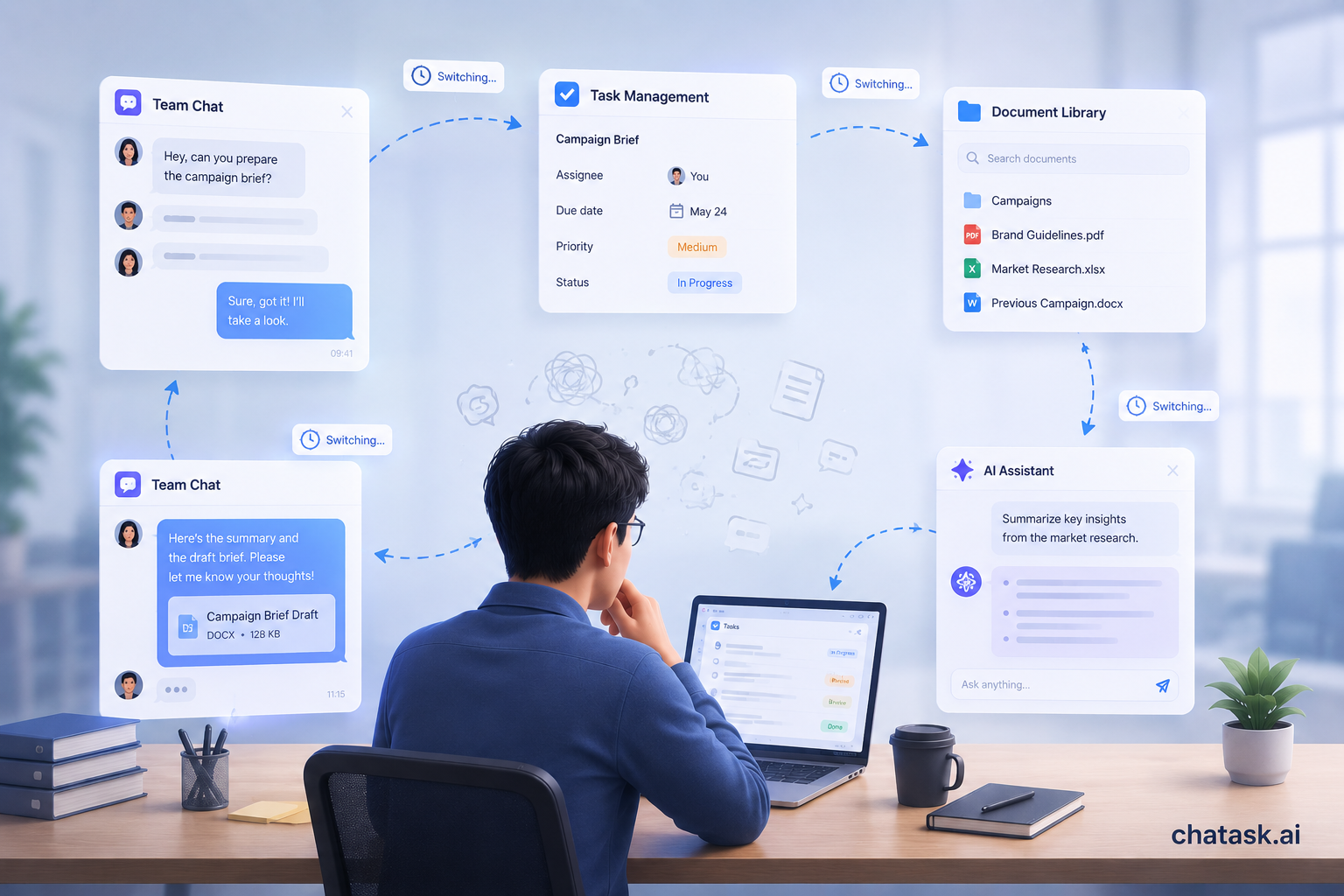
They may receive a request through a conversation, switch to a task management platform to review the details, search for supporting documents in an internal knowledge base, open an AI tool to help process information, and then return to the conversation to share updates with the team.
None of these actions are inherently wrong.
The problem is that work becomes fragmented across multiple systems. To complete a single task, employees are not only performing their actual work but also spending time navigating between tools.
Each switch may only take a few seconds. However, when repeated dozens of times every day, it creates a significant operational cost that very few organizations actively measure.
The Biggest Cost Is Not Time
When discussing tool switching, most people think about wasted time. In reality, time is only the most visible part of the problem.
What businesses lose even more is focus.
Every time users move from one platform to another, they must rebuild their working context. They need to remember what they were doing, which information is relevant, who is responsible, and what the next step should be. This process happens quickly, but it continuously consumes cognitive energy.
As a result, many teams remain busy throughout the day while struggling to maintain deep focus. Work is interrupted more frequently, decisions take longer to make, and the likelihood of overlooking important information increases over time.
When Data Exists but Context Becomes Fragmented
One of the common paradoxes of modern organizations is that the amount of available data keeps growing, yet the ability to leverage that data does not improve at the same pace.
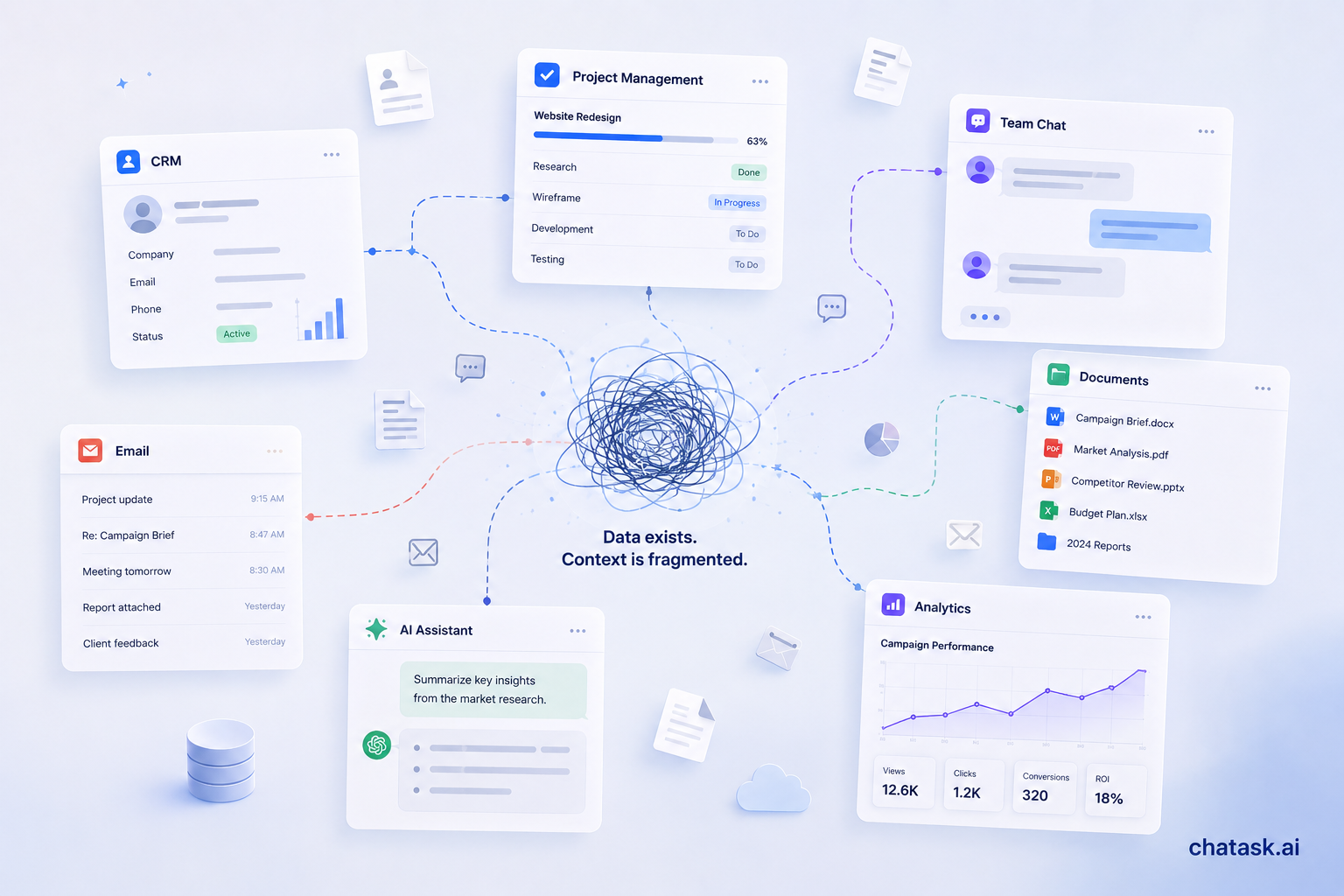
Customer information may live inside a CRM system. Project progress may be tracked in a project management platform. Documents may be stored in a separate repository. Meanwhile, critical discussions and decisions take place across different chat channels.
Each platform contains a piece of the larger picture. However, very few people have enough time to connect all those pieces together.
The challenge is no longer a lack of data. The challenge is that data, work, and conversations exist in different places. When context becomes fragmented, collaboration and decision-making inevitably suffer.
The Largest Hidden Cost Is Coordination Speed
When organizations are small, these disruptions may not have a significant impact. However, as the number of projects, departments, and employees grows, coordination speed becomes one of the most important factors in operational efficiency.
A document that is difficult to find can cost multiple people hours of verification. A missed conversation can trigger additional rounds of communication. A decision delayed by a few hours can sometimes delay an entire project by several days.
These costs rarely appear as a specific line item on a financial statement. Yet they surface every day in the form of waiting time, duplicated work, and missed opportunities.
Why Modern Work Platforms Are Changing Their Approach
For years, organizations addressed productivity challenges by adding more tools. Whenever a new need emerged, another application was introduced into the workflow.
Today, more and more organizations are asking a different question:
How can we reduce the number of times employees need to switch between tools?
Instead of continuing to expand their software stack, modern work platforms are focusing on bringing work, data, communication, and AI into a unified environment. The goal is not to force everything onto a single screen. The goal is to ensure that activities related to the same task remain connected within the same context.
The Role of Widgets in Reducing Operational Friction
This is where Widgets become more important than ever.
In traditional work platforms, users are typically responsible for finding information themselves. They open dashboards to check progress, navigate management systems to review tasks, or move across multiple tools to locate the data they need.
Widgets reverse that approach.
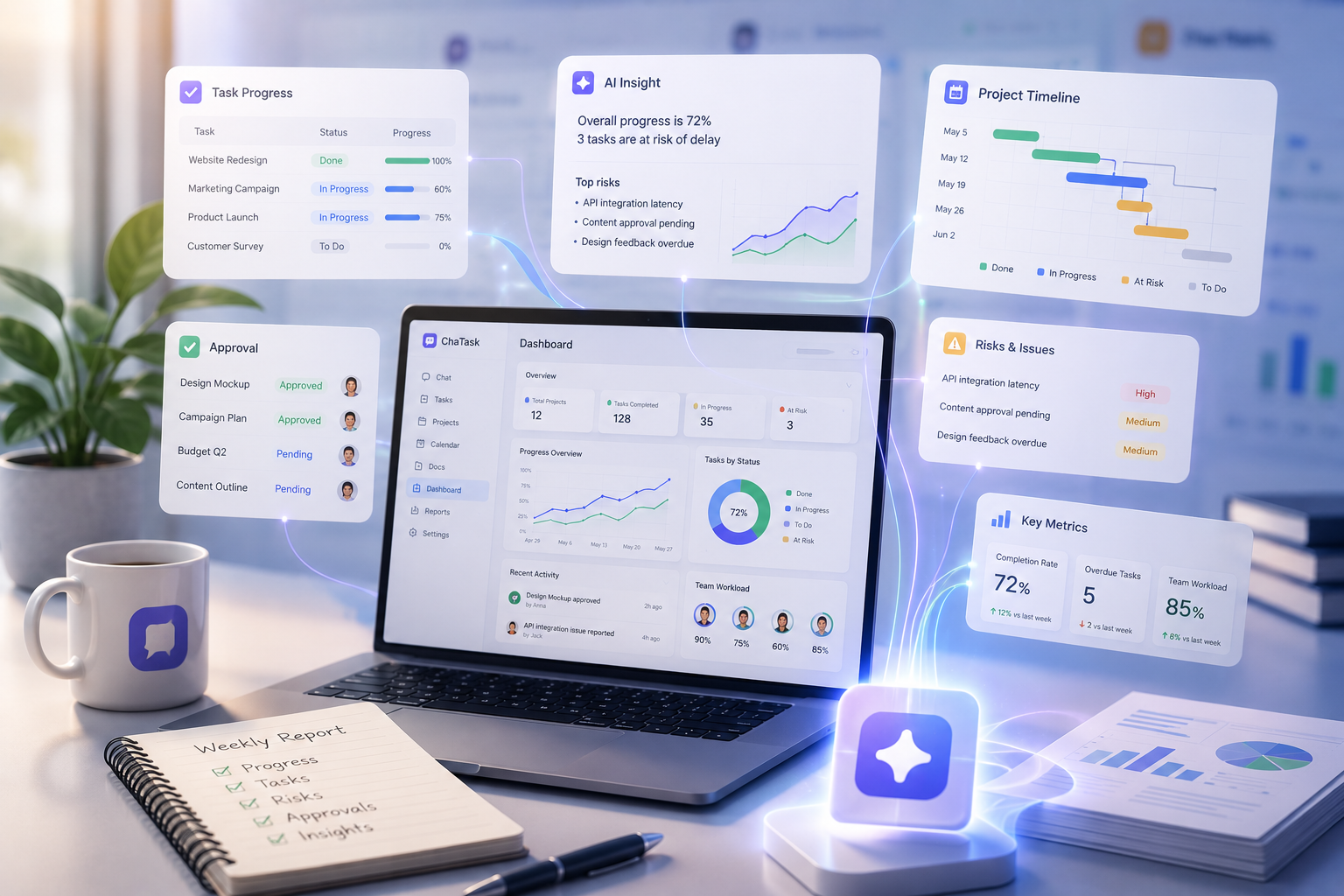
Instead of requiring users to travel to where data exists, Widgets bring data directly to where work is happening. Task status, alerts, approval workflows, AI-generated insights, and process steps can all appear directly within the same workflow.
This not only reduces the need to switch between systems but also helps teams remain within the same context. Work, data, communication, and AI are no longer separate components. They become part of a unified working experience.

The Future of Productivity Is Not About Adding More Tools
In manufacturing, efficiency often comes from eliminating unnecessary movement. Knowledge work is moving in the same direction.
Productivity does not necessarily increase because employees work harder. In many cases, productivity improves simply because teams spend less time searching for information, switching between systems, or connecting data from multiple sources.
This is one reason why more organizations are becoming interested in AI Workspaces and unified work platforms. When work, data, AI Agents, and people are connected within the same context, invisible operational costs begin to decrease. Teams can then focus more of their energy on activities that create real value.
Because sometimes, what slows a business down is not a lack of tools.
It is having too many tools operating separately from one another.