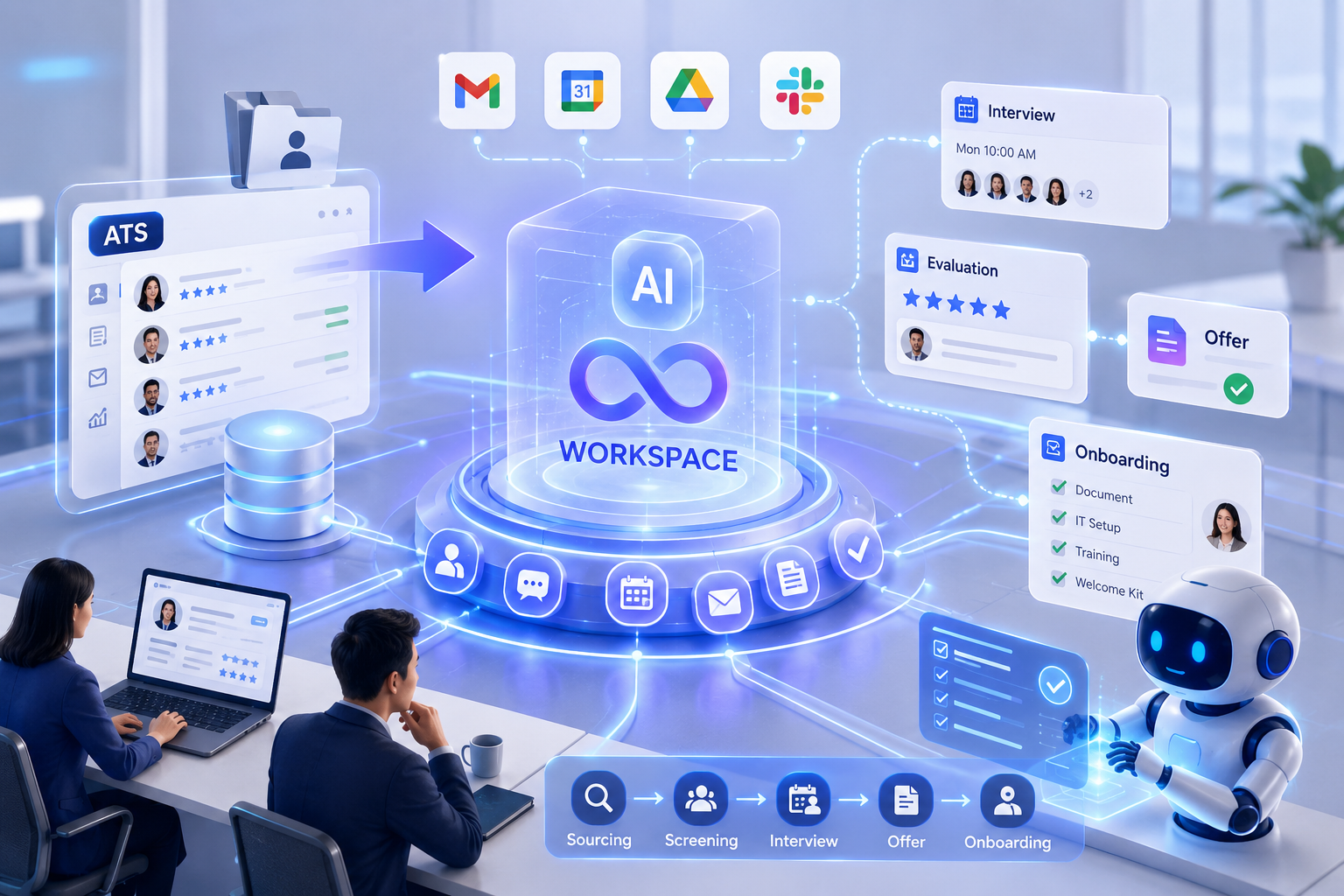
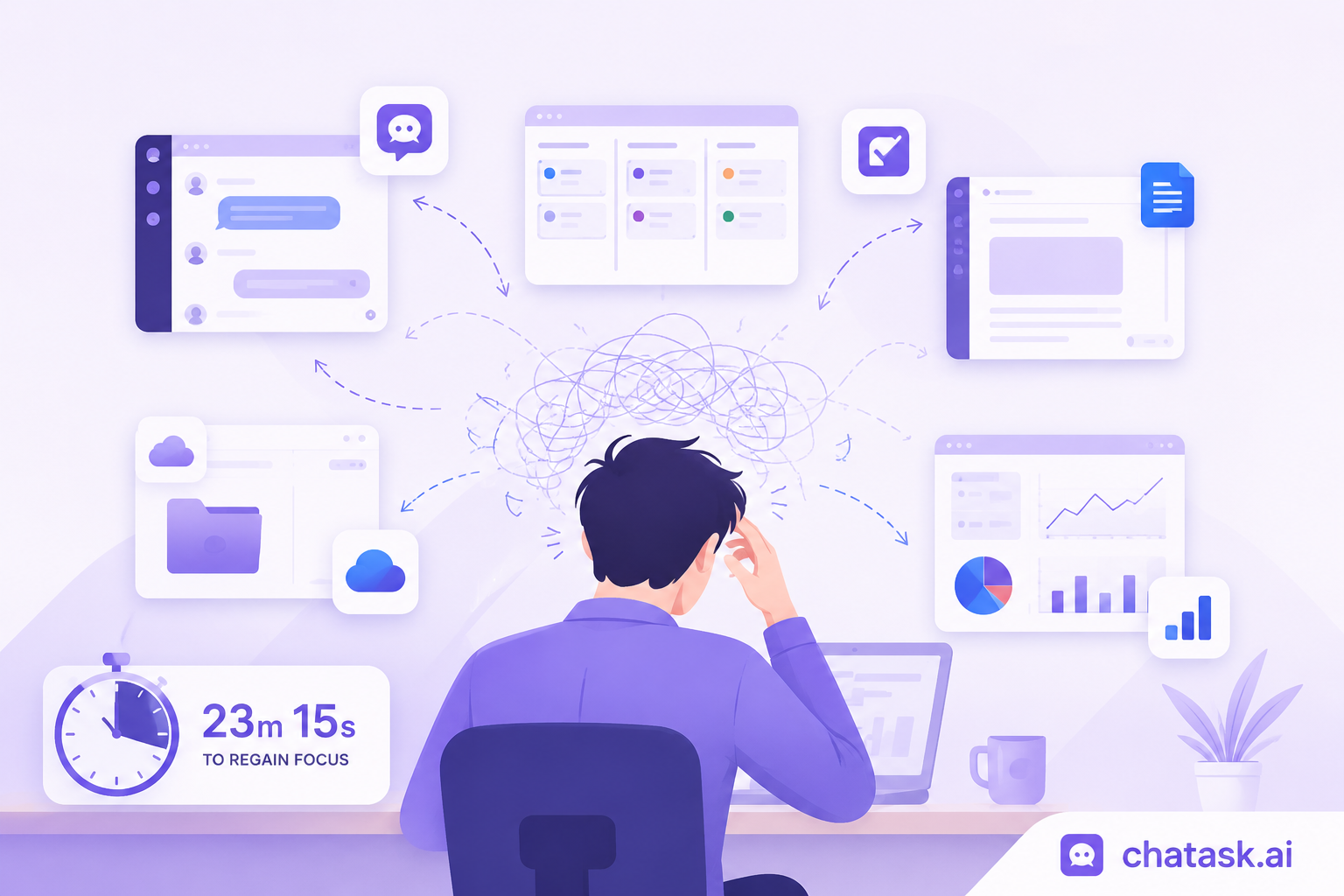
To complete even a simple task today, many employees have to open multiple applications at the same time. A request arrives through chat, related documents are stored in a knowledge repository, tasks are tracked in a project management platform, data must be checked on a dashboard, and sometimes one or two AI tools are needed to help get the work done.
What is remarkable is that much of the time is no longer spent actually doing the work. Instead, it is spent searching for information and switching between systems. Every tool is designed to improve productivity, yet as the number of tools continues to grow, the overall work experience often becomes more complicated.
This is the paradox many organizations face today. Technology continues to advance, software becomes increasingly intelligent, yet employees often feel busier, more overwhelmed, and less focused than before. Many experts refer to this phenomenon as Multi-Tool Chaos -the disruption that occurs when work becomes fragmented across too many different tools.
This raises an important question: if technology keeps improving, why isn't work becoming simpler?
The Rise of Multi-Tool Chaos
In the enterprise software industry, this phenomenon is commonly known as Tool Sprawl or Multi-Tool Chaos. It refers to a situation where work is spread across too many platforms, forcing employees to constantly move between tools to complete a single workflow.
A discussion may take place in a chat application. Tasks are created in a project management system. Documents are stored elsewhere. Reports are displayed in separate dashboards. Each tool performs well within its own scope, but when all of them become part of the same workflow, connecting them becomes a task in itself.
Over time, employees are no longer just doing their jobs - they are managing an entire ecosystem of tools. They must remember where information is stored, which platform contains the latest updates, and which application they need to open to find answers to a specific question.
The Biggest Cost Is Context Switching
Many people assume that opening another application only takes a few seconds and therefore has little impact on productivity. However, the real cost is not the action of opening the application - it is the mental effort required to switch contexts.
When someone moves from a chat conversation to a task management system, the brain must rebuild the context of the work: what is being worked on, who is involved, and what needs to happen next. This process happens quickly, which is why most people do not notice it, but it consumes far more mental energy than many realize.
According to research on Context Switching Cost by Professor Gloria Mark at the University of California, Irvine (UCI), knowledge workers require an average of approximately 23 minutes and 15 seconds to fully return to their original task after an interruption or task switch. This suggests that the biggest cost of switching tools is not the few seconds spent opening an application, but the time and mental energy required to regain focus and rebuild context.
AI Needs Context to Deliver Real Value
AI is helping businesses complete work faster, but its effectiveness depends not only on the model itself, but also on the context it can access.
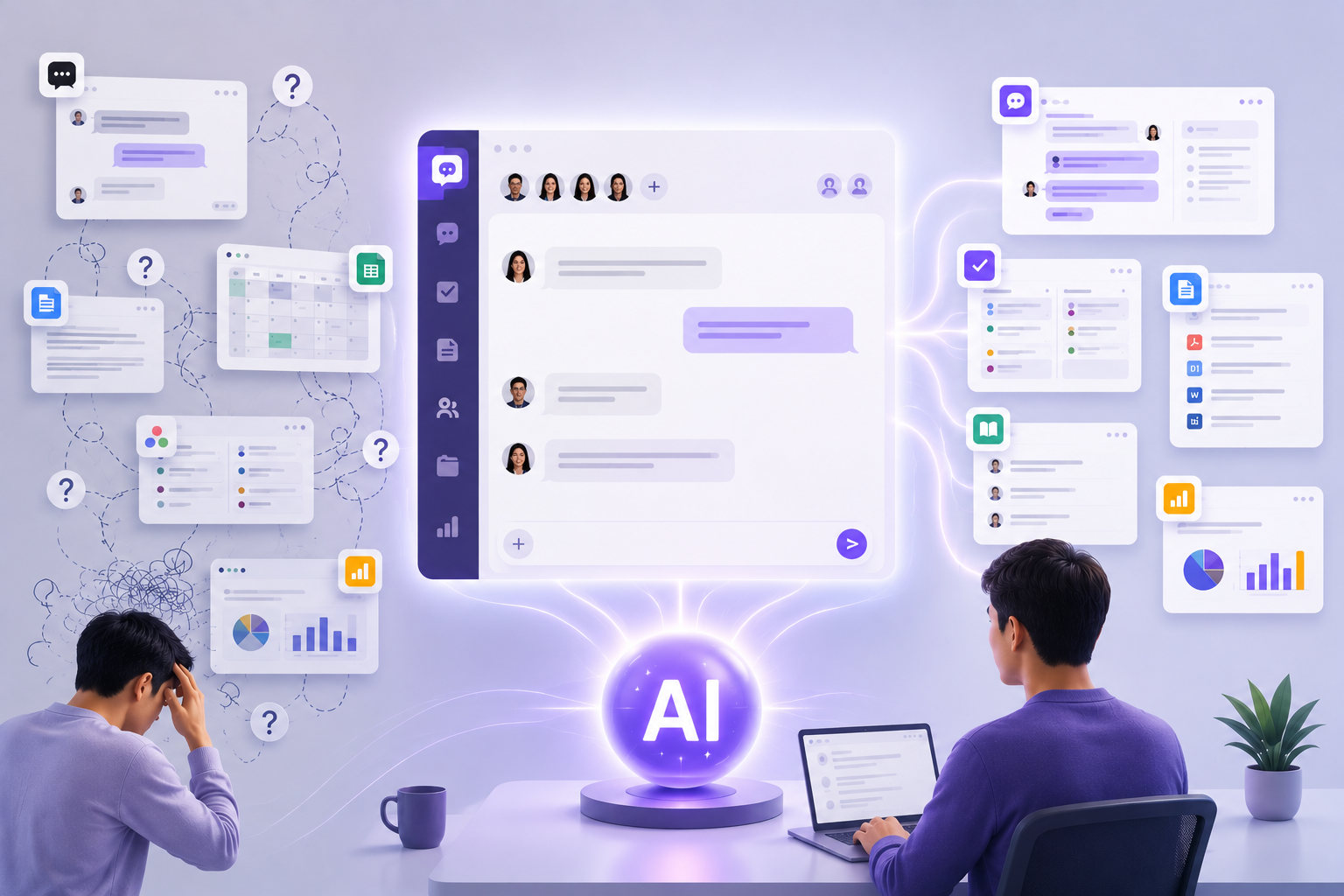
When conversations, documents, tasks, and data are spread across different systems, both people and AI must constantly switch contexts to understand the bigger picture. This reduces productivity and creates additional context-switching costs.
With ChaTask, chat, tasks, knowledge, and AI Agents are connected within a single workspace. As a result, context is preserved throughout the entire workflow, helping users spend less time searching for information while enabling AI to provide more accurate support based on the actual work context.
The Future Is Not More Tools
For many years, enterprise software evolved according to a simple principle: one problem, one tool. While this approach helped solve individual challenges, it also fragmented workflows over time.
Today, many organizations are beginning to rethink that approach. Instead of searching for another application, they are looking for a unified work environment where work, data, knowledge, and AI can coexist within the same context.
The goal is no longer to have the largest collection of tools. The goal is to reduce the number of times employees need to switch between them. When everything is connected within a single workflow, information becomes easier to access, AI gains more context to provide meaningful assistance, and teams can focus on work that creates real value.
Conclusion
The challenge facing modern organizations is not a lack of software. In reality, many companies have more tools than ever before. The real problem is that work has become fragmented across too many different platforms.
Every new tool may solve a specific problem, but it also introduces another break in the workflow. When the number of tools exceeds a person's ability to connect them effectively, Multi-Tool Chaos begins to emerge and directly impacts productivity.
This is one of the reasons why more organizations are moving away from a “more tools” mindset and toward the concept of an AI Workspace - an environment where people, work, knowledge, and AI are connected within a single, unified workspace.