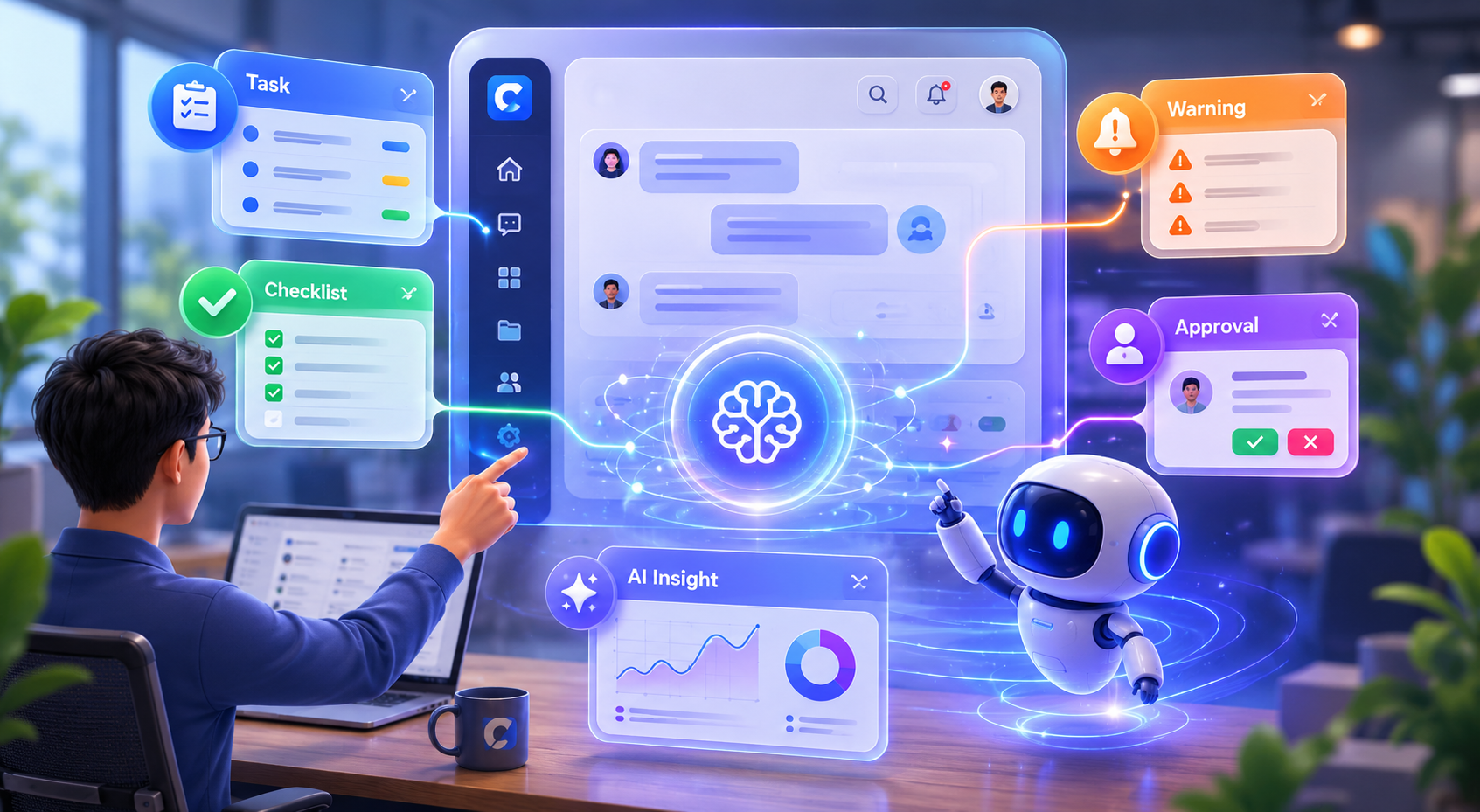
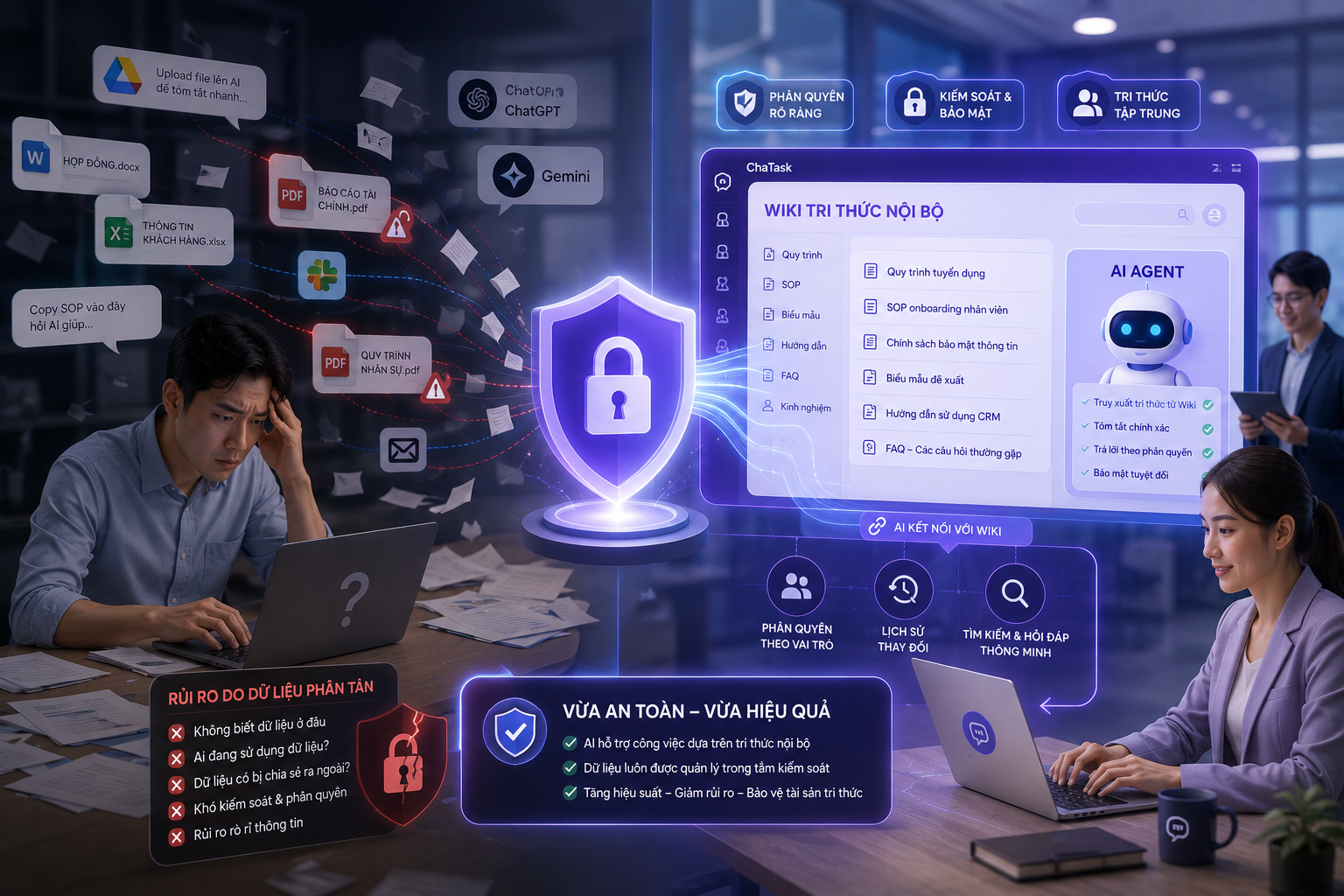
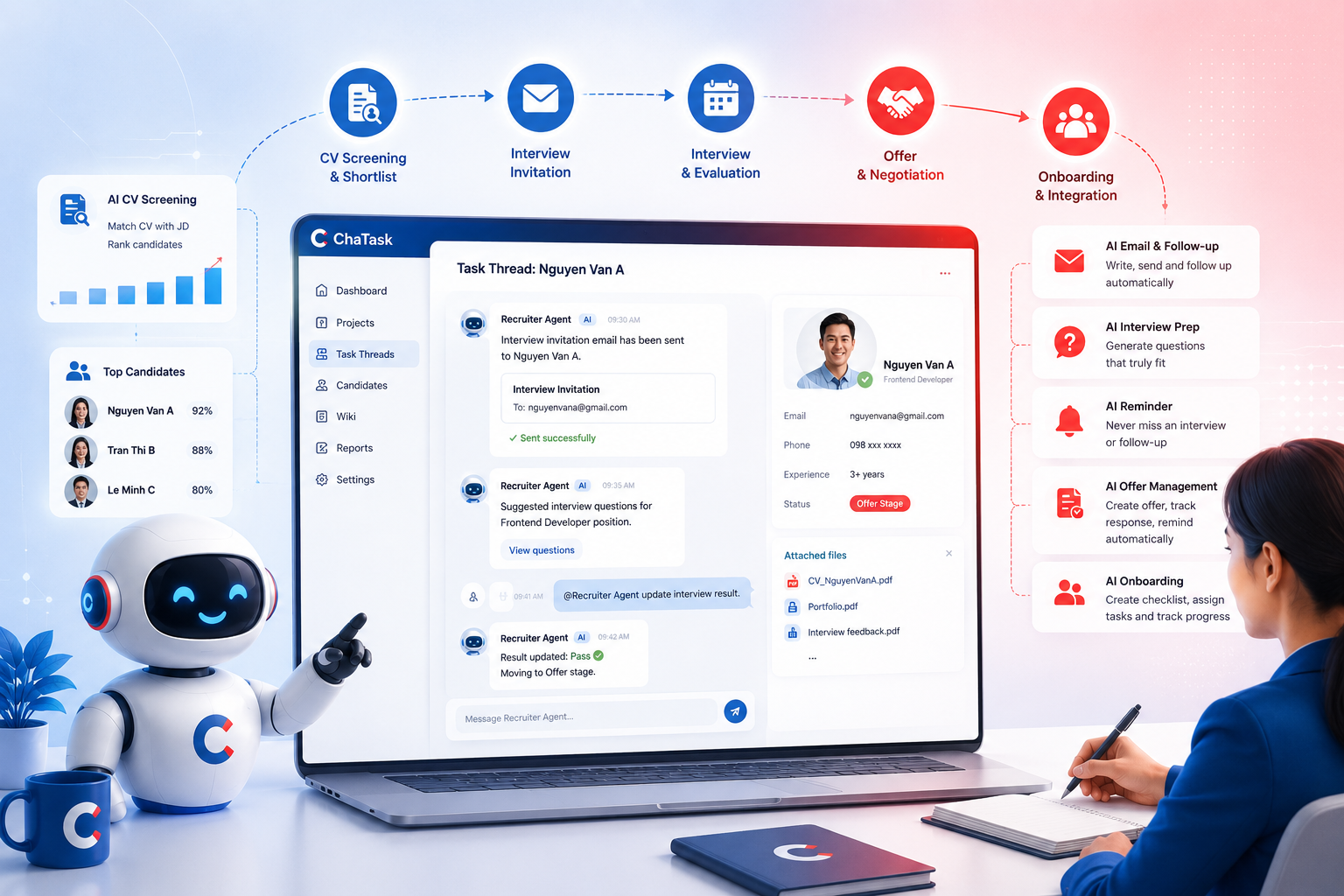
Chat has transformed the way businesses communicate.
Over the past decade, email has gradually given way to real-time messaging platforms. Work no longer has to wait for long email threads or endless meetings. Communication has become faster, more direct, and more flexible.
However, as Chat became the center of business communication, a new challenge emerged.
Work is discussed in Chat, but it is carried out somewhere else.
A customer discussion takes place in a chat channel. Then, an employee has to open a project management tool to create a task. To check project progress, they switch to a dashboard. When they need to look up a process or related documentation, they open a wiki or a shared drive. If they want to ask AI for help, they move to yet another platform.
Each switch may take only a few seconds. But when this happens dozens or even hundreds of times a day, it creates an invisible cost that most organizations pay without realizing it.
That cost is fragmentation. Information is scattered across different systems. Context is lost as people move between tools. And employees spend more time searching than actually executing work.
The Problem with Chat Is Not a Lack of Information
Interestingly, most of the information businesses need already exists.
-
Tasks have been created.
-
Reports are available.
-
Data is continuously updated.
-
Documents are properly stored.
The problem is that this information does not appear where work is actually happening.
When a manager asks for a project update in Chat, they often have to wait for someone to check another system and report back.
When a team member wants to know how many tasks remain unfinished, they need to open a separate screen. When a risk emerges, the relevant information may be buried inside a report or spreadsheet that very few people actively monitor.
The data exists, but it is disconnected from the context where decisions are being made. This is why many organizations own numerous tools and systems, yet still feel that their operations are not truly seamless.
When Chat Becomes the Workplace
The next generation of collaboration platforms is approaching this challenge differently.
Instead of forcing users to search for information, these platforms bring information directly to where users are already working.
And that place is Chat. This shift fundamentally changes the way we think about Chat.
Chat is no longer just a place for communication. It is gradually becoming the place where work is organized, tracked, and completed.
For that to happen, Chat needs more than a stream of messages. It needs the ability to surface work, data, and actions directly within the conversation. That is where Widgets come in.
Widgets Are the Missing Piece
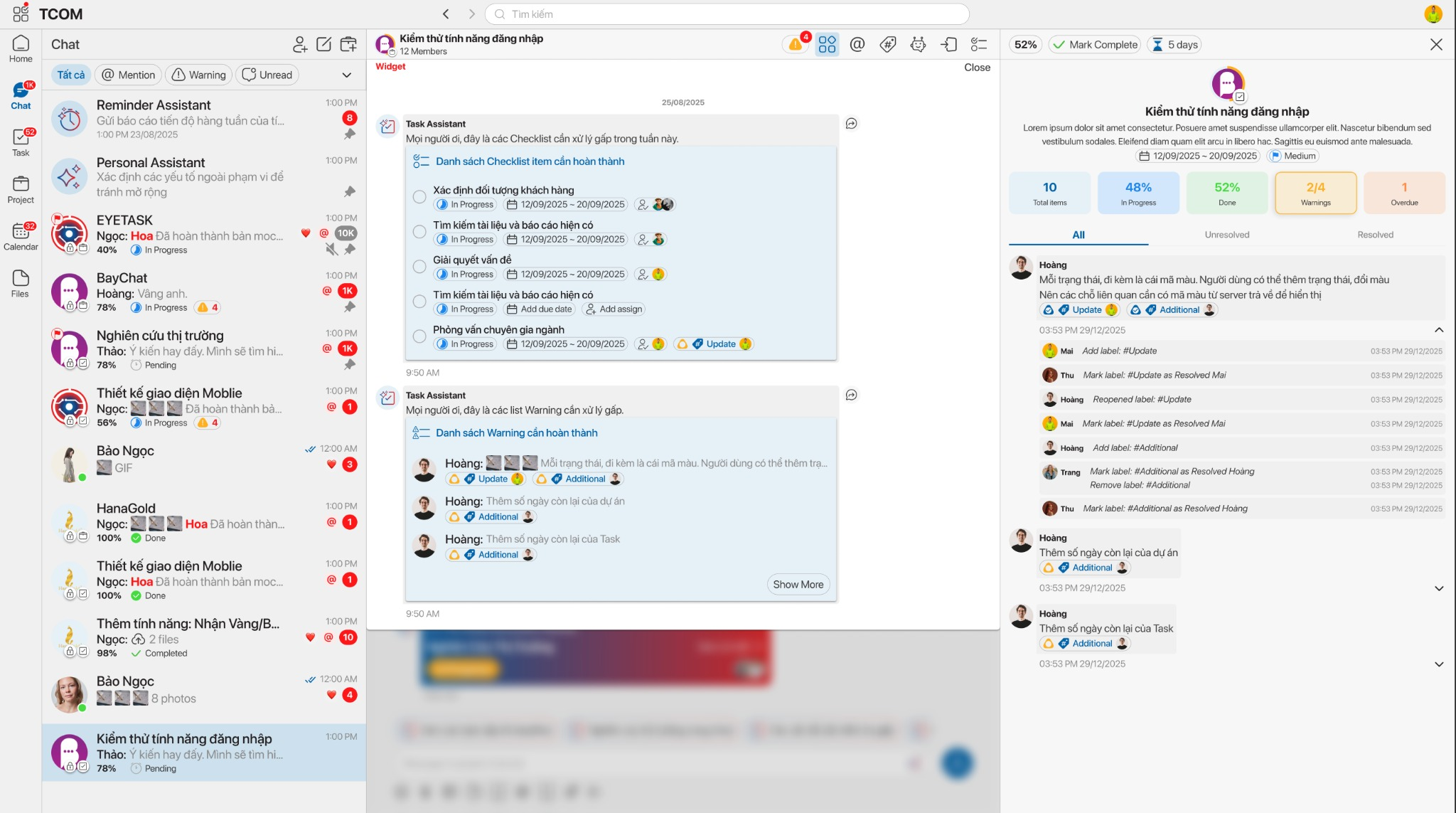
Simply put, Widgets are dynamic information blocks displayed directly within Chat.
Instead of opening a separate project management screen, users can see task statuses right inside the conversation. Instead of searching elsewhere for reports, data is updated and displayed where discussions are already taking place.
The most important aspect of a Widget is not its interface. It is its context.
Information appears at the right moment, in the right place, and is directly connected to the discussion at hand.
When a team is discussing a marketing campaign, related tasks can appear within the conversation itself. When a project encounters a risk, alerts can be displayed directly in the project channel. When a deliverable requires approval, managers can review and approve it without leaving the discussion.
There is no longer a need to constantly move back and forth between systems.
Work becomes more seamless because data remains connected to its context.
When AI Works Inside Chat
The rise of AI is making the concept of Widgets more important than ever.
Today, many businesses use AI primarily as a question-and-answer tool. Users ask questions, and AI provides answers.
But that is only the beginning.
In the near future, AI will not just answer questions. It will actively participate in day-to-day operations.
-
AI will monitor project progress.
-
AI will identify signs of delay.
-
AI will detect potential risks.
-
AI will generate reports and recommend next actions.
To do this effectively, AI needs a better way to communicate with people.
Instead of sending long paragraphs of text, AI can present information through concise, visual, and actionable Widgets.
As a result, Widgets are not merely a way to display data.
They become the collaboration interface between humans and AI.
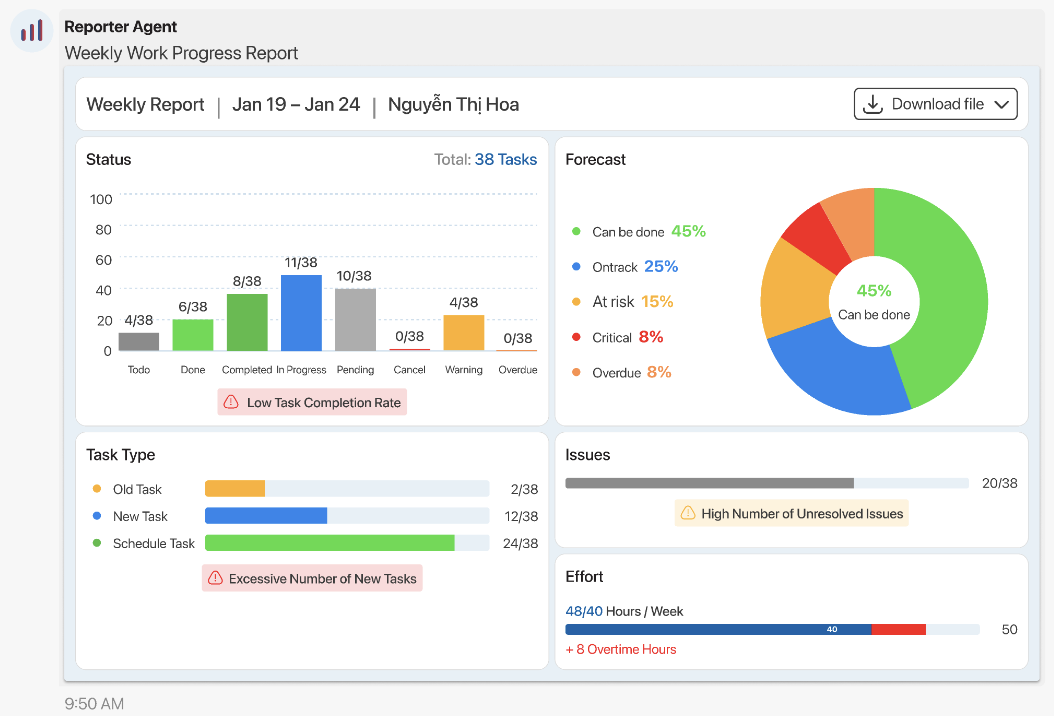
Widget In Chat and ChaTask's Vision for the Future of Work
At ChaTask, Widget In Chat is built around a simple philosophy: work should appear where people are already working.
Instead of scattering tasks, alerts, reports, and AI capabilities across multiple systems, ChaTask brings them directly into Chat, Project Channels, and Task Threads.
When a task changes status, the update appears instantly within the conversation.
When an issue arises, alerts are displayed where the team is actively collaborating.
When AI Agents detect risks or opportunities to improve performance, their insights are presented through Widgets rather than lengthy reports that are difficult to follow.
As a result, Chat is no longer just a place to talk about work.
It becomes the place where work actually happens.
This is how ChaTask brings a new work model to life—one where people, data, and AI Agents operate together within a unified workspace.
Work in Chat. Human + AI Agents, All in One Chat.