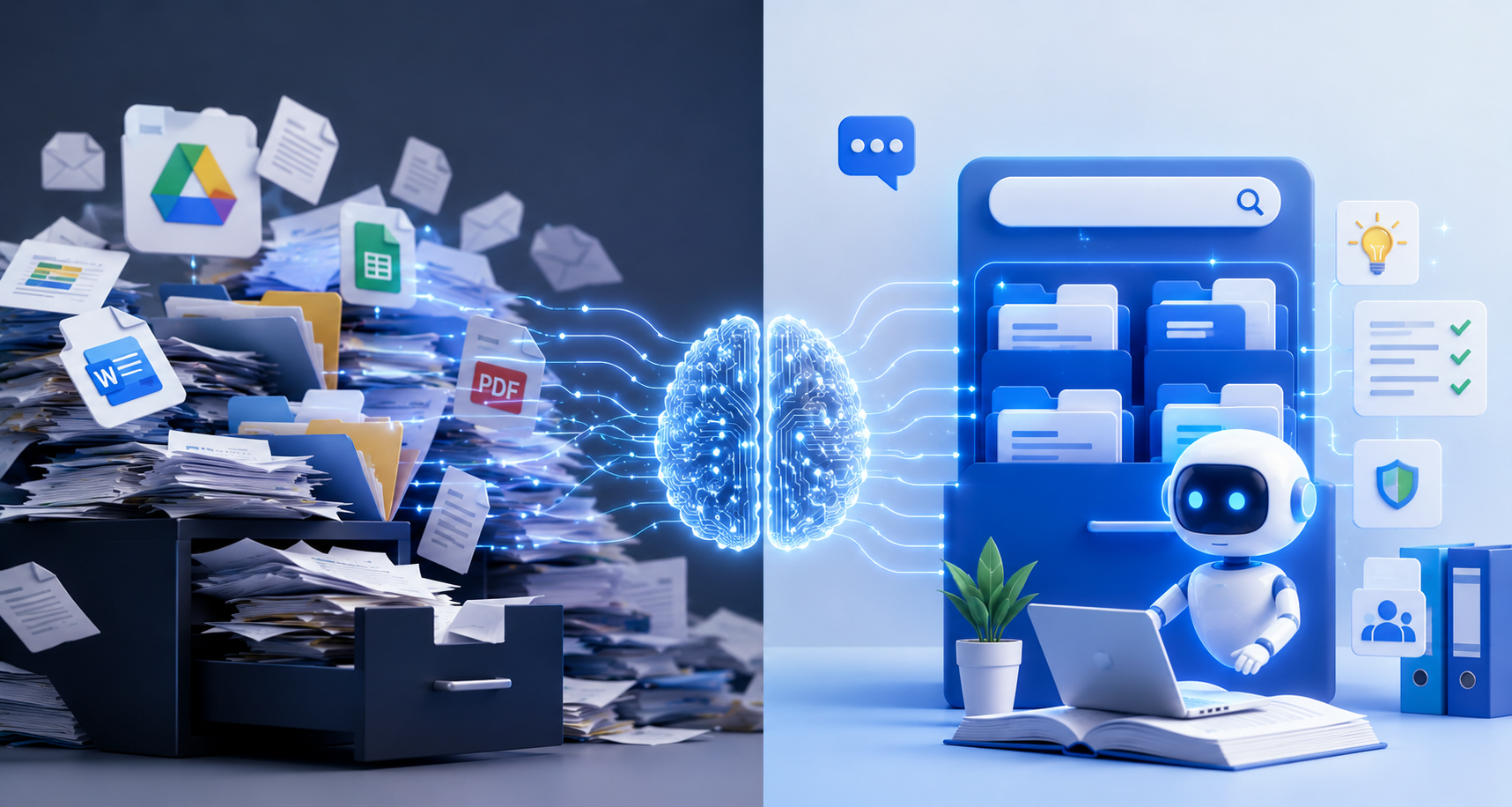
Many organizations are investing heavily in AI with the expectation that employees can simply ask a question and receive an accurate answer instantly. Thousands of documents are digitized and stored across Google Drive, SharePoint, Notion, Confluence, and other document management systems, creating the impression that AI has everything it needs to "understand" the business.
However, after a period of implementation, many companies encounter the same frustrating issue. AI responds quickly, but the answers are incorrect - or only partially correct compared to the actual processes being followed within the organization.
The surprising part is that the problem usually isn't the AI model itself. Modern AI systems are highly capable of understanding language, but the quality of their responses depends heavily on how an organization's knowledge is managed and structured.
AI Doesn't Truly Understand Your Business
Many people assume that uploading internal documents into an AI system is enough for it to understand how the business operates. In reality, AI does not automatically know which document is currently valid, which process has been replaced, or which source should be treated as the official reference.
For example, when an employee asks about the company's payment approval process, AI may find several relevant documents at once. These could include an SOP published two years ago, an email announcing a policy update, an outdated instruction manual, or even a draft document that was never officially approved.
Without a mechanism to determine which source is the most authoritative, AI will attempt to combine information from everything it finds. The result may sound reasonable, but it may no longer reflect how the company actually operates today.
More Documents Do Not Mean More Knowledge
Many organizations accumulate tens of thousands of documents over the years. SOPs, contracts, internal policies, emails, meeting minutes, and project documentation are all preserved - but often scattered across multiple platforms and repositories.
This creates a common paradox. The more data a company has, the more information AI can access. At the same time, however, AI also has a greater chance of selecting outdated information or combining content that no longer belongs together.
The real problem is not a lack of data. The problem is that the data lacks structure and proper governance.

Common Reasons Why AI Gives Incorrect Answers
One of the most common issues is duplicate documentation. The same process may exist in multiple folders, with each version containing slight modifications. While humans can often recognize which version is the latest, AI cannot make that distinction unless version control is clearly established.
Another common issue is that organizations create new versions instead of replacing outdated ones. After several years, a single process may exist in five or six different versions, making it difficult for both employees and AI to determine which one is currently in effect.
Even when the documents themselves are accurate, AI may still provide incomplete answers because it lacks context. An SOP might simply state, "Department Manager approval required," but AI has no idea which department the employee belongs to, what type of request is being processed, or which business unit the procedure applies to. Without that context, AI can only provide a generic response.
Furthermore, much of an organization's most valuable knowledge isn't documented at all. Important decisions made during meetings, approved exceptions, project-specific discussions, and the experience accumulated by senior employees often exist only in chat conversations, emails, or internal notes. If AI only reads documents without access to this operational knowledge, its answers will always miss part of the bigger picture.
The Problem Isn't AI - It's Knowledge Management
Many organizations still treat AI as nothing more than a smarter search engine. In reality, AI can only perform effectively when it is supported by a well-organized knowledge management system.
An AI-ready knowledge repository is much more than a place to store files. Every document should have proper version control, a clearly defined validity status, associated departments, related business processes, and usage scope. At the same time, organizations need access control mechanisms so AI only retrieves information that is appropriate for each user and each specific situation.
In other words, AI needs a trusted source of knowledge - not simply a folder containing thousands of documents.
AI Needs More Than a Knowledge Base
In reality, organizational knowledge extends far beyond formal documents. It also exists in daily conversations, work history, approved decisions, lessons learned from previous projects, and the ways teams have resolved issues in the past.
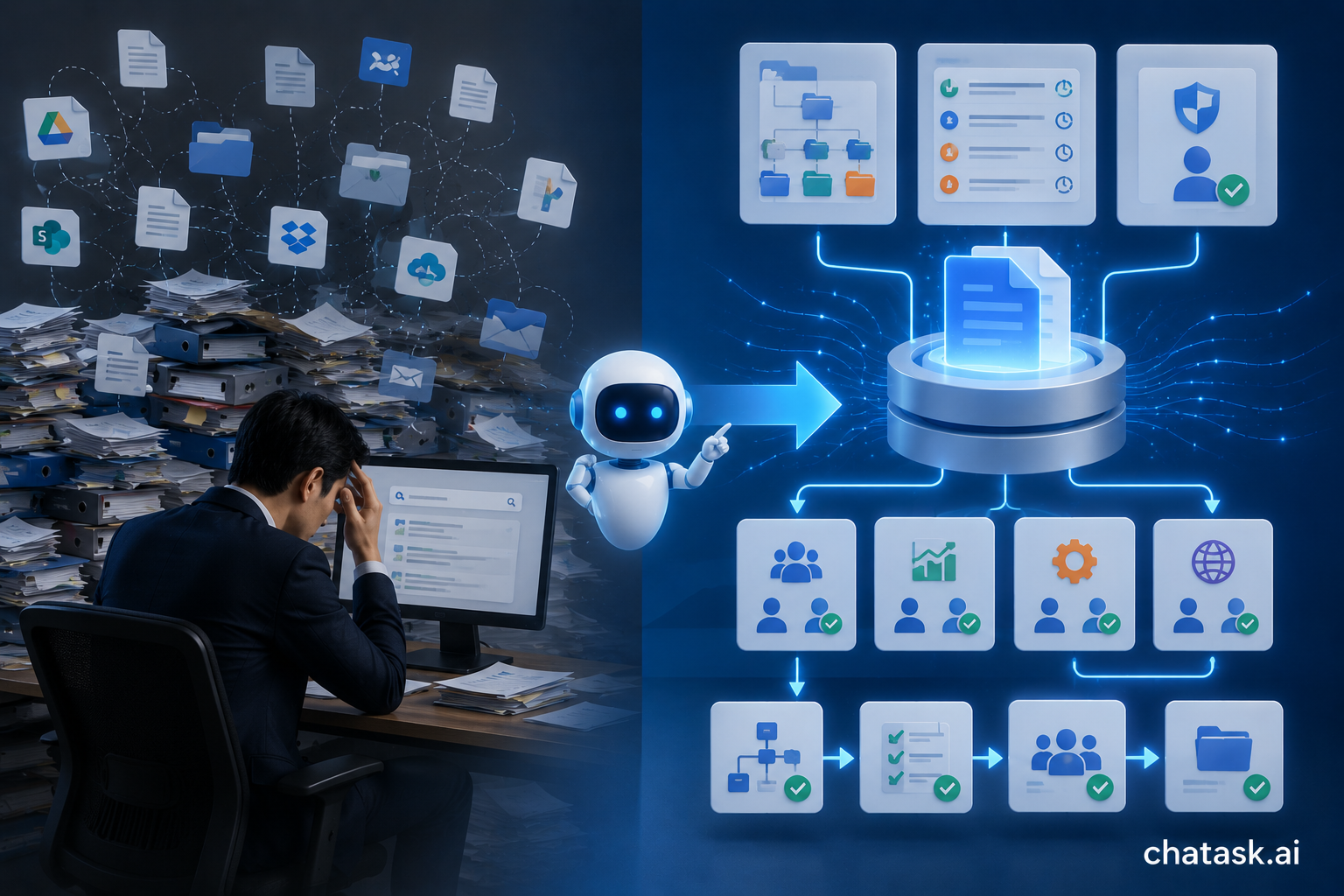
This is why more organizations are moving beyond the traditional concept of a Knowledge Base toward what is increasingly known as Enterprise Memory. Instead of simply storing documents, they build systems that allow AI to understand the relationships between documents, people, tasks, workflows, and operational history.
When an employee asks a question, AI doesn't just search for matching keywords in documents. It understands which project the employee is working on, which department they belong to, what stage the task is currently in, and which version of the process applies. This context is what ultimately determines the quality of the answer.
Context Matters More Than the Amount of Data
A common misconception is that feeding AI more data will naturally produce more accurate answers. In reality, the opposite is often true. When information is poorly organized, adding more documents simply increases the likelihood that AI will retrieve the wrong information.
What AI truly needs is not more data, but more context. It needs to understand who is asking the question, what task they are performing, which document version is currently valid, and which business process applies to their specific situation.
Only with sufficient context can AI provide answers that truly fit the organization's operations instead of delivering generic responses.

Conclusion
If AI frequently provides incorrect answers, organizations should not immediately assume that the technology itself is inadequate. In many cases, the real issue is that organizational knowledge remains fragmented, unstructured, and poorly governed.
In the AI era, competitive advantage no longer comes from owning more documents than your competitors. It comes from transforming documents, conversations, and accumulated experience into a well-organized knowledge system that stays up to date and remains closely connected to day-to-day work.
When that happens, AI doesn't just respond faster - it responds with the right context, the right process, and the right information for the right person. That is the foundation for using AI effectively and sustainably across the enterprise.